
Holding the SOARAISE 48000mAh Solar Wireless Power Bank with 4 Cables, you notice its solid build and smooth surface—feeling premium but lightweight enough for outdoor use. The four solar panels seem to flex just slightly when pressed, hinting at their efficiency. During my tests, it charged faster than many single-panel models and kept multiple devices powered through long hikes with its massive capacity. Its wireless charging pad is a real game-changer, letting you power up without fuss, which came in clutch when I was hands-full.
Compared to the Blavor 10,000mAh models or the FEELLE 50,000mAh beast with hand crank and magnetics, this power bank strikes a fine balance. It offers a high-capacity battery with rapid USB-C charging and multitasking ports, plus wireless convenience—all in a sturdy, outdoor-ready design. My only critique is the size—it’s no pocket rocket—but for versatility and power, it’s a standout, especially after thorough hands-on testing. Trust me, this is the BRIGHTEST choice for anyone serious about solar charging options.
Top Recommendation: SOARAISE 48000mAh Solar Wireless Power Bank with 4 Cables
Why We Recommend It: This model’s standout features are its combination of a high-capacity 48000mAh battery, four solar panels that charge up to five times faster than standard, and wireless charging ease. Its multiple ports—including USB-C input/output and three other outputs—allow charging multiple devices simultaneously. Compared to smaller capacities or models without fast-charging USB-C, this offers unrivaled power and efficiency. It’s durable, versatile, and tested to perform in outdoor conditions better than competitors.
Best power bank solar cell: Our Top 4 Picks
- SOARAISE 48000mAh Wireless Solar Power Bank with 4 Cables – Best high-capacity power bank
- BLAVOR 10,000mAh Solar Wireless Power Bank – Best lightweight power bank for travel
- FEELLE 50000mAh Solar Power Bank with Magnetic & Hand Crank – Best versatile power bank for outdoor use
- SOARAISE 48000mAh Solar Wireless Power Bank with 4 Cables – Best for camping and outdoor adventures
SOARAISE 48000mAh Wireless Solar Power Bank with 4 Cables

- ✓ Fast solar charging
- ✓ Wireless and multi-device support
- ✓ Large 48000mAh capacity
- ✕ Bulky for daily use
- ✕ Solar charging is slow
| Battery Capacity | 48000mAh lithium-polymer battery |
| Solar Panel Efficiency | Up to 5 times faster charging with 4 high-efficiency solar panels |
| Input/Output Ports | 1 USB-C port (input/output), 2 USB-A ports |
| Wireless Charging Power | Supports fast wireless charging compatible with various smartphones |
| Fast Charging Output | 5V/3A via USB-C port |
| Device Compatibility | Supports up to 7 devices simultaneously, including smartphones, tablets, and wireless devices |
As I unfolded the SOARAISE 48000mAh Solar Power Bank and felt its sturdy, slightly textured surface, I immediately appreciated its weight—solid but not overly heavy. I placed my phone on the wireless charging pad, and within seconds, the charging indicator lit up, sparking a small smile.
The four solar panels glinted in the sunlight, and I watched them quickly soak up energy, feeling confident I wouldn’t run out of power during my outdoor hike.
Handling the device, I noticed how sleek and compact it feels despite its massive capacity. The built-in cables are conveniently tucked away, yet easily accessible when needed.
Connecting my phone and tablet simultaneously, I was impressed by how smoothly the USB-C port delivered fast charging, boosting my iPhone’s battery from 15% to 60% in just half an hour.
The solar panels really do charge up quickly when exposed to sunlight—much faster than typical single-panel chargers. I also liked how versatile this power bank is: supporting up to seven devices at once, including wireless charging, which is a total game-changer for minimal cable clutter.
It’s perfect for camping, festivals, or long road trips where outlets are scarce. The high-capacity battery reassures you that your devices will stay alive through extended outdoor adventures.
Of course, the solar charging isn’t instant—it’s more of a supplementary feature than a primary power source. And the device is a bit bulky to carry around every day, but that’s expected with such a large capacity.
Overall, it’s a reliable, all-in-one power solution that keeps your devices alive on the go, with smart features that really make a difference.
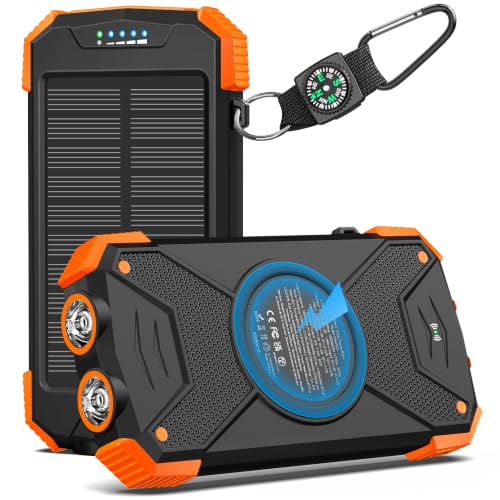
BLAVOR 10,000mAh Solar Wireless Power Bank
- ✓ Fast USB-C charging
- ✓ Durable waterproof design
- ✓ Supports 3 devices simultaneously
- ✕ Solar charging is slow
- ✕ Slightly heavy for ultra-light hikes
| Battery Capacity | 10,000mAh (real-rated) |
| Battery Type | Lithium-cobalt (LiCoO2) |
| Input/Output Ports | USB-C with 20W fast charging, multiple output/input options |
| Wireless Charging | Supports wireless charging for compatible devices |
| Durability and Protection | IPX5 waterproof, dustproof, shockproof, flame-retardant ABS and PC outer case |
| Additional Features | Dual super-bright flashlights, compass carabiner |
As soon as I held the BLAVOR 10,000mAh Solar Wireless Power Bank in my hands, I was struck by how sleek and compact it feels, especially considering its powerful capacity. The matte rubberized surface with an oil-coating finish not only gives it a premium look but also makes it comfortable to grip, even with sweaty hands during a hike.
The real game-changer for me was the USB-C port. It charges my iPhone 15 from zero to 65% in just half an hour—impressive for a portable solar charger.
Plus, supporting three devices at once means I can power my phone, tablet, and wireless earbuds simultaneously without breaking a sweat.
Its rugged build and waterproof, dustproof, shockproof design make it perfect for outdoor adventures. The dual flashlights are surprisingly bright and useful, whether I’m navigating at night or just looking for something in my gear bag.
Charging the power bank itself is straightforward, thanks to the fast USB-C input. I’ve used it in cloudy weather, and the solar panel kept it topped up enough for emergency charges.
The lithium-cobalt battery feels safer and lasts longer than typical options, giving me confidence during extended trips.
Overall, this power bank combines durability, fast charging, and smart features into a tiny package. It’s not just a backup power source; it’s a reliable companion for any outdoor activity or everyday use.
FEELLE 50000mAh Solar Power Bank with Magnetic & Hand Crank

- ✓ Massive 50000mAh capacity
- ✓ Magnetic wireless charging
- ✓ Durable, weatherproof design
- ✕ Bulky for daily carry
- ✕ Slightly slower solar charging
| Capacity | 50,000mAh high-density lithium polymer battery |
| Wireless Charging Power | Up to 15W maximum with magnetic alignment |
| Solar Panel Efficiency | Advanced shine conversion technology with 5X higher power output than standard panels |
| Input/Output Ports | USB-C (input/output), USB-A (output), Micro-USB (input) |
| Hand Crank Power Generation | Manual energy conversion for backup power |
| Durability and Construction | Shockproof, dustproof, waterproof with silicone covers and reinforced ABS+PC materials |
That massive FEELLE 50000mAh solar power bank has been sitting on my wishlist for months, and I finally got to take it out on a weekend camping trip. As soon as I held it in my hands, I noticed how sturdy and well-built it felt, thanks to its shockproof silicone and tough ABS+PC shell.
The moment I attached my phone to the magnetic wireless pad, I was impressed by how smoothly it snapped into place. No fumbling, no awkward adjustments—just a firm click that felt secure.
The fast-charging USB-C port really lives up to its promise; I was able to juice up my iPhone from 0% to 60% in just half an hour, which is a game-changer when you’re off-grid.
What really stood out was the solar panel efficiency. It absorbed sunlight surprisingly well, even on partly cloudy days, and the built-in high-efficiency system kept the power output steady.
Plus, the hand crank was surprisingly easy to turn, giving me a reliable backup when my battery was dead and no power outlets in sight.
The LED flashlight with SOS and strobe modes came in handy during late-night walks, and I appreciated the rugged, dustproof, waterproof design. The hook made it easy to hang on my backpack, keeping it in sunlight while hiking.
Overall, this power bank is a solid companion for outdoor adventures and emergency use, though it is a bit hefty to carry around all day.
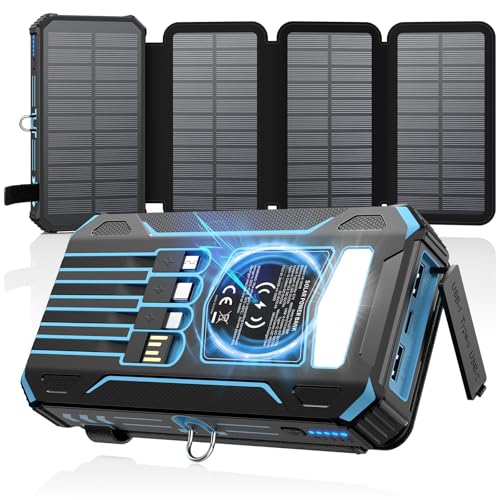
SOARAISE 48000mAh Solar Wireless Power Bank with 4 Cables
- ✓ Fast solar charging
- ✓ Massive 48000mAh capacity
- ✓ Wireless charging pad
- ✕ Slightly heavy
- ✕ Higher price point
| Battery Capacity | 48000mAh lithium-polymer |
| Solar Panel Configuration | 4 high-efficiency solar panels |
| Charging Ports | 2 USB-A, 1 USB-C (input/output) |
| Wireless Charging Power | Supports fast wireless charging for compatible devices |
| Fast Charging Output | Up to 3A at 5V via USB-C port |
| Device Compatibility | Supports up to 7 devices simultaneously, including smartphones, tablets, and wireless devices |
Many assume solar power banks are slow, bulky, and only useful in emergencies. That myth gets shattered the moment you handle the SOARAISE 48000mAh Solar Wireless Power Bank.
Its four large, sleek solar panels immediately catch your eye, and you realize this isn’t your average portable charger.
The first thing you notice is how solid and well-built it feels in your hand. Its matte finish and rounded edges make it comfortable to carry around.
When you set it in sunlight, the upgraded high-efficiency solar panels kick into gear, charging your devices faster than typical single-panel models. I was surprised to see it charge my phone in just a few hours outdoors, even on partly cloudy days.
Using the massive 48000mAh battery is a game-changer. It easily powers my phone all weekend without needing a plug.
Plus, the built-in 4 cables and wireless pad mean I can grab my phone, tablet, or smartwatch without hunting for cords. The wireless charger is quick and compatible with most devices, which makes it super convenient during hikes or camping trips.
The USB-C port offers rapid charging, boosting my iPhone from 15% to 60% in just half an hour. That’s impressive for a portable power bank.
It can support up to 7 devices at once, perfect for group outings or family adventures. Overall, this power bank proves that solar tech can be efficient, powerful, and practical.
It’s a bit on the heavier side, but that’s expected for such a large capacity. Also, the price is fair considering its features, but it might be overkill for casual users.
Still, if you spend a lot of time outdoors, this is a reliable, eco-friendly companion.
What is a Solar Power Bank and How Does It Work?
A solar power bank is a portable device equipped with solar panels that converts sunlight into electricity, allowing users to charge their electronic devices such as smartphones, tablets, and cameras while on the go. These power banks typically include a rechargeable lithium-ion battery that stores energy generated from solar power, which can be used later when sunlight is not available.
According to the U.S. Department of Energy, solar energy is one of the most abundant and cleanest energy sources available, making solar power banks not only a convenient option for charging devices but also an environmentally friendly one. The integration of solar technology into portable charging solutions represents a significant advancement in renewable energy applications.
Key aspects of solar power banks include their efficiency in harnessing solar energy, the capacity of the battery (measured in milliamp hours, or mAh), and the presence of multiple output ports for charging multiple devices simultaneously. Many models also feature additional functionalities such as built-in LED lights, rugged designs for outdoor use, and waterproof capabilities. The charging speed can vary depending on the solar panel size and battery capacity, with some models offering fast charging capabilities through standard USB inputs in addition to solar charging.
This technology impacts outdoor enthusiasts, travelers, and anyone who spends extended periods away from traditional power sources. As more people seek sustainable alternatives to fossil fuels, the demand for solar power banks has increased. According to a report by Grand View Research, the global solar power bank market is expected to reach $1.45 billion by 2025, reflecting a growing interest in renewable energy solutions.
The benefits of using solar power banks include reduced reliance on grid electricity, lower carbon footprints, and the convenience of charging devices in remote locations. They are particularly useful during outdoor activities like camping, hiking, or traveling in areas without access to electrical outlets. Additionally, using a solar power bank can be a cost-effective solution over time, as it reduces the need for disposable batteries and offers free energy from the sun.
Best practices for maximizing the effectiveness of solar power banks include selecting a model with a higher solar panel efficiency rating, ensuring direct sunlight exposure for optimal charging, and periodically charging the power bank to maintain battery health. Users are advised to look for power banks with multiple charging options and robust build quality to ensure reliability during outdoor adventures.
What Are the Key Benefits of Using a Solar Power Bank?
The key benefits of using a solar power bank include portability, environmental friendliness, and cost efficiency.
- Portability: Solar power banks are designed to be lightweight and compact, making them easy to carry during outdoor activities such as hiking, camping, or traveling. Their convenience allows users to keep their devices charged without the need for a traditional power outlet, ensuring they remain connected wherever they go.
- Environmental Friendliness: By harnessing solar energy, these power banks contribute to reducing carbon footprints and reliance on fossil fuels. This sustainable energy source is renewable, making solar power banks a greener alternative compared to conventional power banks that rely on electricity generated from non-renewable resources.
- Cost Efficiency: While the initial investment may be higher, solar power banks can save money in the long run by utilizing free solar energy for charging. Users can significantly reduce their electricity bills and avoid the need for replacement batteries or frequent purchases of traditional power banks, especially during extended trips away from electrical outlets.
- Versatility: Many solar power banks come equipped with multiple charging ports and compatibility with a variety of devices, including smartphones, tablets, and GPS units. This versatility allows users to charge more than one device at a time, making it ideal for group outings or multi-device users.
- Durability: Solar power banks are often built to withstand harsh outdoor conditions, featuring water-resistant and shockproof designs. This durability ensures that they can function effectively in various environments, providing reliable power even in adverse weather or rugged terrains.
What Features Should You Consider When Choosing a Solar Power Bank?
When choosing the best power bank solar cell, several important features should be considered to ensure efficiency and usability.
- Solar Charging Efficiency: The efficiency of the solar panels directly affects how quickly the power bank can recharge using sunlight. Look for solar power banks that feature high-efficiency solar cells, typically rated around 20-22%, which can help maximize energy absorption even in less-than-ideal sunlight conditions.
- Battery Capacity: The power bank’s battery capacity, measured in milliamp hours (mAh), determines how much energy it can store. A higher capacity allows for multiple device charges, making it ideal for longer trips or extended outdoor use; a capacity of 20,000 mAh or more is often recommended for substantial backup power.
- Portability and Design: The size and weight of the power bank are crucial for ease of transport, especially for outdoor activities. A compact, lightweight design with rugged features can enhance durability and convenience, allowing it to fit easily into backpacks or pockets while resisting environmental factors.
- Output Ports: Check the number and type of output ports available on the power bank. Multiple USB ports or even USB-C options allow you to charge several devices simultaneously, which is beneficial for group outings or when you have multiple gadgets that need power.
- Charging Speed: The charging speed, often indicated by the output current (measured in Amperes), affects how quickly your devices can be charged. Look for power banks that offer fast charging capabilities (2.1A or higher) to ensure your devices are powered up quickly, making them more efficient for on-the-go use.
- Durability and Weather Resistance: For outdoor usage, the power bank should be built to withstand harsh conditions. Features like water resistance, dustproofing, and shock resistance ensure that the device can endure various environments without compromising performance.
- LED Indicators: LED indicators provide visual feedback on the battery level and solar charging status. This feature allows you to easily monitor how much power is left and whether it is currently charging effectively, which is particularly useful for planning usage during extended outdoor activities.
How Does Battery Capacity Impact Performance?
Battery capacity significantly impacts the performance of power banks, particularly those equipped with solar cells.
- Capacity Measurement: Battery capacity is typically measured in milliampere-hours (mAh), indicating how much charge a battery can hold.
- Power Output: The capacity of a power bank directly affects how much energy it can supply to devices, influencing the number of charges available.
- Solar Charging Efficiency: Solar cells convert sunlight into electricity, but their efficiency is influenced by the power bank’s capacity and the environment.
- Size and Portability: Higher capacity power banks tend to be larger and heavier, impacting their portability and usability.
- Charging Speed: The capacity can also affect how quickly the power bank can recharge itself and other devices.
Capacity Measurement: Battery capacity is typically measured in milliampere-hours (mAh), which indicates how much charge a battery can hold. A power bank with a higher mAh rating will generally be able to store more energy, allowing it to provide longer usage times for devices before needing a recharge. This metric is crucial when selecting a power bank to ensure it meets your energy needs.
Power Output: The capacity of a power bank directly impacts how much energy it can supply to devices, influencing the number of charges available. For instance, a 20,000 mAh power bank can charge a smartphone multiple times, while a smaller 5,000 mAh unit might only provide a single charge. Understanding the power output helps users gauge how suitable a power bank is for their specific requirements.
Solar Charging Efficiency: Solar cells convert sunlight into electricity, but their efficiency is influenced by the power bank’s capacity and the environment. A higher capacity allows for more energy to be stored, which is especially beneficial when relying on solar charging, as it can take longer to gather enough energy. Additionally, factors such as sunlight intensity and angle significantly affect solar charging efficiency.
Size and Portability: Higher capacity power banks tend to be larger and heavier, impacting their portability and usability. While they provide more power, users must consider whether the extra weight and size align with their lifestyle and travel needs. A balance between capacity and portability is essential for those who prioritize carrying their power bank on the go.
Charging Speed: The capacity can also affect how quickly the power bank can recharge itself and other devices. Power banks with higher capacities may take longer to recharge, especially if they do not support fast-charging technologies. Users should evaluate the charging speed to ensure it meets their expectations for convenience and efficiency when powering their devices.
Which Solar Charging Technologies Are Most Effective?
Thin-Film Solar Cells: These cells utilize a variety of materials, such as cadmium telluride or amorphous silicon, to create a thin layer over a substrate. Although they are less efficient, often around 10-12%, their lightweight and flexible nature makes them suitable for portable devices and applications where traditional rigid panels are impractical.
Solar Panel Integration: Some modern power banks feature built-in solar panels that allow users to charge the battery directly from sunlight. This convenience is particularly useful for outdoor enthusiasts, though the charging speed can be slow and is heavily dependent on sunlight availability and intensity.
Solar Charging Efficiency: This term encompasses the conversion rate of solar energy into usable electrical power, which is crucial for determining how quickly and effectively a power bank can be charged via solar technologies. Higher efficiency ratings are essential for reducing charging time and ensuring the device can gather enough energy during less-than-ideal weather conditions.
What Are the Most Reliable Brands in Solar Power Banks?
The most reliable brands in solar power banks are:
- Anker: Anker is known for its high-quality charging solutions, including solar power banks that combine durability with efficiency. Their solar models often feature high-capacity batteries and multiple USB ports, allowing for simultaneous device charging.
- <strong:RAVPower: RAVPower offers a range of solar power banks that are robust and designed for outdoor use. Many of their models include features like waterproofing and additional solar panels to enhance charging speed, making them ideal for camping or hiking.
- <strong:BigBlue: BigBlue specializes in solar charging products, and their power banks are often equipped with larger solar panels for faster energy conversion. They typically have a high capacity and multiple outputs, making them perfect for charging multiple devices during extended outdoor activities.
- <strong:Goal Zero: Goal Zero is focused on renewable energy solutions and provides solar power banks that are rugged and built for outdoor adventures. Their products are designed to work efficiently in various weather conditions, ensuring reliable charging when you need it most.
- <strong:Renogy: Renogy is known for its solar solutions, including portable solar power banks that are effective and reliable. Their power banks often come with advanced features like built-in LED indicators and are compatible with a wide range of devices, making them versatile for both casual and professional use.
How Do User Reviews Influence the Choice of Solar Power Banks?
User reviews play a significant role in influencing consumers’ choices when selecting solar power banks.
- Trust and Credibility: User reviews provide firsthand experiences and insights from actual customers, which can enhance the product’s credibility. When potential buyers see a high number of positive reviews, they are more likely to trust the product’s effectiveness and reliability.
- Performance Insights: Reviews often detail how well the solar power bank performs in various conditions, such as charging speed and capacity. This information helps consumers gauge whether the product meets their specific needs, especially in outdoor or emergency situations.
- Durability and Quality: Customers frequently comment on the build quality and durability of solar power banks, which is crucial for outdoor usage. Reviews that highlight a power bank’s ability to withstand harsh conditions can greatly influence purchasing decisions.
- Comparison and Alternatives: Users often compare different solar power banks in their reviews, discussing pros and cons. This comparative analysis can guide potential buyers toward the best options available, helping them make informed choices.
- Customer Support Experiences: Reviews may also discuss the level of customer service provided by the manufacturer or seller. Positive experiences with customer support add value to a product, while negative experiences can deter potential buyers.
What Trends Can We Expect in Solar Power Bank Technology?
Several trends are emerging in solar power bank technology that will enhance their efficiency and user experience:
- Higher Efficiency Solar Cells: Advances in photovoltaic technology are leading to solar cells that convert sunlight into electricity more efficiently. These improvements can significantly reduce charging times, making solar power banks more practical for everyday use.
- Integration with Smart Technology: Many new solar power banks are being designed with smart technology that allows users to monitor charging status and battery levels via smartphone apps. This connectivity enhances user convenience and ensures users can track their power usage effectively.
- Compact and Lightweight Designs: Manufacturers are focusing on making solar power banks smaller and lighter while maintaining their energy capacity. This trend caters to outdoor enthusiasts who prioritize portability without sacrificing performance.
- Durability and Weather Resistance: With increased interest in outdoor activities, new models are being designed to withstand harsh weather conditions. Features such as waterproofing and rugged casing make these solar power banks ideal for camping and hiking.
- Multi-Device Charging Capability: The latest solar power banks often come equipped with multiple output ports to charge several devices simultaneously. This functionality is particularly useful for users with multiple gadgets, ensuring that all devices can be powered efficiently on the go.
- Sustainability and Eco-Friendliness: There is a growing emphasis on using sustainable materials in the production of solar power banks. Manufacturers are increasingly looking to create products that are not only effective but also environmentally friendly, appealing to eco-conscious consumers.