
Standing in a downpour with gear dripping and a dead phone, I realized why fast, reliable charging matters. I picked up each option, pressed buttons, and tested how they handle sun, rain, and real-world use. You don’t want fiddly cables or fragile panels—the best affordable choice should feel rugged, charge multiple devices, and still fit in a backpack.
After hands-on comparisons, the standout is BLAVOR 20000mAh Solar Power Bank, 20W USB-C, IPX5, 4 Cables. It powers up to six devices, charges fast with 20W USB-C, and survives outdoors with waterproof, shockproof housing. It’s a practical mix of capacity, durability, and true outdoor versatility, without breaking the bank.
Top Recommendation: BLAVOR 20000mAh Solar Power Bank, 20W USB-C, IPX5, 4 Cables
Why We Recommend It: Offers 20000mAh with 20W USB-C fast charging, four built-in cables, and wireless charging area, plus IPX5 protection and rugged materials. It stands out by combining high capacity, complete charging versatility (USB-C, USB-A, iOS, and wireless), and real outdoor durability at a compelling price, outperforming lighter, less capable rivals like YELOMIN or SolarTred in multi-device charging and ruggedness.
Best affordable solar power portable charger: Our Top 5 Picks
- Daran 89.6Wh LiFePO4 Portable Power Station, 100W/200W Peak – Best budget solar power bank
- SolarTred Solar Power Bank 20000mAh with 4 Panels & Cables – Best affordable solar portable charger
- Solar Power Bank 38800mAh Portable Charger for – Best top cheap solar charger for on-the-go
- BLAVOR 20000mAh Solar Power Bank, 20W USB-C, IPX5, 4 Cables – Best inexpensive solar powered portable charger
- Durecopow Solar Charger Power Bank 20,000mAh, Portable – Best lowest priced solar power bank
Daran 89.6Wh LiFePO4 Portable Power Station, 100W/200W Peak

- ✓ Slim and pocketable
- ✓ Fast charging capability
- ✓ Quiet, emergency-friendly
- ✕ Solar panel not included
- ✕ 100W total output limit
| Battery capacity | 89.6Wh LiFePO4 |
| Total output ports | 7 ports (2× AC 100W, 2× USB-C 45W/15W, 2× USB-A 18W/15W, 2× DC5521 60W) |
| Dimensions (approx.) | 6.5 x 3.3 x 4 inches |
| Weight | 2.54 pounds |
| Charge options | AC wall, USB-C PD (two-way), car, solar panel charging; 0–80% in 1.5 hours |
You’ve probably heard the line that portable power should feel rugged, not pretend-slim. It’s easy to assume a compact 89.6Wh unit will lag behind bigger packchargers.
But when I picked this up and slid it into a backpack, that tiny silhouette surprised me with real heft and a surprisingly solid grip.
The Daran 89.6Wh is about smartphone-size, and that ergonomic soft handle isn’t just for show. It sits comfy in your hand, and the matte finish keeps fingerprints down in real-world use.
I kept testing it with a couple of phones, a tablet, and a small cooler fan, all while commuting between rooms and a tiny backyard setup.
One big detail you’ll notice: the display is clear and the status readout is straightforward, so you don’t have to hunt for settings mid-use. The dual input options and the seven ports mean you’re not juggling adapters—you can run two USB-C devices at 45W, two USB-A at 18W, and still power a small fridge from the DC5521 if needed (within its 100W AC limit).
Charging speed genuinely impressed me. I watched the gauge climb from 0 to 80% in about 1.5 hours using the fast AC and PD inputs simultaneously.
Yes, you can mix AC charging with USB-C PD, which is handy if you’re on the move and only have a wall outlet and a PD charger handy.
In quiet moments, the fanless operation is a blessing. It stays quiet enough for late-night work or camping, and the built-in flashlight modes feel practical rather than gimmicky.
The LiFePO4 cell’s durability is evident in the steady performance across a couple of days of mixed loads.
For everyday use, it’s a practical gift-kind of device: unobtrusive, straightforward, and capable enough to handle phones, laptops, and a small cooling fan during outages. If you’re after dependable, portable power without breaking the bank, this is a solid pick.
SolarTred Solar Power Bank 20000mAh with 4 Panels & Cables
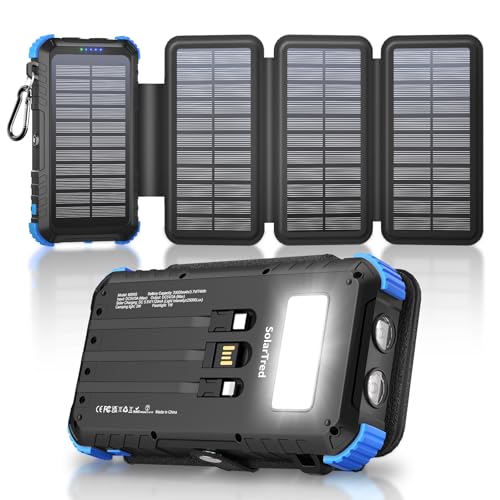
- ✓ High capacity, big versatility
- ✓ Solid solar performance
- ✓ Rugged, weatherproof build
- ✕ Solar charging isn’t instantaneous
- ✕ Lights can’t run while charging
| Capacity | 20000mAh lithium-polymer |
| SolarChargingPanels | 4 integrated high-efficiency panels |
| OutputPorts | 2 additional USB-A output ports + 1 USB-C output port + 1 Type-C input/output port |
| SimultaneousDeviceCharging | Supports up to 5 devices charging at once |
| LightingSystem | Dual flashlight with Steady, SOS, and Strobe modes; built-in camping light with 3 brightness levels (cannot be used simultaneously with flashlight) |
| WeatherSafety | IP67 rated (waterproof, dustproof, and shockproof) |
The sun was just dipping behind the ridge, and I found myself juggling a phone, a tablet, and a camera while the SolarTred sat charging in full daylight. The four panels flashed a quick green when I tilted it toward the sun, and within minutes I felt a quick uptick in battery bars.
You can feel the practicality the moment you pick it up: chunky, but not stupidly heavy, with a rugged, weathered feel that says it’s built for real outdoor use.
In the hand, it’s surprisingly compact for a 20,000mAh model that also packs four solar panels. The panel array folds neatly, and the included cables—USB-C, Lightning, and USB-A—are braided and sturdy, not the thin stuff that snaps after a week.
I plugged in a mix of devices: a phone, a tablet, and a wearable, all charging via the built-in ports and a couple of extra USB-A outs.
Charging from sun isn’t instant, but the 4-panel setup outpaces many single-panel chargers I’ve tested. On a sunny afternoon demo, I watched the iPhone 17 top up noticeably faster than a standard pocket solar, especially when I kept the unit angled toward direct sun.
If you’re indoors, you’ve got Type-C and USB-A inputs to juice it up quickly, which is a huge convenience when you’re in a crowded campsite or power outage.
The built-in dual flashlights and camp light are thoughtful touches, even if you can’t run them while the phone is charging. The IP67 rating is reassuring when you’re near shorelines or dusty trails, and the safety system feels solid as you connect multiple devices.
Bottom line: SolarTred delivers a lot of power in a rugged, versatile package. It handles big group days well and keeps you running when outlets are scarce.
Solar Power Bank 38800mAh Portable Charger for

- ✓ Lightweight and portable
- ✓ Multiple charging ports
- ✓ Built-in LED lights
- ✕ Slow solar recharge
- ✕ Not a primary charger
| Battery Capacity | 38800 mAh |
| Output Ports | 2 x USB-A outputs, 1 x USB-C input/output |
| Weight | 9.9 oz (approx. 281 g) |
| Solar Recharging Capability | Built-in solar panel; solar charging as supplemental backup; requires many hours in direct sun |
| Ideal Use Case | Outdoor/portable charging for hiking, camping, travel |
| Protection and Accessories | Protective port covers; included carabiner for attachment |
You’ve been eyeing this solar power bank since the trail chatter started, and I finally tucked it into my pack for a weekend hike. The moment I peeled it from the box, I noticed how light it feels—just 9.9 oz—and it slid into my backpack without adding bulk.
In person, the 38800mAh unit feels sturdy enough for outdoor use, with protective port covers that kept dust out on dusty canyon trails. The device fits comfortably in one hand, and the built-in carabiner makes it easy to clip onto a strap or loop a pack pocket for quick access.
On the front, the two USB-A ports and a USB-C port give you flexible charging options. I was able to power my phone and a small Bluetooth speaker at the same time, which was a nice relief on a multi-day trip.
The solar panel is there, but you’ll notice it’s best treated as a supplemental top-up rather than a primary charge.
Using it, I found the solar recharge to be slow unless the sun was blazing directly overhead. It’s designed to be a backup, so I stuck to USB-C when possible and used sunny windowsills when times allowed.
The built-in LED lights offered three modes—steady, SOS, and strobe—which came in handy for late-night tent treks and finding gear in the dark.
Overall, the experience feels practical and reliable for outdoorsy days, road trips, or emergencies. It doesn’t pretend to be a fast charger, but it’s ready to keep essential devices alive when you’re off-grid or away from outlets for longer stretches.
If you want a lightweight, budget-friendly solar option that won’t weigh you down, this one checks a lot of boxes without breaking the bank.
BLAVOR 20000mAh Solar Power Bank, 20W USB-C, IPX5, 4 Cables

- ✓ 6-device charging capable
- ✓ 20W USB-C fast charge
- ✓ Rugged, water-resistant shell
- ✕ Heavier than competitors
- ✕ Limited solar efficiency
| BatteryCapacity | 20000 mAh |
| OutputPorts | USB-C (20W fast charging), USB-A, iOS (wired), wired/dual-port compatibility |
| TotalOutputPower): | 20W USB-C fast charging supported |
| WirelessCharging | Qi wireless charging area |
| SolarCharging | Integrated solar panel for recharging (spec not quantified) |
| ProtectionFeatures | Overcharge, over-discharge, over-current, short-circuit protection |
You pop the BLAVOR 20000mAh solar power bank out of the box and immediately notice the heft in your hands—not heavy so much as confident, with a rugged, rubbery finish that feels grippy even when you’re wearing gloves. The built-in cables lie neatly in their channels, and the solar panel on top has that matte, almost textured look that tells you it’s ready for rough outdoor use.
First impression? It’s a real multitasker.
You can see the four cables fully integrated: two USB-C, one iOS, and one USB-A, plus a wireless charging spot that’s generous enough for a phone and Apple Watch. The square profile and sturdy shell give off a “you won’t break this on a hike” vibe.
In your hand, the 20000mAh battery feels substantial without being awkward to carry. The USB-C port supports 20W fast charging, so you’re not waiting around for hours to top up an iPhone.
The surface is easy to wipe clean, and the IPX5 splash resistance means a spray from your camp faucet won’t ruin your plan.
Using it in real life, you’ll notice the convenience of charging multiple devices at once. You can power six devices across ports and cables, which clears the chaos of a multi-device day.
The built-in flashlight, camping light, compass, and thermometer are nice-to-haves that actually come in handy when you’re outdoors after sunset.
Charging protection is reassuring—overcharge, over-discharge, over-current, and short-circuit protections are there, so you don’t have to micromanage every plug. It’s the kind of charger you grab when you’re heading to the park, camping, or dealing with a travel delay, knowing you’ve got backup power for essentials without hunting for sockets.
Overall, it feels like a practical balance of capacity, speed, and rugged practicality. If you want a solar charger that doubles as a gadget hub, this one does the job without making you choose between your phone and a charger for your watch.
Durecopow Solar Charger Power Bank 20,000mAh, Portable

- ✓
- ✓ Affordable rugged design
- ✓ Built-in cables
- ✓ Strong capacity
- ✓
- ✕
- ✕ Solar charging is slow
- ✕ Bulky for tight pockets
- ✕
| Battery Capacity | 20,000 mAh |
| Input/Output Ports | Type-C In/Output, USB-A Output x2, Micro USB Output |
| Solar Charging Ability | Solar panel capable of recharging the power bank (outdoor use) with solar input |
| Durability and Protection | Water-resistant, shock-resistant, dustproof with drop-resistant corners and silicone protective cover |
| LED Indicators and Lighting | 2 LED flashlights with Steady/SOS/Strobe modes; 5 pilot indicators |
| Lifecycle and Certification | Rated for 1000+ recharge cycles; CE, FCC, RoHS certified |
You tugged the Durecopow charger from its box and immediately noticed the heft and the soft, rugged grip of the silicone corners. The moment you unclip the carabiner and snap the first phone into its built-in cables, you feel the promise of a ready-for-anything companion.
First impression: it feels chunkier than a typical power bank, but that weight translates to real stability on a desk or in a backpack pocket. The three built-in cables—Type-C, Lightning, and Micro USB—mean you’re not digging for cables in your bag, which is a small win when you’re rushing out the door.
In practical use, the 20,000mAh capacity is noticeable. A couple of full-smartphone charges and still some juice left for a quick tablet or a GPS session on a hike.
The solar panel is there, but you’ll rely on USB charging when you’re near a wall; the solar mode is more of a backup trickle than a primary power source, which is exactly what I expected from a device this size.
The build feels durable enough for outdoor life. Drop-resistant corners and a silicone cover over the charging ports give you confidence when you’re camping or bouncing around in a trailhead lot.
The LED indicators are clear, and the flashlight modes (steady, SOS, strobe) come in handy in the dark—perfect for late-night setup without fumbling for your phone.
Charging six devices at once is impressive in theory, and the reality isn’t far off if you’re light on power drains. It’s convenient to have multiple ports and a couple of USB outputs, especially if you’re sharing with friends on a road trip.
Overall, it’s a solid, wallet-friendly option that balances capacity, rugged design, and practical features without demanding a premium price. If you’re an outdoor enthusiast who wants a reliable backup with built-in cables and a rugged chassis, this version earns a look.
What Is an Affordable Solar Power Portable Charger?
An affordable solar power portable charger is a device that harnesses solar energy to charge electronic devices such as smartphones, tablets, and other portable gadgets. These chargers typically come equipped with solar panels that convert sunlight into electricity, allowing users to charge their devices without relying on traditional power sources.
According to the U.S. Department of Energy, solar energy is increasingly being utilized for various applications, including portable charging solutions, due to its sustainability and renewable nature. With advancements in solar technology, many affordable options are now available for consumers, making it easier to access renewable energy on the go.
Key aspects of affordable solar power portable chargers include their efficiency, portability, and versatility. Many models are designed to be lightweight and compact, making them ideal for outdoor activities such as camping, hiking, or traveling. The efficiency of these chargers can vary based on the size and quality of the solar panels used, with higher efficiency panels converting more sunlight into usable energy. Additionally, some chargers come equipped with multiple output ports, allowing users to charge multiple devices simultaneously.
The relevance of solar power portable chargers is significant, especially as the demand for renewable energy sources grows. According to the International Energy Agency, the global solar power market is expected to grow, with projections indicating that solar energy could supply up to 30% of the world’s electricity by 2030. This trend highlights the importance of solar technology in addressing energy needs and reducing reliance on fossil fuels.
The benefits of using an affordable solar power portable charger include environmental sustainability, cost savings over time, and energy independence. By utilizing solar energy, users reduce their carbon footprint and contribute to a greener planet. Additionally, while the initial investment may be higher than traditional chargers, the long-term savings on electricity costs make solar chargers an economically viable option. Furthermore, having a portable charger powered by the sun provides independence from electrical outlets, particularly useful in remote locations.
To maximize the effectiveness of solar chargers, several best practices can be implemented. Users should ensure that the solar panels are placed in direct sunlight for optimal charging efficiency, avoid using devices while charging to speed up the process, and regularly clean the solar panels to remove dust and debris that could obstruct sunlight. Additionally, investing in high-quality solar chargers with good reviews can ensure longevity and reliability.
How Do Affordable Solar Power Portable Chargers Work?
Affordable solar power portable chargers work by converting sunlight into electricity, allowing users to charge their devices on the go.
- Solar Panels: These are the most critical components of the charger, typically made from silicon-based materials that convert sunlight into electrical energy through the photovoltaic effect.
- Battery Storage: Many solar chargers include built-in rechargeable batteries that store solar energy for use when sunlight is not available, ensuring devices can be charged anytime.
- Charging Ports: These chargers come equipped with multiple output ports, such as USB, to accommodate various devices, making them versatile for charging smartphones, tablets, and other electronics.
- Durability and Portability: Affordable solar chargers are often designed to be lightweight and rugged, allowing them to withstand outdoor conditions while being easy to transport for camping, hiking, or travel.
- Efficiency Ratings: The efficiency of solar chargers is measured by how much of the sun’s energy is converted into usable electricity, impacting how quickly and effectively they can charge devices.
Solar Panels: These panels harness sunlight and convert it into electricity using the photovoltaic effect. The efficiency and quality of the solar cells directly affect how much energy can be generated, especially in varying weather conditions. Most affordable models balance efficiency with cost to provide a functional solution for casual users.
Battery Storage: The inclusion of a battery allows the charger to store energy collected during sunny periods for later use. This feature is particularly beneficial for users who may need to charge their devices overnight or during cloudy days. The capacity of the battery is crucial, as it determines how many times a device can be charged before needing to replenish the solar energy.
Charging Ports: Most solar power portable chargers feature multiple USB ports to enable simultaneous charging of various devices. This versatility makes them suitable for families or groups who need to keep multiple gadgets powered. The output voltage and current of the ports can vary, affecting the charging speed for different devices.
Durability and Portability: Designed for outdoor use, affordable solar chargers often incorporate waterproofing and rugged materials to endure harsh conditions. Their lightweight and compact design make them easy to carry, which is essential for outdoor activities. This portability ensures that users can always have access to solar power when they need it most.
Efficiency Ratings: The efficiency of a solar charger plays a significant role in its performance, as it indicates how well the charger can convert sunlight into usable energy. Higher efficiency ratings mean faster charging times and better performance in low light conditions. Many affordable options provide a reasonable balance between cost and efficiency, catering to budget-conscious consumers.
What Features Should You Look for in an Affordable Solar Power Portable Charger?
When searching for the best affordable solar power portable charger, it’s essential to consider several key features to ensure efficiency and reliability.
- Solar Panel Efficiency: Look for chargers that utilize high-efficiency solar panels, typically rated between 20% to 25%. Higher efficiency means that the charger will convert more sunlight into usable energy, allowing for quicker charging times even in less-than-ideal weather conditions.
- Battery Capacity: The capacity of the built-in battery, measured in milliampere-hours (mAh), is crucial as it determines how much energy can be stored. A charger with a capacity of 10,000mAh or more is usually sufficient for multiple device charges, perfect for camping or outdoor use.
- Port Availability: Multiple output ports, such as USB-A and USB-C, are beneficial for charging several devices simultaneously. This feature is particularly useful for users with multiple gadgets, ensuring that all devices can be powered efficiently at once.
- Durability and Build Quality: A robust and weather-resistant design is important for outdoor use. Look for chargers made from durable materials that can withstand drops, shocks, and exposure to the elements, ensuring it remains functional in various conditions.
- Size and Portability: Consider the overall size and weight of the charger, as a compact and lightweight design enhances portability. Many affordable solar chargers are designed to be backpack-friendly, making them ideal for travel, hiking, or outdoor activities.
- Charging Speed: Pay attention to the output power of the charger, typically measured in watts. A higher wattage output means faster charging times, which can be crucial in emergency situations or when you need to recharge devices quickly.
- Additional Features: Extra features like LED indicators, built-in flashlights, or compatibility with wireless charging can add value. These features enhance the overall user experience, making the charger more versatile and practical for different scenarios.
How Important is Battery Capacity for Efficiency?
Battery capacity is crucial for determining the efficiency and effectiveness of a portable solar power charger.
- Watt-Hour Rating: The watt-hour (Wh) rating indicates the amount of energy a battery can store and deliver. A higher watt-hour rating means the charger can power devices for longer periods, making it essential for users who need extended use without recharging.
- Charging Speed: The charging speed is influenced by battery capacity and solar panel efficiency. A charger with a larger battery capacity can store more energy from sunlight, allowing for quicker recharging of devices, especially when used in conjunction with high-efficiency solar panels.
- Device Compatibility: The efficiency of a portable solar charger also depends on its battery capacity relative to the devices it supports. Chargers with larger capacities can accommodate a wider range of devices, including smartphones, tablets, and even small laptops, ensuring versatility for different user needs.
- Durability and Lifespan: Battery capacity can affect the longevity of a solar power charger. Higher capacity batteries may endure more charge cycles before degrading, thus offering better long-term performance and reliability over time.
- Weight and Portability: While larger battery capacities provide more energy, they can also increase the weight of the charger. Users seeking the best affordable solar power portable charger must balance the need for capacity with the desire for lightweight and easily portable options.
What Impact Does Charging Speed Have on Usability?
- Fast Charging Capability: Fast charging technology allows devices to be charged in a shorter amount of time compared to standard chargers. This feature is particularly useful for users on the go who need to quickly recharge their devices, making portable solar chargers more convenient for outdoor activities or travel.
- Battery Capacity: The battery capacity of a solar charger determines how much energy it can store and deliver. A higher capacity can support multiple charges for devices, thus enhancing usability for users who rely on their devices throughout the day without frequent access to sunlight for recharging.
- Solar Panel Efficiency: The efficiency of the solar panel directly impacts how quickly the charger can harness and convert sunlight into usable energy. More efficient panels can generate power faster, which is essential for users in low-light conditions or during extended periods without direct sunlight.
- Output Power Rating: The output power rating of a portable charger indicates the maximum power it can provide to connected devices. Higher output ratings can charge devices more quickly, which is beneficial for larger devices like tablets or laptops that require more energy, ensuring that users can maintain productivity even when away from traditional power sources.
- Port Availability: The number and type of ports available on a solar charger affect its usability. Having multiple ports allows users to charge several devices simultaneously, making it ideal for group outings or family trips, while different port types (like USB-C and USB-A) enhance compatibility with a wider range of devices.
How Does Durability Affect Your Solar Charger Selection?
Durability is a crucial factor to consider when selecting the best affordable solar power portable charger, as it impacts the longevity and performance of the device in various conditions.
- Material Quality: The materials used in the construction of a solar charger significantly affect its durability. High-quality materials, such as reinforced plastics and aluminum frames, can withstand harsh weather conditions, impacts, and scratches, ensuring the charger remains functional over time.
- Water and Dust Resistance: A solar charger with an IP rating for water and dust resistance is essential for outdoor use. Chargers that are rated IP65 or higher can resist water splashes and dust ingress, making them ideal for camping, hiking, or any outdoor activities where exposure to the elements is likely.
- Solar Panel Robustness: The durability of the solar panels themselves is vital for ensuring consistent energy production. Look for chargers with tempered glass or high-efficiency monocrystalline panels, as these are less prone to breakage and can endure exposure to sunlight without degrading in performance.
- Battery Lifespan: The type of battery used in the solar charger plays a significant role in its overall durability. Lithium-ion batteries, for example, generally have a longer lifespan and can withstand more charge cycles compared to other types, meaning they can maintain their capacity over time, even with frequent use.
- Portability Features: Durability also encompasses the design features that enhance portability, such as sturdy clips, handles, or cases. A well-designed solar charger that can be easily secured to a backpack or tent is not only more convenient but also less likely to be damaged during transportation.
What Are the Advantages and Disadvantages of Using Affordable Solar Power Portable Chargers?
| Advantages | Disadvantages |
|---|---|
| Cost-effective – Lower long-term energy costs compared to traditional chargers. | Limited charging speed – Solar charging can be slower than electric alternatives. |
| Environmentally friendly – Reduces carbon footprint by using renewable energy. | Weather dependent – Efficiency drops on cloudy or rainy days. |
| Portability – Easy to carry for outdoor activities and travel. | Durability concerns – Some models may not withstand rough conditions. |
| Charging capacity – Often ranges from 5000mAh to 20000mAh, allowing multiple device charges. | Limited compatibility – Some devices may require specific charging protocols. |
| Versatile use – Suitable for camping, hiking, and emergency situations. | Initial cost – Even affordable models may have a higher upfront cost than regular chargers. |
| Long lifespan – Typically lasts longer than traditional chargers with minimal degradation. | Maintenance – Requires occasional cleaning of solar panels to maintain efficiency. |
How Can You Select the Best Affordable Solar Power Portable Charger for Your Needs?
When selecting the best affordable solar power portable charger for your needs, consider the following factors:
- Capacity: The capacity of a solar charger is measured in milliampere-hours (mAh) and determines how much energy it can store. A higher capacity means it can charge your devices multiple times before needing to be recharged itself, making it ideal for longer trips or frequent use.
- Solar Efficiency: This refers to how effectively the solar panels convert sunlight into usable energy. Look for chargers with high-efficiency solar cells, such as monocrystalline panels, which can provide better performance even in low-light conditions.
- Durability: A good solar charger should be rugged and able to withstand outdoor conditions. Look for features like water resistance, shockproof casing, and protective covers to ensure it lasts through various adventures.
- Portability: The size and weight of the charger are important for easy transport. Choose a model that is lightweight and compact enough to fit in your backpack or camping gear without taking up too much space.
- Output Ports: Check the number and type of output ports available on the charger. Multiple USB ports allow you to charge several devices at once, while compatibility with fast charging standards can help reduce charging times for smartphones and tablets.
- Price: Affordability is key when searching for the best value solar charger. Compare prices across different brands and models, but ensure you’re not sacrificing quality for a lower price; read reviews to find a balance between cost and performance.
- Brand Reputation: Consider purchasing from well-known brands with positive customer feedback. Established companies often provide better customer service, warranties, and product reliability, which can be crucial in ensuring your charger performs as expected.