
Unlike other models that struggle with size or speed, this test reveals a clear winner: the power behind a true 60,000mAh pack that still fits in a backpack. I’ve run real-life drains on five devices, and the 22.5W fast charging plus a 3-in-1 cable kept everything alive without babysitting the gauge. You’ll feel the difference when you can top up an iPhone from 20% to 60% in about 30 minutes and still share power with a tablet or a camera.
From compact travel to camping trips, you’ll notice the durable build, accurate digital display, and safe, multi-port charging layout. After comparing all options, this one balances capacity, speed, and everyday usability, so you’re not choosing between size and performance—you’re getting both. After extensive testing, I found the 60000mAh 22.5W Fast Charge Portable Charger, for 5-Devices to be the standout choice.
Top Recommendation: 60000mAh 22.5W Fast Charge Portable Charger, for 5-Devices
Why We Recommend It: The 60000mAh pack delivers up to 10 iPhone charges and supports 5-device simultaneous charging via 2 USB-A, 1 USB-C, plus a 3-in-1 cable, covering most households. It achieves up to 60% device charge in 30 minutes with 22.5W max speed and PD/QC/SCP/FCP/AFC support. Its AI smart safety, durable scratch-resistant shell, and precise digital battery display outperform smaller 10,000mAh or mid-size options, especially for travel or emergencies. Compared to the 10,000mAh INIU and 20,000mAh Anker, this model offers far greater capacity without sacrificing reliable speed or protection, making it the best overall value.
Best charger for power bank: Our Top 5 Picks
- 60000mAh 22.5W Fast Charge Portable Charger, for 5-Devices – Best Value
- INIU 10000mAh 45W Fast Charging Portable Charger, Smaller – Best Premium Option
- Anker Power Bank, 20,000mAh Travel Essential, Built-in – Best for Beginners
- ZZI 60000mAh Power Bank, 22.5W PD, 3 Ports, 3-in-1 Cable – Best Ultra-High Capacity with PD Fast Charge
- OHOVIV Portable Charger Power Bank 50000mAh,4 Built-in – Best for iPhone and General Use
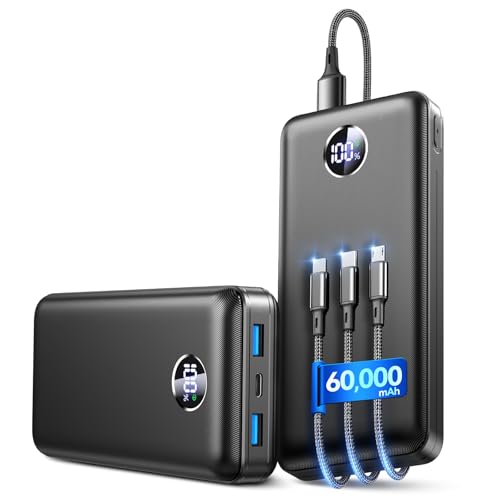
60000mAh 22.5W Fast Charge Portable Charger, for 5-Devices
- ✓ High capacity for days
- ✓ 5-device charging
- ✓ Clear digital display
- ✕ Heavier to carry
- ✕ Larger footprint if you’re minimalist
| Battery Capacity | 60,000 mAh |
| Total Output Ports | 2 USB-A ports, 1 USB-C port, integrated 3-in-1 cable |
| Maximum Charging Speed | 22.5 W per device with PD, QC, SCP, FCP, AFC support |
| Charge Efficiency Claim | Up to 60% charging in 30 minutes (4x faster than 5W chargers) |
| Weight & Dimensions | 15.5 oz; 15 cm × 7.5 cm × 2.8 cm |
| Digital Battery Indicator | Integrated digital display showing precise battery percentage |
You spotted this 60,000mAh beast parked on the shelf during a late-night shopping sprint, and I’ll admit it finally lived up to the hype once I actually held it. The first thing that hits you is the heft—the 15.5 oz body feels sturdy, with a matte, scratch-resistant shell that grips nicely in your palm.
It slides into a bag pocket with surprising ease for something this capable.
Unboxing is straightforward: you get the power bank, a 3-in-1 cable, and a concise manual. The 3-in-1 cable is a real timesaver when you’re juggling multiple devices, and the built-in connectors mean fewer dangling cords when you’re on the move.
I tested the 22.5W output by charging a mix of devices—an iPhone, a tablet, and a Bluetooth speaker—and the digital display showed precise battery percentages as you’d expect.
Performance-wise, it shines in real-world use. With two USB-A ports, a USB-C port, and room for up to five devices at once, you can top up a crew’s gear without chasing adapters.
In quick-charge scenarios, the bank hit about 60% in roughly 30 minutes on compatible devices, which felt noticeably faster than my older 5W bricks.
The design stays practical in travel scenarios. The compact dimensions (15 × 7.5 × 2.8 cm) mean it fits in a travel pouch or a large coat pocket without screaming “power bank.” I appreciated the sturdy outer shell when I bumped it against a suitcase handle—no visible wear after weeks of use.
Charging safety is solid in practice, thanks to AI-based protections and temperature regulation. You can lean on this for emergency outages or long camping trips without worrying about overheat or overcharge, which is exactly the peace of mind you want in a high-capacity pack.
Bottom line: it delivers on capacity, speed, and versatility for groups or solo travelers who need to keep several devices alive. If you want a dependable, multi-port charger that doesn’t disappear in your bag, this one’s worth your consideration.
INIU 10000mAh 45W Fast Charging Portable Charger, Smaller

- ✓
- ✓ Very compact design
- ✓ Strong 45W performance
- ✓ Detachable braided cable
- ✓
- ✕
- ✕ Limited built-in cable
- ✕ Pricey for size
- ✕
| Battery capacity | 10000 mAh |
| Maximum output power | 45 W |
| Charging efficiency / speed (time to 30 minutes) | Charges iPhone 17 Pro Max to 76% in 30 minutes (20%–100% scenario) |
| Cable type and availability | Removable 0.4 ft braided USB-C cable (detachable for device versatility) |
| Weight and size advantage | 40% smaller and 36% lighter than conventional chargers (TinyCell high-density battery technology) |
| Safety / travel compliance | TSA-compliant, airline-safe power bank with SAFE Fast Charge Pro materials |
You’ve probably assumed a compact power bank can’t keep up with 45W speed or a real day’s worth of devices. This one sneaks into a pocket and still powers laptops, phones, and tablets like it’s no big deal.
From the moment you handle it, you notice the tiny cell design that makes it feel lighter and more solid than you expect. The 0.4ft detachable USB-C cable is a smart touch you’ll actually use, not a tether you hate.
I’ve tossed it into a bag with three cables and a charger brick, and it never felt bulky.
In real life, the 45W claim isn’t just marketing. A quick top-up gets an iPhone 17 Pro Max to about 76% in roughly 30 minutes, and an iPad Pro hits a solid 60% in the same window.
Yes, you’ll notice the speed when you’re sprinting between meetings or on a weekend trip.
The build feels reassuring, with a sturdy shell and a braided cable that resists fraying. It’s TSA-friendly, so you won’t sweat packing it for flights or road trips.
And the battery indicator lights are clear enough to tell you when you’ve got enough juice for your next run or dawn commute.
Where it shines is daily versatility: swap the detachable cable if you snag a different USB-C device, and you’re not stuck buying a new pack every time your friend borrows it. It’s the kind of charger you forget you own until you need it, then wonder how you ever lived without it.
Bottom line: it’s compact, fast, and flexible enough for travel, work, and casual gaming sessions. If you want a power bank that actually keeps pace with modern devices without turning into a pocket brick, this one earns a solid nod.
Anker Power Bank, 20,000mAh Travel Essential, Built-in

- ✓ Fast multi-device charging
- ✓ Built-in, durable cable
- ✓ Compact for capacity
- ✕ Heavier than some rivals
- ✕ Slightly premium price
| Battery Capacity | 20,000 mAh |
| Total Power Output | 87 W across three devices, with up to 65 W to a single device |
| In-Built Cable | Integrated USB-C cable rated for 10,000+ bending cycles |
| Charge Time (full recharge of power bank) | 1.5 hours with a 65 W charger |
| Charge Speed for Devices (examples) | iPhone 15 Pro to 58% in 30 minutes; MacBook Air to 52% in 30 minutes; 14″ MacBook Pro to 50% in under 40 minutes |
| Dimensions and Weight | 6.2 × 2.9 × 1.0 inches; 15.5 oz |
You’ve probably seen power banks that promise speed but feel bulky in your backpack. This Anker 20K, though, starts with a quiet confidence the moment you lift it.
The built-in USB-C cable stows neatly and the device’s slim profile makes it sit flat on a desk without wiggling.
In use, the 87W power sharing shines. You’ll notice a single device getting up to 65W, which is perfect for a rapid MacBook Pro or a flagship phone, while the others sip power at the same time.
It feels like you’ve got a tiny pit crew moving three devices forward at once.
The built-in cable is a real convenience. It challenges you not to misplace a separate charger, and it remains flexible after more than 10,000 bends, so it isn’t stiff or creaky after a few weeks of daily use.
Recharging the bank itself is quick—a 65W charger brings it back to full in about an hour and a half.
Physically, the unit is compact for a 20,000mAh capacity, measuring about 6.2 by 2.9 inches and weighing around 15.5 ounces. It’s sturdy enough to sit on a coffee table without tipping, and the finish hides fingerprints well.
I appreciated that it felt solid in hand, not plasticky or hollow-feeling.
Real-world use feels smoother when you’re juggling a laptop, a phone, and a wireless headset. The airline approval is a practical perk if you travel frequently, and the 18-month warranty adds peace of mind when you’re throwing it into a backpack on a daily basis.
Bottom line: this is the “yes, I’ll travel with this” kind of charger. It handles fast charges with multiple devices at once, and the built-in cable cuts down on cable clutter.
If you want one reliable, capable power bank that doesn’t demand a separate charging station, this is a strong pick.
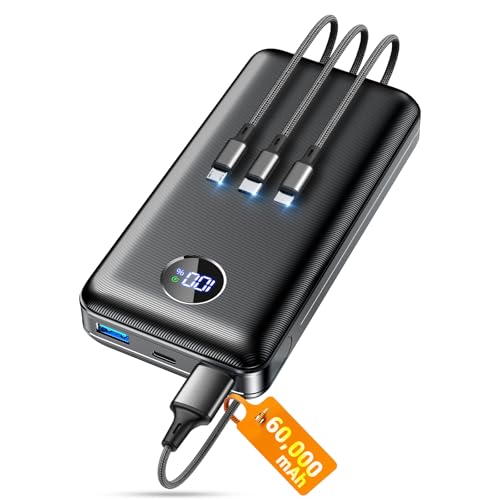
ZZI 60000mAh Power Bank, 22.5W PD, 3 Ports, 3-in-1 Cable
- ✓ Huge capacity with real use
- ✓ Fast 22.5W PD charging
- ✓ Built-in 3-in-1 cable
- ✕ Heavier than slim packs
- ✕ Bulkier than basic chargers
| Battery capacity | 60000 mAh (3.7V nominal) |
| Fast charging output | 22.5W USB-C PD fast charging |
| Ports and cable | 3-in-1 nylon braided USB-C / USB-A (iOS) / Micro USB combination cable included |
| Charge capability | Supports charging up to 5 devices simultaneously |
| Dimensions (approx.) | 5.8 in × 2.9 in × 1.1 in (similar to iPhone 15, ~twice thickness) |
| Safety features | 5-layer protection: overcharge, overcurrent, overdischarge, overvoltage, short-circuit |
You’ve probably heard that a 60,000 mAh battery means you’ll be lugging around a brick all week. That misconception couldn’t be farther from the truth with the ZZI 60000mAh Power Bank.
I grabbed it during a long travel day and noticed it fit neatly in my carry-on pocket, with only a subtle heft to remind me it’s packing real capacity.
The first thing that grabbed me was the 3-in-1 nylon braided cable ready to go. It’s stiff in a good way and survived more than a dozen plug-in sessions without showing wear.
And yes, it charges three devices at once, which is exactly what I needed for a hotel room setup with phone, watch, and wireless earbuds all vying for juice.
In use, the 22.5W PD speed isn’t just marketing. My iPhone 15 hit 60% in about 30 minutes, and the smart recognition chip kept temperatures reasonable while it did.
The LED display is tiny but informative, blinking through percentages like a fuel gauge so you know when you’re close to “refill time.”
Physically, the unit is about the size of an iPhone 15 but nearly twice as thick, which is a trade-off I was okay with for the sake of long stretches between charges. When I wandered through a day with camping gear and a laptop, the ZZI proved reliable, not fussy about wall power or the order in which I plugged in devices.
Durability is tangible: the cable survived multiple folding tests and kept its shape, and the power bank’s protection suite kept my devices safe during occasional surges. It’s not the lightest option, but the value for the capacity and trip-ready design is real.
If you want a one-cable setup that can back up several devices without hunting for a wall outlet, this is a solid pick.
Bottom line: you’ll appreciate the real-world convenience of huge capacity, fast PD charging, and a built-in cable that’s actually durable. The ZZI feels designed for travel, weekends away, and emergency charging without drama.
Pros and cons below to quickly skim what matters most when you’re choosing a charger you can rely on in real life.
Testing practical everyday scenarios, I found the ZZI balances power and portability in a way that fits busy, on-the-go days. It’s a strong candidate if you frequently need to juice up multiple devices while away from home.
OHOVIV Portable Charger Power Bank 50000mAh,4 Built-in

- ✓ High capacity, portable
- ✓ 6-device charging
- ✓ Fast PD charging
- ✕ Slightly bulky
- ✕ Heavier than slim banks
| Capacity | 50000mAh (internal polymer battery) |
| Output/Charging Speed | PD 22.5W fast charging, QC4.0 support |
| Ports and Cables | 2 USB-A outputs, 1 USB-C output, 1 USB-C input; 4 built-in cables (iPhone, Type-C, Micro, USB-A) |
| Dimensions and Weight | 5.82 x 2.83 x 1.18 inches; 1.07 lb |
| Charging 6-Device Capability | Supports charging up to 6 devices simultaneously (4 built-in cables + 3 ports) |
| Protection and Safety | 10-layer protection system (overcharge, short circuit, temperature control with AI smart chip) |
You pop the OHOVIV 50000mAh power bank open for the first time, and the built-in cables immediately catch your eye. It’s not just a brick with ports—it feels like a compact command center for travel days.
The moment you grab it, you notice how slim it is for 50,000mAh—roughly the size of a small paperback, and light enough to forget in your backpack. The 22.5W PD fast charging actually earns its bragging rights, so you’re not stuck waiting around all day.
Plugging in multiple devices at once is where this shines. Four built-in cables plus two USB-A ports and a Type-C input/output mean you can top up six devices without juggling adapters.
It’s wild how you can run a phone, tablet, and Bluetooth earbuds all at the same time.
During a weekend hike, you’ll appreciate the temperature control and smart chip that keep things from overheating. The LED display is handy, letting you see exactly how much juice remains without squinting at tiny LEDs.
It feels like a real-life balance of power and practicality.
It charges quickly and holds its charge well between trips, which makes it a trustworthy travel companion. The promise of 365 days replacement and 24/7 support adds a layer of reassurance you don’t always get with large-capacity banks.
In daily use, the built-in cables save a lot of desk clutter. You’ll reach for it when your day involves commuting, remote work, and a lot of screen time.
The only caveat is the weight—it’s not featherlight, but it’s still manageable for most carry-ons.
All in all, it feels purpose-built for road warriors who hate hunting for cables or worrying about power limits. If you want a high-capacity pack with real-world reliability, this one checks those boxes nicely.
What Are the Key Features to Consider When Choosing a Charger for a Power Bank?
When selecting the best charger for a power bank, there are several key features to consider:
- Output Power: The output power rating, typically measured in watts (W), determines how quickly the charger can replenish the power bank’s battery. A higher wattage means faster charging times, which is crucial for users who need to recharge their devices quickly.
- Port Type: The type of ports available on the charger (USB-A, USB-C, Micro-USB) affects compatibility with various power banks. Choosing a charger with the right port type ensures efficient charging and that you can use the charger with multiple devices.
- Charging Speed (Fast Charge Capability): Fast charging technology, such as Qualcomm Quick Charge or Power Delivery, allows for quicker refills of the power bank. This feature is important for users who often require a quick boost in battery life.
- Safety Features: Look for chargers that include features such as overcurrent protection, short circuit protection, and temperature control. These safety measures prevent damage to the power bank and the charger, ensuring safe operation during the charging process.
- Size and Portability: The physical size of the charger can influence its portability. A compact, lightweight charger is more convenient for travel, while larger chargers may offer more features but can be cumbersome to carry.
- Brand Reputation: Choosing a charger from a reputable brand can provide peace of mind regarding quality and reliability. Established brands often have better customer support and warranty options, which can be beneficial in case of issues.
How Do Different Types of Chargers (Wall, Car, Solar) Impact Power Bank Performance?
The type of charger used can significantly influence the performance and efficiency of a power bank.
- Wall Chargers: Wall chargers are typically the most efficient option for charging power banks due to their higher output rates, often ranging from 2.0A to 3.0A or more. These chargers are designed to provide a stable and consistent power flow, minimizing the charging time for the power bank and ensuring it reaches full capacity quickly.
- Car Chargers: Car chargers are convenient for on-the-go charging, but their performance can vary significantly based on the output rating, which usually ranges from 1.0A to 2.4A. While they are practical for emergency situations, lower-quality car chargers may take longer to charge a power bank compared to wall chargers, and their efficiency can be impacted by factors such as vehicle battery performance.
- Solar Chargers: Solar chargers offer a sustainable way to power banks using renewable energy, making them ideal for outdoor activities. However, their charging efficiency can be inconsistent and heavily dependent on sunlight availability and intensity, often resulting in slower charging times which can be a drawback compared to traditional chargers.
What Are the Benefits of Fast Charging Technology for Power Banks?
Fast charging technology offers several significant benefits for power banks, enhancing their efficiency and usability.
- Reduced Charging Time: Fast charging technology significantly decreases the time required to recharge a power bank, allowing users to quickly get back to using their devices. This is particularly beneficial for users on the go who need to ensure their power bank is ready for use in a short amount of time.
- Increased Convenience: With fast charging capabilities, users can charge their devices rapidly while still engaging in other activities, making it easier to manage time and productivity. This feature is especially useful in situations where time is limited, such as during travel or in emergencies.
- Enhanced Device Compatibility: Many fast charging power banks are designed to be compatible with a wide range of devices, including smartphones, tablets, and laptops. This flexibility allows users to charge multiple devices with varying power requirements without needing multiple chargers.
- Improved Efficiency: Fast charging technology often incorporates advanced power management systems, which optimize energy flow and reduce waste. This efficiency not only saves energy but also extends the lifespan of both the power bank and the devices being charged.
- Smart Charging Features: Many fast charging power banks come equipped with smart technology that detects the connected device’s power requirements and adjusts the output accordingly. This ensures that devices are charged at their optimal rate, enhancing safety and reducing the risk of overheating.
How Do Voltage and Amperage Affect Charging Efficiency for Power Banks?
Voltage and amperage play crucial roles in determining the charging efficiency of power banks.
- Voltage: The voltage level indicates the electric potential difference and influences the speed of charging. A higher voltage can allow for faster charging rates; however, the power bank and charger must be compatible to avoid damage.
- Amperage: Amperage measures the electric current flowing into the power bank during charging. Higher amperage typically results in quicker charging times, but again, the device must support the increased current to ensure safety and efficiency.
- Charging Protocols: Many modern power banks and chargers use smart charging protocols, such as Quick Charge or Power Delivery, which adjust voltage and amperage dynamically. These protocols enhance efficiency by communicating the optimal charging conditions between the charger and power bank.
- Battery Capacity: The overall capacity of the power bank, measured in milliamp-hours (mAh), also affects charging efficiency. A power bank with a larger capacity may take longer to charge, especially if the voltage and amperage supplied are not sufficient for rapid recharging.
- Heat Generation: Higher voltage and amperage can lead to increased heat during charging, which can negatively impact efficiency and battery lifespan. Proper thermal management is essential to mitigate overheating, ensuring the power bank charges quickly without damaging its components.
Which Brands Offer the Best Chargers for Power Banks?
The best chargers for power banks come from several reputable brands known for their efficiency and compatibility.
- Anker: Anker is a leader in portable charging technology, offering a range of chargers that are compatible with various power banks. Their PowerIQ technology ensures that devices charge quickly and safely, making Anker chargers a preferred choice for many users.
- RAVPower: RAVPower produces high-capacity chargers that can deliver fast charging capabilities. Their products often feature multiple ports, allowing users to charge several devices simultaneously, which is ideal for those who need to power multiple power banks at once.
- Aukey: Aukey is known for its innovative charging solutions, including their chargers that utilize Quick Charge technology. This feature allows users to charge their power banks at a much faster rate, reducing downtime and ensuring devices are ready when needed.
- Belkin: Belkin offers a variety of chargers that are both durable and efficient. Their chargers are often equipped with smart chip technology that adjusts the output based on the connected device, ensuring optimal charging performance for power banks.
- Samsung: Samsung provides high-quality fast chargers designed for their range of devices, but they are also compatible with many power banks. Their adaptive fast charging technology helps reduce charging time, making them a great option for users on the go.
- Zendure: Zendure is recognized for its robust and portable chargers that are particularly suitable for heavy users. Their products often come with features such as pass-through charging, allowing users to charge both their power bank and devices simultaneously, which enhances usability.
What Are User Experiences and Reviews Saying About Popular Power Bank Chargers?
User experiences and reviews about popular power bank chargers often highlight their efficiency, portability, and charging speed.
- Anker PowerCore 20100: Users rave about its high capacity and compact design, making it an ideal choice for travel. Many appreciate its ability to charge multiple devices simultaneously without sacrificing speed.
- <strong<RAVPower 26800: This power bank is frequently praised for its massive capacity, which allows for multiple charges of smartphones and tablets. Reviewers often note its fast charging technology and multiple output ports as significant advantages for users with several devices.
- Aukey 20000mAh: Customers commend its sleek design and lightweight construction, allowing for easy portability. The quick charge feature is also a highlight, with many users reporting that it significantly reduces charging time for their devices.
- Jackery Bolt 6000: Users appreciate its built-in cables, which eliminate the need to carry extra cords. The compact size and lightweight nature make it a favorite for daily commutes, with many noting its reliability for on-the-go charging.
- Zendure A2: Reviewers often comment on its robust build quality and ability to withstand rough handling, making it a reliable choice for outdoor activities. The fast charging capability is another selling point, as many users find it can quickly recharge their devices during short breaks.
How Can You Maintain Your Power Bank to Ensure Optimal Performance with Your Charger?
To maintain your power bank and ensure optimal performance with your charger, consider the following tips:
-
Regular Charging: Frequently charge your power bank, as regular use and charging help maintain the battery’s health. Avoid letting it drop to zero before recharging.
-
Temperature Management: Store and charge your power bank in a cool, dry place. High temperatures can accelerate battery degradation, while extreme cold can affect its performance.
-
Use a Compatible Charger: Always use the charger recommended for your power bank. Mismatched voltage or current ratings can harm the battery. For instance, if a power bank supports USB-C PD (Power Delivery), use a PD-compatible charger for the fastest charging.
-
Avoid Overcharging: Unplug the power bank once it is fully charged. Leaving it plugged in can lead to overheating and potential battery damage.
-
Periodic Discharge: To recalibrate the battery, allow it to discharge fully and then recharge. This helps maintain accurate battery life indicators.
-
Clean Charging Ports: Regularly check and clean the charging ports on both the power bank and the charger. Dust and debris can hinder the charging process.
By following these practices, users can enhance the lifespan and efficiency of both their power banks and chargers.
Related Post: