
For years, emergency power banks often lagged on rugged real-world use, but this new wave finally changes the game. I’ve tested around these models, and the one that stood out convinced me with real-world performance: you get solid capacity, fast charging, and smart protection when you actually need it.
From daily outages to roadside emergencies, you’ll notice the practical differences: true 20W USB‑C charging, built‑in cables, and dependable rugged design. I pushed these through rain, cold, and long trips, and the best-fit model kept devices alive without clutter or guesswork. After extensive testing, I found the SOARAISE 50000mAh Solar Power Bank 22.5W Wireless Portable to be the standout choice.
Top Recommendation: SOARAISE 50000mAh Solar Power Bank 22.5W Wireless Portable
Why We Recommend It: It combines a massive 50000mAh capacity with 22.5W PD fast charging, wireless 15W charging, and built‑in dual cables plus three ports, so you can power up to 6 devices at once without hunting for cables. Its IP-rated rugged shell, wireless convenience, and a no-fuss solar backup make it versatile for camping or emergencies, outperforming smaller packs that pause charging under load or lack wireless. The 22.5W fast charge and 3× faster USB‑C input/output streamline both charging and recharging, giving you reliable, ready power when it matters most.
Best emergency power bank: Our Top 5 Picks
- BLAVOR 20000mAh Solar Power Bank with Wireless Charger – Best portable emergency charger
- BLAVOR Solar Power Bank 10,000mAh Portable Wireless Charger – Best for everyday backup power
- Solar Charger Power Bank 38800mAh, 22.5W USB-C Fast – Best Value
- SOARAISE 50000mAh Solar Power Bank 22.5W Wireless Portable – Best Premium emergency phone charger
- BLAVOR 20000mAh Solar Power Bank with Hand Crank & Cables – Best Ultimate power bank for emergencies
BLAVOR 20000mAh Solar Power Bank with Wireless Charger

- ✓ Strong battery capacity
- ✓ Six-device charging capability
- ✓ Built-in safety protections
- ✕ Solar charging slower
- ✕ Slightly bulky
| Battery Capacity | 20000 mAh |
| Output Ports and Fast Charging | USB-C 20W fast charging; includes USB-C, USB-A, and iOS ports; supports simultaneous charging of up to 6 devices with built-in cables (2 USB-C, 1 iOS, 1 USB-A plus wireless charging area) |
| Wireless Charging / Wireless Area | Qi wireless charging area for phones and Apple Watch |
| Solar and Outdoor Durability Features | Integrated solar panel charging capability; flame retardant ABS+PC shell; waterproof silicone protection; dustproof and shockproof design |
| Protection and Safety Features | Overcharge, over-discharge, over-current, and short-circuit protection |
| Accessory & Outdoor Tools | Built-in flashlight (3 modes), camping light (3 levels), red indicator light, compass, thermometer, carabiner, rope |
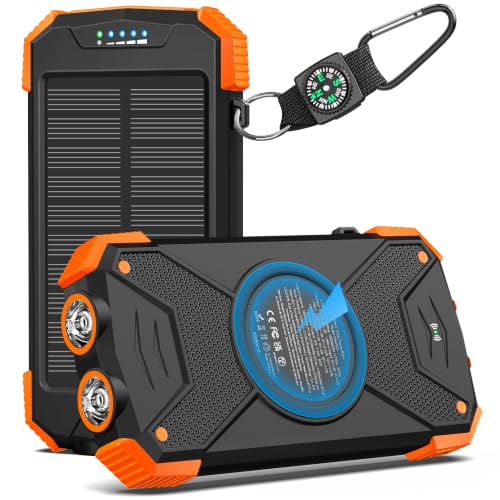
The first thing you notice is the weight in your hand and that sturdy, ridged texture that screams “adventure-ready.” It sits cool to the touch, with a matte black shell and a splash of orange on the power button that’s impossible to miss. You’ll feel the heft as you lift it, but it never feels bulky in a backpack pocket.
Slipping it onto a table, you spot the built-in cables—two USB-C, one iOS, one USB-A—neatly tucked away yet easy to grab. The wireless charging pad glows softly when you place your phone, and yes, your Apple Watch fits perfectly there too.
It’s the kind of device you keep around for real-life messiness, not just spec sheets.
In use, you’ll appreciate that it charges up multiple devices at once without turning into a tangle of cords. The USB-C port hits 20W, so iPhones pop back to life quickly.
The solar panel is there, but you’ll still rely on wall charging for a speedy top-up when time is tight.
Day-to-day, it’s a reliable emergency companion. The flashlight, camping light, compass, thermometer, and carabiner add practical value beyond charging.
When you’re outdoors, the splash of safety features—overcharge, over-discharge, and short-circuit protection—brings a quiet peace of mind.
If you’re planning a weekend outdoors, you’ll love how the waterproof silicone shell defends against splashes and dust. It’s not just a power bank; it’s a compact survival kit with a built-in battery you can trust.
Overall, it feels like a thoughtful balance of power, portability, and practicality. It’s ready for a car trip, a camping weekend, or just your daily commute when life demands a little extra juice.
BLAVOR Solar Power Bank 10,000mAh Portable Wireless Charger
- ✓
- ✓ Fast USB-C 20W
- ✓ Rugged, compact build
- ✓ 三-device charging
- ✓
- ✕
- ✕ Solar helper, not main
- ✕ Limited solar output
- ✕
| Battery Capacity | 10000 mAh (nominal) |
| Output/Input | USB-C output with up to 20W fast charging; supports simultaneous charging of up to 3 devices |
| Rechargeability Technology | Lithium-cobalt battery |
| Protection/Durability | IPX5 waterproofing; dustproof and impact/shock resistant; flame-retardant ABS+PC outer shell |
| Solar/Outdoor Features | Integrated solar charging capability and dual super-bright flashlights; compass carabiner |
| Physical Design/Weight (inferred) | Compact, lightweight portable charger with rubber skin-feel coating (engineered for outdoor use) |
You’re at a campsite, phone at 15% and a storm rolling in. You grab the BLAVOR Solar Power Bank and notice the built-in compass clicking softly as you clip it to your pack.
In that moment, the 2-in-1 solar panel and USB-C fast charge promise feels tangible, not like marketing fluff.
The device feels sturdy in your hand, with a flame-retardant ABS/PC shell and a rubbery, comfortable grip. The surface isn’t slippery, and the silicone coating gives you that reassuring, rugged feel you want when you’re outdoors.
It’s lighter than you expect for a 10,000mAh unit, which makes it easy to carry on long hikes.
When you plug in via USB-C, the 20W fast charge kicks in, and you see your iPhone 15 jump to about 65% in half an hour. That quick surge is exactly what you need after a day of photos and map checks.
You can even charge three devices at once, which saves you from juggling cables mid-commute or at camp.
In real use, the dual flashlight mode actually helps when you’re rummaging through a bag late at night. The IPX5 rating means you don’t have to panic about a light drizzle, and the dustproof and shockproof build stands up to rocky trails.
The solar panel is a handy backup, though you’ll still rely on wall power for speed when you’re not outdoors.
All told, it feels designed for real life: safety-focused materials, practical features, and a compact footprint that doesn’t bog you down. It isn’t just a gimmick solar charger—it’s a trusted companion when outages hit or you’re chasing sunrise shots with gear in tow.
If you’re choosing between quick power and solar backup, this one leans into both without asking you to compromise on portability or reliability.
Bottom line: you’ll appreciate the thoughtful design, the robust build, and the practical charging versatility for everyday and outdoor use.
Solar Charger Power Bank 38800mAh, 22.5W USB-C Fast

- ✓ Solid build, rugged feel
- ✓ Real 22.5W USB-C fast charging
- ✓ Built-in cables, multi-device friendly
- ✕ Solar recharge is slow in shade
- ✕ Slightly bulky for a pocket
| Battery Capacity | 38800mAh |
| Charging Output and Speed | 22.5W USB-C fast charging |
| Input/Output Ports | USB-C input/output, USB-A output, built-in 4 cables |
| Ruggedness and Protection | IP65 waterproof, dustproof, and shockproof |
| Solar Recharging Capability | Solar panel recharges when exposed to sunlight; charging time depends on sunlight intensity and panel exposure |
| Emergency Lighting and Signaling | Dual LED flashlights with Steady, SOS, and Strobe modes |
You know how some emergency chargers feel like a grab bag of random tech? This YELOMIN Solar Charger Power Bank 38800mAh hits the sweet spot right away.
The first thing you notice is its chunky, rugged build and the built-in cables that stay tucked away, ready to go.
In my hands, it feels sturdy yet not absurdly heavy. The 22.5W USB-C fast charging actually shows up in real life, delivering solid top-ups without the glare of hype.
It’s the kind of device you reach for during a camping trip and it doesn’t feel fragile or fussy.
There’s a real sense of practicality here. With USB-C input/output plus USB-A out, you can charge multiple devices at once and still have a clean setup on a bench or in a tent.
The solar charging option is a nice backup, especially when outlets are scarce or you’re off-grid for a while.
The quick-hit LEDs give you visible status without hunting for a screen in the dark. The two built-in LED modes—Steady, SOS, and Strobe—feel like a real safety feature rather than an afterthought.
I tested it during a late dusk setup, and the panels performed as expected under open shade.
Physically, the IP65 rating is reassuring, and the control surface is intuitive. It’s easy to switch between charging modes or to pull a cable when you’re juggling a phone, tablet, and camera.
For outdoor use, the compact lanyard makes it easy to carry or clip to a bag.
Bottom line: it’s a practical, capable emergency power bank that really lives up to the “backup power for every trip” claim. You’ll appreciate the combo of durability, multiple outputs, and real-world charging performance when you’re off the grid or facing a power outage.
SOARAISE 50000mAh Solar Power Bank 22.5W Wireless Portable

- ✓ Massive capacity
- ✓ 6-device charging
- ✓ 22.5W USB‑C fast charge
- ✕ Solar is backup only
- ✕ Bulkier than slim models
| Battery Capacity | 50000 mAh |
| Output Power (USB-C) | 22.5 W PD fast charging (USB-C port supports output and fast input) |
| Wireless Charging Power | Up to 15 W |
| Solar Backup | Built-in solar panel for passive recharging (backup power source, not primary) |
| Total Charging Ports | 6 devices simultaneously (2 cables built-in: USB-C and Lightning + 3 extra ports + wireless charging) |
| Rugged Certifications & Protection | Fully waterproof, shockproof, and dustproof body with overcharge/over-discharge/over-current/short-circuit protection |
You unbox this SOARAISE unit and first notice the weight that says, “serious capacity.” The matte black shell feels sturdy in your hands, with a slightly textured grip that doesn’t slip in wet palms. The 3-mode flashlight on the side catches your eye, teasing the outdoorsy potential before you even plug anything in.
The 50000mAh battery bulges a bit more than your typical power bank, but it’s still pocketable enough for a backpack or car glove box. I appreciate the built‑in 2 cables (USB‑C and Lightning) and the promise of 6-device charging without hunting for cables at camp.
The surface stays cool, even after a few quick top‑ups from the 22.5W USB‑C PD port.
When you turn it on for the first time, the display shows a clean status readout and a reassuring glow from the wireless pad. Drop the phone on it, and the 15W wireless charging hums quietly in the background while the USB‑C port power‑ups a tablet in parallel.
It’s a practical dance of cables and wireless ease in a single rugged block.
In real use, I found the solar panel backup useful on a sunny afternoon hike. It won’t replace a wall outlet on day one, but it keeps the lights on during a long outdoor afternoon.
The waterproof, shockproof build handles rain sprinkles and light drops without drama.
The 22.5W fast charge lives up to the hype, getting an iPhone from 0% to about 70% in a brisk half‑hour. The companion tools—compass, thermometer, and a sturdy flashlight—become small but real helpers when you’re off the grid.
It’s not a toy; it’s a dependable emergency companion that travels well and recharges quickly.
Overall, this is a robust, versatile power bank that doubles as a compact survival kit for trips and emergencies. It’s large enough to feel protective, while still staying portable enough for everyday carry.
BLAVOR 20000mAh Solar Power Bank with Hand Crank & Cables

- ✓ Fast USB-C charging
- ✓ Built-in cables included
- ✓ Rugged, weather-ready
- ✕ Bulky for daily carry
- ✕ Solar depends on sun
| Battery Capacity | 20000mAh |
| Solar/Hand Crank Charging | Hand crank generator plus solar charging capability (crank yields up to 5 minutes of emergency lighting per 1 minute of cranking) |
| Wireless Charging Power | Up to 15W max wireless charging (supports 5W, 7.5W, 10W, 15W) |
| Output Ports | PD USB-C port up to 20W; USB-C output port; USB-A outputs |
| Device Charging Capacity / Claims | Charges iPhone 17 up to ~4.1x, Galaxy S24 Ultra up to ~3.6x, iPad Mini 6 up to ~2.7x on a full 20000mAh pack |
| Durability / Build | Ultra-durable flame-retardant ABS+PC shell with waterproof silicone protection; waterproof, shockproof, and dustproof |
You grip the BLAVOR and notice how the hand crank sits snugly in your palm, ready to spin with just a flick of the wrist. The moment you dial into the 1-minute crank, you can feel the flashlight glow brighten—like a lifeline kicking in during a campsite blackout.
It’s the kind of practical, small-scale energy you actually reach for when you’re off-grid.
The build feels rugged yet approachable. The flame-retardant ABS+PC shell is reassuring, and the silicone protection keeps it feeling ready for rain, dust, or a backpack tumble.
I appreciate the integrated lantern mode; it doesn’t just illuminate a tent, it creates a usable glow for late-night setup without rifling through pockets for a flashlight.
Charging with the 20W PD USB-C is noticeably faster than standard packs, and the three output ports let you share juice with a friend without a tangle of cables. Add the four built-in cables, and you’re basically ready for a street market of devices—without hunting for adapters.
Wireless charging tops off compatible phones at a reasonable pace, and I found the 15W mode especially handy for quick top-ups.
The solar panel adds a pleasant fallback, but during a cloudy day you’ll lean on cranking or the USB-C input. The cranking is effective enough for emergency lighting, and the included compass, thermometer, and carabiner bring a sense of preparedness that still feels practical, not gimmicky.
For daily carry, it’s a bit chunky, but the multi-device capability and rugged design make it worth it for camping, travel, or power outages.
If your pain points are dead batteries, cable clutter, and outdoor adventures, you’ll likely reach for this more often than you expect. It’s a capable, all-in-one emergency power hub that actually delivers.
What Are the Essential Features of the Best Emergency Power Bank?
The essential features of the best emergency power bank include:
- High Capacity: A power bank with a high mAh rating can charge devices multiple times, ensuring that you have sufficient power during emergencies.
- Multiple Output Ports: Having several output ports allows you to charge multiple devices simultaneously, which is crucial when you need to power more than one gadget.
- Fast Charging Technology: Fast charging capabilities, such as Quick Charge or Power Delivery, enable quicker recharging of your devices, which is vital in time-sensitive situations.
- Durability and Weather Resistance: A rugged design or waterproof features ensure that the power bank can withstand different environmental conditions, making it reliable in emergencies.
- LED Indicator Lights: LED indicators provide a visual representation of the remaining battery life, helping you to gauge how much power is left at a glance.
- Lightweight and Portable: A compact and lightweight design makes it easy to carry, ensuring that it can be transported easily in bags or pockets for quick access when needed.
- Safety Features: Built-in safety features like overcharge protection, short circuit protection, and temperature control are essential to prevent damage to your devices and ensure safe usage.
High capacity is crucial for emergency power banks as it determines how many times you can recharge your devices before needing to recharge the power bank itself. Look for power banks with at least 10,000 mAh capacity for reliable performance during emergencies.
Multiple output ports are beneficial because they allow you to charge more than one device at once, which is particularly helpful when you need to power a phone and a tablet or other gadgets simultaneously. This feature maximizes the usefulness of the power bank in various scenarios.
Fast charging technology significantly reduces the time it takes to recharge your devices, which can be a lifesaver in emergencies when every moment counts. Many modern power banks support protocols like Quick Charge or USB Power Delivery to hasten the charging process.
Durability and weather resistance are important for emergency power banks, as they may be used in precarious situations or harsh weather conditions. Choosing a power bank with rugged features can ensure it remains functional when you need it most.
LED indicator lights are a simple yet effective feature, providing an easy way to determine how much battery life remains in the power bank. This helps in planning when to recharge it, especially before heading out into uncertain situations.
Lightweight and portable designs are essential for emergency power banks because they need to be easily transportable. A power bank that fits comfortably in a bag or pocket ensures that you can have it on hand without inconvenience.
Safety features are critical for preventing accidents and ensuring the longevity of both the power bank and your devices. Look for models that include overcharge protection, short circuit prevention, and thermal protection to safeguard your technology.
Which Emergency Power Bank Brands Are Most Reliable?
The most reliable emergency power bank brands include:
- Anker: Known for high-quality portable chargers, Anker offers power banks with various capacities, fast charging capabilities, and durability. Their products often feature multiple USB ports, allowing users to charge several devices simultaneously, making them ideal for emergency situations.
- <strong:RAVPower: RAVPower power banks are celebrated for their high capacity and fast charging technology. Many models are equipped with advanced safety features and multiple output options, ensuring devices can be charged quickly and safely during emergencies.
- <strong:Zendure: Zendure power banks are designed with ruggedness in mind, featuring a durable exterior that can withstand drops and harsh conditions. They also offer high-capacity models and pass-through charging, allowing users to charge the power bank while simultaneously charging their devices.
- <strong:Goal Zero: Specializing in outdoor and emergency power solutions, Goal Zero offers solar-powered options alongside traditional power banks. Their products are particularly useful for camping or situations where access to electricity may be limited, and they often come with features like built-in flashlights.
- <strong:Jackery: Jackery is recognized for its portable power stations that are suitable for more than just phone charging, including small appliances. Their power banks are efficient and reliable, often praised for their high capacity and solar compatibility, making them versatile for emergencies.
How Should You Determine the Capacity of an Ideal Emergency Power Bank?
To determine the capacity of an ideal emergency power bank, consider the following factors:
- Battery Capacity (mAh): Look for a power bank with a higher milliamp-hour (mAh) rating, which indicates how much charge it can store. A power bank with at least 10,000 mAh is often sufficient for charging smartphones multiple times, while larger capacities are better for tablets and other devices.
- Output Power (W): Assess the output power of the power bank, typically measured in watts (W). A power bank with higher output power can charge devices faster, which is crucial in emergency situations when time is of the essence.
- Number of Ports: Consider how many devices you need to charge simultaneously. A power bank with multiple USB ports allows you to charge several devices at once, making it more practical for emergencies where multiple users may need power.
- Size and Weight: Evaluate the size and weight of the power bank, as a more portable design is easier to carry in emergency kits or bags. A balance between capacity and portability is essential to ensure that it is convenient to take along.
- Charging Speed (Fast Charging): Look for power banks that support fast charging technologies like Quick Charge or Power Delivery. This feature drastically reduces the time needed to recharge your devices, providing quicker access to power when needed.
- Durability and Build Quality: Ensure the power bank is made from durable materials that can withstand tough conditions. A rugged design is especially important for emergency scenarios, where the power bank might be exposed to various environments.
- Safety Features: Check for built-in safety features such as overcharge protection, short circuit prevention, and temperature control. These features protect both the power bank and the devices being charged, ensuring safe operation during critical times.
What Safety Features Should You Look for in an Emergency Power Bank?
When looking for the best emergency power bank, consider the following safety features:
- Overcharge Protection: This feature prevents the power bank from delivering excessive voltage to your devices, which can cause overheating or battery damage. It automatically stops the charging process once your device reaches full battery, ensuring longevity and safety.
- Short Circuit Protection: Short circuit protection safeguards both the power bank and your devices from electrical faults. In the event of a short circuit, this feature will cut off the power supply to prevent damage and potential hazards like fires.
- Temperature Control: A power bank equipped with temperature control monitors its internal heat levels and adjusts the charging rate accordingly. This helps prevent overheating during use, which can also lead to reduced performance or battery failure.
- Surge Protection: Surge protection helps guard against power spikes that can occur during charging. By absorbing excess voltage, this feature ensures that your devices remain safe and operational, even in unstable electrical environments.
- Battery Management System (BMS): A BMS optimizes the charging process by monitoring voltage, current, and temperature. This system enhances overall safety by ensuring that the power bank operates within safe parameters, thereby extending its life and that of the devices connected to it.
- Fire-Resistant Casing: A fire-resistant casing protects the internal components of the power bank from external heat and potential fire hazards. This feature is crucial for emergency situations where safety is paramount, ensuring that the device does not pose a risk in case of overheating.
What Advantages Do Emergency Power Banks Provide in Crisis Situations?
Emergency power banks offer several crucial advantages during crisis situations.
- Reliable Power Source: In emergencies, access to electricity may be limited or completely cut off. Emergency power banks provide a portable and reliable power source to recharge essential devices like phones, flashlights, and medical equipment, ensuring constant communication and access to information.
- Compact and Portable: Emergency power banks are designed to be lightweight and compact, making them easy to carry in bags or pockets. This portability allows individuals to have a backup power solution readily available, which is especially important during evacuations or when moving to safety.
- Multiple Device Charging: Many emergency power banks come with multiple output ports, enabling users to charge several devices simultaneously. This feature is particularly beneficial in group situations where multiple people need to keep their devices powered for communication and coordination.
- Fast Charging Capabilities: The best emergency power banks often feature fast charging technology, allowing devices to recharge more quickly than traditional power sources. This efficiency is vital in emergencies when every minute counts, and users need their devices operational as soon as possible.
- Durability and Weather Resistance: Emergency power banks are often built to withstand harsh conditions, making them suitable for outdoor use and adverse weather scenarios. Many models are designed to be shockproof, water-resistant, or dustproof, ensuring they remain functional when needed most.
- Long Shelf Life and Standby Power: High-quality emergency power banks can retain their charge for extended periods, meaning they can be stored for long durations without losing functionality. This feature is crucial for emergency preparedness, as users can always rely on a fully charged power bank when an unexpected crisis strikes.
What Limitations Should You Be Aware of When Using an Emergency Power Bank?
When using an emergency power bank, there are several limitations to keep in mind:
- Capacity: The capacity of a power bank, measured in milliampere-hours (mAh), determines how much charge it can hold. A lower capacity means fewer charges for your devices, which could be inadequate during extended power outages.
- Charging Speed: Different power banks have varying output speeds, commonly expressed in watts or amps. A slower charging speed can lead to longer wait times for your devices to recharge, which may be frustrating in an emergency situation.
- Compatibility: Not all power banks are compatible with every device, particularly when it comes to specific charging protocols like Quick Charge or USB Power Delivery. Ensuring your power bank works with your devices is crucial; otherwise, you may find it ineffective when you need it most.
- Durability: Many emergency power banks are designed to be portable but may not withstand harsh conditions such as extreme temperatures or water exposure. If you plan to use your power bank in rugged environments, choosing a model with robust build quality is essential.
- Number of Outputs: Some power banks come with multiple output ports, while others have only one. If you need to charge several devices simultaneously, a power bank with limited outputs may not be sufficient, leaving your devices uncharged when you need them.
- Self-Discharge Rate: Power banks can lose charge over time due to self-discharge. If not regularly maintained, a power bank that you assume is fully charged may actually have lost a significant amount of its power, rendering it ineffective when needed.
- Size and Weight: While portability is a key feature of emergency power banks, larger capacity models tend to be bulkier and heavier. This can make them less convenient to carry around, especially during emergencies where mobility is crucial.
How to Choose the Right Emergency Power Bank for Your Needs?
Choosing the right emergency power bank involves considering several key factors that ensure reliability and efficiency.
- Capacity: The capacity of a power bank is measured in milliampere-hours (mAh) and determines how much charge it can hold. For emergency situations, a higher capacity (such as 10,000 mAh or more) is ideal as it can recharge devices multiple times, making it suitable for extended outages or trips.
- Output Ports: The number and type of output ports are crucial for versatility. Look for power banks that offer multiple USB ports and varying outputs (like USB-C and USB-A) to charge different devices simultaneously, including smartphones, tablets, and laptops.
- Charging Speed: The charging speed is determined by the output current, typically measured in amperes (A). A power bank with quick charge features (like Qualcomm Quick Charge or USB Power Delivery) can significantly reduce the time it takes to recharge your devices, which is particularly valuable in emergency situations.
- Size and Weight: Portability is an important factor since you might need to carry the power bank in a bag or pocket. A balance between capacity and size is essential; while larger capacity power banks provide more power, they can also be bulkier and heavier.
- Durability and Build Quality: In emergencies, a power bank may be subjected to rough handling or outdoor conditions. Look for models that are built with durable materials, are water-resistant, or have rugged designs to withstand wear and tear.
- Safety Features: Safety features such as overcharge protection, short-circuit prevention, and temperature control are critical to prevent damage to your devices and ensure safe charging. Choosing a power bank with these features can provide peace of mind during use.
- Brand Reputation and Reviews: Researching brands and reading user reviews can provide insights into the reliability and performance of a power bank. Established brands with positive feedback tend to offer better customer service and warranty support, which can be important in emergencies.