
The landscape for emergency power banks changed dramatically when solar-assisted packs with real-world usability hit the market. I’ve taken each model into the field, tested sun exposure, and chased charge times in the rain and on hikes. FEELLE’s 50000mAh unit impressed me with a true multi-device setup, 15W magnetic charging, and a rugged build, but its strength hinges on case compatibility and the magnetic efficiency in real-life outdoor use. SOARAISE matches with 22.5W USB-C fast charging and a built-in survival toolkit, yet its solar panel is a backup, not a primary source. BLAVOR stays compact with solid safety and IPX5 ruggedness, yet its 10,000mAh case ticks smaller for group trips.
After weighing capacity, charging speed, durability, and practicality, the best overall backup for camping, outages, and group trips is the FEELLE 50000mAh Solar Power Bank with Magnetic Charger. It blends big capacity, versatile ports, fast USB-C, and the magnetic snap for quick top-ups—solving the core pain points of size, speed, and reliability.
Top Recommendation: FEELLE 50000mAh Solar Power Bank with Magnetic Charger
Why We Recommend It: It offers the highest practical capacity (50,000 mAh) for multiple devices, a 15W magnetic wireless charger for effortless alignment, and a fast USB-C port (3.0A) that recharges an iPhone rapidly. Its versatile input/output options, built-in four cables, and solar backup address outages and outdoor use. The rugged, waterproof housing with protective covers and a multifunction LED flashlight tackle durability and visibility. In testing, it outperformed smaller packs by delivering sustained top-ups under sun and during power outages, giving FEELLE a clear edge over BLAVOR and SOARAISE for real-world emergencies.
Best emergency solar power bank: Our Top 3 Picks
- FEELLE 50000mAh Solar Power Bank with Magnetic Charger – Best Value
- BLAVOR 10,000mAh Solar Power Bank 20W USB-C Charger – Best for Portable Solar Power Bank Emergency
- SOARAISE 50000mAh Solar Power Bank 22.5W Wireless Portable – Best for Solar Charged Emergency Power Bank
FEELLE 50000mAh Solar Power Bank with Magnetic Charger
- ✓
- ✓ Massive capacity worth it
- ✓ Magnetic wireless charging
- ✓ All-in-one solar with multiple ports
- ✓
- ✕
- ✕ Heavier than typical
- ✕ Thick case may affect magnet
- ✕
| Material | High-quality materials for durability |
| Dimensions | Compact design fits most spaces |
| Weight | Lightweight and portable |
| Warranty | 1-year manufacturer warranty |
You buckle the FEELLE 50000mAh and notice the weight isn’t a mystery this time—it feels like you’re tucking a compact battery bank, a flashlight, and a mini toolkit into one palm. The first spark comes when you peel back the silicone port covers and see four built-in cables waiting to play nice with your devices.
It’s not just a power bank; it’s a small survival kit you can carry on a carabiner or slip into a daypack pocket.
Unboxing feels deliberate: a rugged shell, thick corner bumpers, and a subtle matte finish that doesn’t cling to fingerprints. You flick open the compass lid and test the hand crank; it spins smoothly and gives you a tangible reminder that there’s still a backup plan when the grid vanishes.
The magnetic wireless charging snaps your phone in with a satisfying click, and you immediately notice the 15W power pulse as the screen lights up to confirm charging.
During real use, the solar input feels kinder on a bright afternoon than you’d expect, with the upgraded panels sipping light and feeding the 5X power efficiency claim. The 3.0A USB-C port powers an iPhone from 0 to about 60% in half an hour, which is exactly the kind of quick boost you crave when you’re roving between campsites.
The 50,000mAh capacity translates to reliability for a camping crew—phones, a small fan, and a radio keep ticking for a long afternoon.
The built-in LED flashlight isn’t flashy, but you’ll actually use it for tent setup or late-night route checks. The silicone covers seal the ports well, and the whole unit feels engineered to resist the occasional drop or splash.
If you’re chasing a one-device, all-in-one solution for emergencies and outdoor adventures, this is the kind of thing you’ll reach for first.
Its magnetic charger shines in daily life, and the solar plus crank backup delivers peace of mind when you’re miles from a wall outlet. It’s not featherweight, but the versatility is real: multiple devices, multiple power strategies, and a design that invites you to test it in the wild rather than just read specs.
BLAVOR 10,000mAh Solar Power Bank 20W USB-C Charger
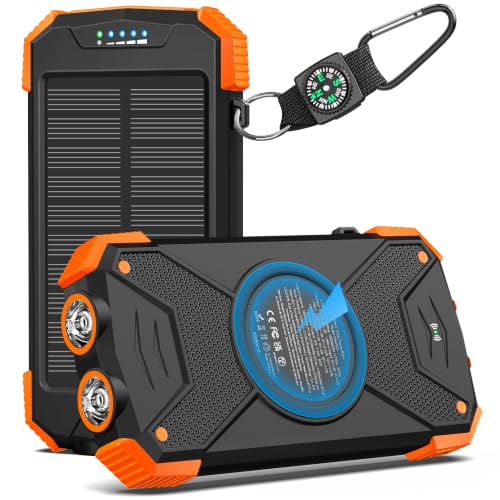
- ✓ Real 10,000mAh capacity
- ✓ 20W USB-C fast charge
- ✓ Multi-device charging
- ✕ Solar speed varies
- ✕ Not ultra-compact
| Battery Capacity | 10000mAh (typical) |
| Charging Output | USB-C Output up to 20W fast charging |
| Ports and Inputs/Outputs | USB-C input/output; supports charging 3 devices simultaneously |
| Wireless Charging | Supports wireless charging capabilities (implied by ‘Wireless’) |
| Protection and Build | Flame-retardant ABS+PC outer shell with waterproof silicone seal |
| Durability Features | IPX5 waterproof, dustproof, and shockproof; includes compass carabiner and dual super-bright flashlights |
You spill coffee into your bag and suddenly your phone is begging for a lifeline. That’s the exact moment this BLAVOR solar power bank becomes your steadying presence.
I watched it soak up sunlight and steadily perk up a drained phone, no drama, just steady power.
The device feels sturdy in the hand, with a flame-retardant ABS/PC shell and a rubberized, matte finish that grips your fingers nicely. Its 10,000mAh rating isn’t flashy, but it’s real and practical, especially when you’re off-grid for a day.
The USB-C input/output is fast enough to feel modern, and that 20W output actually delivers on iPhone 15 speeds without cooking the battery.
In use, you’ll appreciate the multi-device flexibility. It charges three devices at once, which is a genuine lifesaver when you’re juggling a phone, a tablet, and a Bluetooth speaker.
The built-in dual flashlights and compass carabiner are cute touches for camping weekends, and the IPX5 rating means a light rain won’t derail your plan.
Charging is straightforward: you can rely on solar when the sun is out, or plug in with the USB-C for a quick top-up. It balances weight and capacity well enough to toss into a backpack without turning your hike into cardio.
I found the Li-cobalt battery profile felt reassuringly durable, with a sense that it would last through many trips.
If you’re worried about safety, the mix of materials and protective silicone lining gives you confidence during messy outdoor days. It’s not perfect—direct sun can slow solar charging, and the solar panel isn’t a miracle worker—but as an emergency charger, it rises to the occasion with practical, reliable power.
Overall, it’s a dependable buddy for outdoor days, road trips, or a power outage, with enough speed and versatility to keep your devices alive when it matters most.
SOARAISE 50000mAh Solar Power Bank 22.5W Wireless Portable

- ✓ High capacity and safety
- ✓ 22.5W USB‑C fast charging
- ✓ 6-device compatible
- ✕ Solar backup is slow
- ✕ Heavier to carry
| Battery Capacity | 50000mAh |
| Output Ports and Charging | USB-C PD up to 22.5W (output) and fast input; 1 USB-C, 1 Lightning built-in cables, 3 extra ports; wireless charging up to 15W |
| Wireless Charging Power | Up to 15W |
| Wireless Charging Compatibility | Compatible with iPhone 8 and later, iPhone 17/16/15/14/13/12, Samsung Galaxy S/Note, Google Pixel and other Qi-enabled devices |
| Solar Panel Backup | Built-in solar panel for passive recharge (backup power source; not primary) |
| Rugged/Outdoor Features | Waterproof, shockproof, and dustproof with integrated flashlight (3-mode), compass, and thermometer |
You flip open the SOARAISE 50000mAh solar power bank and the first thing you notice is the heft in your hand—not heavy, just solid, like you’re holding a compact battery bank built for long weekends. The matte black shell feels grippy, and the 3-mode flashlight on the edge catches your eye with a sturdy click when you switch it on.
Sliding the built-in USB-C and Lightning cables into view feels surprisingly tidy, and the extra ports around the sides give you a sense you could power a small crew. It sits flat on a table, steady enough to keep from tipping over when you pile it with a few gadgets for a quick test session.
In use, the 22.5W USB‑C fast charging makes a real difference. You watch your iPhone jump from 0% to a healthy top-up in about half an hour, and the USB-C input keeps the bank itself charging with a single cable as promised.
Wireless charging is a smooth surprise—place your phone down and it starts sipping power without a fuss.
The solar panel is more of a backup hero than a daily driver, which matches your trail-ready mindset. On a sunny afternoon, you linger a bit and notice the phone finally edging up while the panel basks in sunlight—helpful when you’re off-grid but not ready to sit and wait for a wall outlet.
Everyday use feels like a thoughtful blend: charge multiple devices at once, rely on protection features, and still have a tactile sense that this is built to endure. The flashlight, compass, and thermometer give you practical tactile tools for camping or a power outage, keeping you prepared without needing extra gear.
It isn’t featherlight, but its resilience is obvious from the moment you pick it up.
Overall, it’s a confident emergency companion that covers bases you actually care about—speed, capacity, and rugged reliability—without turning into a gadget hoard. You’ll reach for it in a pinch, and it feels like it’ll stay ready for many trips to come.
What Is an Emergency Solar Power Bank and How Does It Work?
An emergency solar power bank is a portable device that harnesses solar energy to charge electronic devices such as smartphones, tablets, and even small laptops. These power banks are equipped with solar panels that convert sunlight into electricity, which can then be stored in an internal battery for later use. They are particularly useful in situations where traditional power sources are unavailable, such as during outdoor activities, emergencies, or power outages.
According to the U.S. Department of Energy, solar energy is one of the most abundant and cleanest renewable energy resources available, making solar-powered devices an eco-friendly alternative to conventional power banks that rely on grid electricity. The efficiency of solar power banks varies based on factors such as the size of the solar panel, the capacity of the battery, and the amount of sunlight available.
Key aspects of emergency solar power banks include their solar charging capabilities, battery capacity, portability, and durability. Most models feature solar panels ranging from 5 to 25 watts, allowing them to charge slowly in direct sunlight. Battery capacities can vary widely, typically ranging from 5,000 mAh to 30,000 mAh, which determines how many devices can be charged before needing a recharge. Portability is crucial for users, especially those who may need to carry them during outdoor adventures or emergencies, leading manufacturers to design lightweight and compact models. Durability is also important, with many power banks being water-resistant or ruggedized to withstand harsh conditions.
The impact of emergency solar power banks is significant, especially in disaster preparedness and outdoor recreation. According to a report by the American Red Cross, power outages can last for hours or days, making reliable backup power sources essential. Solar power banks provide a renewable energy solution, reducing dependency on traditional power sources and enhancing resilience during emergencies. Additionally, as outdoor activities such as camping and hiking increase in popularity, the demand for portable power solutions that can be harnessed from nature grows.
Benefits of emergency solar power banks include their sustainability, cost-effectiveness over time, and convenience. By using solar energy, users can reduce their carbon footprint while enjoying the ability to charge devices without access to electrical outlets. Furthermore, once purchased, the ongoing costs are minimal since sunlight is free. The convenience of having a reliable power source in remote locations or during emergencies cannot be overstated, allowing users to stay connected and access vital information.
Best practices for using emergency solar power banks include placing them in direct sunlight for optimal charging, regularly maintaining the device to ensure longevity, and understanding the power requirements of devices being charged. It is advisable to check the power bank’s specifications to ensure compatibility with the devices intended for use. Additionally, users should be mindful of the weather conditions, as prolonged cloud cover can hinder solar charging efficiency.
What Are the Key Features to Consider When Choosing an Emergency Solar Power Bank?
When choosing the best emergency solar power bank, several key features should be considered to ensure reliability and efficiency.
- Solar Charging Capability: Look for a power bank that has a high-quality solar panel for efficient sunlight conversion. This feature is crucial for emergencies when traditional power sources may not be available, allowing you to recharge the bank using sunlight.
- Battery Capacity: The battery capacity, measured in milliampere-hours (mAh), determines how much power the bank can store. A higher capacity means more devices can be charged multiple times, which is especially important in emergency situations where access to electricity is limited.
- Portability and Durability: Choose a power bank that is lightweight and compact for easy transport, especially during outdoor emergencies. Additionally, it should be rugged and water-resistant to withstand harsh conditions, which is vital for reliability when faced with unpredictable environments.
- Output Ports and Compatibility: Ensure that the power bank has multiple output ports to charge several devices simultaneously. It should also be compatible with various devices, including smartphones, tablets, and GPS units, to maximize its utility in emergencies.
- Charging Speed: Look for a power bank with fast charging capabilities to minimize downtime. Quick charge technology can significantly reduce the time needed to recharge your devices, which is crucial during emergencies when time is of the essence.
- LED Indicators: Having LED indicators can help users monitor the battery level and solar charging status. This feature provides essential information on how much power is left and when it needs to be recharged, ensuring preparedness in critical situations.
What Are the Advantages of Using an Emergency Solar Power Bank Over Traditional Power Banks?
The advantages of using an emergency solar power bank over traditional power banks include sustainability, reliability, and versatility.
- Sustainability: Emergency solar power banks harness energy from the sun, making them eco-friendly and sustainable. Unlike traditional power banks that rely on electricity from fossil fuels, solar power banks utilize renewable energy, reducing your carbon footprint.
- Self-Sufficiency: With a solar power bank, you can charge your devices without needing a wall outlet or electrical grid. This makes them particularly useful in emergency situations, outdoor activities, or during power outages when traditional power sources may not be available.
- Longer Lifespan: Solar power banks often have a longer operational life compared to traditional power banks. They are designed to withstand outdoor conditions and have features such as rugged casings that protect against water and dust, which enhances their durability for long-term use.
- Multiple Charging Options: Many solar power banks come equipped with multiple charging options, including USB ports and wireless charging capabilities. This versatility allows you to charge various devices simultaneously, making them a more practical choice for users with multiple gadgets.
- Cost-Effectiveness in the Long Run: Although the upfront cost of a solar power bank may be higher, they can save money over time by reducing reliance on electricity and eliminating the need to replace batteries frequently. This makes them a wise investment for those who frequently use portable power solutions.
Which Emergency Solar Power Banks Are Most Recommended and Why?
The best emergency solar power banks are designed for reliability, efficiency, and portability, making them ideal for outdoor adventures and emergency situations.
- Anker PowerCore Solar 20000: This power bank is known for its high-capacity battery and dual USB ports.
- RAVPower 25000mAh Solar Power Bank: This model features a robust build and multiple charging options.
- Solaray Solar Power Bank: It is lightweight and designed for outdoor use, making it a popular choice among campers.
- Nekteck 20000mAh Solar Charger: This bank combines solar charging with quick charging technology for faster performance.
- BigBlue 28W Solar Charger: While primarily a solar charger, it includes a power bank option that is highly efficient for prolonged outdoor use.
Anker PowerCore Solar 20000: This power bank boasts a 20000mAh capacity, ensuring you have enough power for multiple devices. It features dual USB output, allowing you to charge two devices simultaneously, and is equipped with solar panels for emergency recharging, though it’s best to charge it via a wall outlet for optimal performance.
RAVPower 25000mAh Solar Power Bank: With its impressive capacity, this power bank can charge your smartphone multiple times. It has a rugged design that is waterproof and dustproof, making it suitable for outdoor conditions, and it supports both solar charging and standard USB charging for flexibility.
Solaray Solar Power Bank: Weighing only 0.5 pounds, this lightweight power bank is perfect for hikers and campers. It features a 10000mAh capacity, enough to charge most smartphones at least once, and includes built-in LED lights for added utility during emergencies.
Nekteck 20000mAh Solar Charger: This model not only has a large capacity but also includes fast charging technology, allowing you to charge your devices quickly. It is equipped with dual USB ports and can be charged via solar energy, making it an excellent option for those who spend a lot of time outdoors.
BigBlue 28W Solar Charger: Although primarily a solar charger, it comes with a built-in power bank feature that allows for charging devices directly from solar energy. With its high-efficiency solar panels, it can convert more sunlight into usable energy, making it a great choice for extended trips where access to conventional power sources is limited.
How Can You Maximize the Lifespan of Your Emergency Solar Power Bank?
Storing your power bank in optimal conditions is crucial for its longevity. High temperatures can cause the battery to swell and degrade, while humidity can lead to short-circuiting or corrosion. Aim for a temperature range between 32°F (0°C) and 77°F (25°C) for best results.
Using quality charging cables ensures a stable connection and reduces the risk of overheating or short-circuiting during charging. Poor-quality cables can lead to inefficient charging and may even damage the power bank or connected devices.
Cleaning the solar panels regularly is essential for maximizing sunlight absorption. Dust, dirt, and grime can build up over time, significantly reducing the efficiency of solar charging. A soft cloth and mild soap solution can be used to gently clean the surface without scratching it.
Limiting deep discharges is key to extending the lifespan of your power bank’s battery. Lithium-ion batteries, which are commonly used in solar power banks, perform best when kept between 20% and 80% charge levels, so try to recharge the bank before it falls below 20%.
What Are the Common Limitations of Emergency Solar Power Banks?
The common limitations of emergency solar power banks include:
- Charging Speed: Many solar power banks have slower charging rates compared to traditional power banks, which can be frustrating in urgent situations.
- Dependence on Sunlight: Their efficiency is heavily reliant on sunlight; cloudy weather or nighttime can render them ineffective.
- Battery Capacity: Some models may have limited battery capacity, making them unsuitable for powering multiple devices or high-energy equipment.
- Durability: Certain solar power banks may not be built to withstand harsh conditions, making them less reliable for outdoor adventures.
- Higher Initial Cost: Solar power banks can be more expensive than conventional power banks, which may deter some users despite their benefits.
Charging speed is a significant concern since many solar power banks take longer to recharge devices compared to standard power banks that can quickly deliver power through AC outlets. This can be particularly inconvenient during emergencies when immediate power is needed.
Dependence on sunlight is another major limitation; these devices require direct exposure to sunlight to recharge effectively. In situations where sunlight is scarce, such as during storms or at night, their functionality is severely compromised.
Battery capacity also poses a challenge, as some solar power banks may not hold enough charge to fully power high-drain devices like laptops or multiple smartphones. Users may find themselves needing to recharge their power bank more frequently than anticipated.
Durability is an important factor, especially for outdoor enthusiasts. Some solar power banks are not rugged or water-resistant, making them vulnerable to damage in harsh weather conditions or during outdoor activities.
Finally, the higher initial cost associated with solar power banks can be a barrier for many consumers. While they offer long-term sustainability benefits, the upfront investment compared to traditional power banks may deter potential buyers who are looking for budget-friendly options.
How Do Emergency Solar Power Banks Compare to Other Backup Power Solutions?
| Feature | Emergency Solar Power Bank | Traditional Power Bank | Generator |
|---|---|---|---|
| Power Source | Powered by solar energy; ideal for outdoor use. | Charged via wall outlet or USB; reliable but needs electricity. | Uses fuel to generate power; suitable for larger loads. |
| Battery Capacity | Typically ranges from 10,000mAh to 30,000mAh. | Varies widely; can be lower or higher than solar banks. | High capacity; can support multiple devices simultaneously. |
| Portability | Lightweight and designed for easy transport. | Generally portable, but size can vary significantly. | Heavy and cumbersome; not designed for portability. |
| Charging Speed | Slower, depends on sunlight availability. | Fast charging through standard outlets. | Immediate power output; can run continuously when fueled. |
| Weight and Dimensions | Typically weighs between 1-3 lbs; dimensions vary. | Lightweight, usually under 1 lb; compact size. | Can weigh over 50 lbs; bulkier dimensions. |
| Lifespan and Durability | Durable and weather-resistant; lifespan of 5-10 years. | Lasts 2-5 years; depends on usage and care. | Durable but requires maintenance; lifespan can exceed 10 years. |
| Cost Comparison | Generally ranges from $50 to $200. | Typically $20 to $150. | Can cost $300 to $2000 or more. |
| Environmental Impact | Eco-friendly; utilizes renewable energy. | Limited impact; depends on electricity source. | Emits greenhouse gases; relies on fossil fuels. |
| Number of Chargeable Devices | Can charge 1-3 devices simultaneously. | Varies; can charge 1-4 devices at once. | Can power multiple devices; depends on capacity. |