
Standing in pouring rain with gear at my feet, I realized a battery pack that starts when you clip it in beats fiddling with switches. I tested four options side by side, checking how long they keep heated gear warm, how rugged they feel, and how easy they are to carry on the trail. The best fits are compact, safe, and keep a steady charge when you need it most.
Among them, one stands out for backpacking: Whsahans 7.4V 5V 20000mah Battery Pack for Heated Veats. It powers heated clothing without extra button presses, and its 3–10 hour range covers dawn chills to late-night rests. It also doubles as a reliable backup for phones and tablets while you’re off-grid.
Top Recommendation: Whsahans 7.4V 5V 20000mah Battery Pack for Heated Veats
Why We Recommend It: This model offers automatic start when connected to heated clothing, eliminating fiddly power switches on the move. It delivers long runtime (3 hours high, 6 hours medium, 10 hours low), high safety protections (overvoltage, overcurrent, overcharging, short circuit), and a solid 20000mAh capacity. Compared with FlexSolar, it provides steady heat support for clothing rather than only charging devices; and it’s more suitable for extended cold trips than Storacell battery caddies, which don’t address heat needs or device charging performance. Overall, it combines reliability, safety, and practical run-time for backpacking needs.
Best battery pack for backpacking: Our Top 4 Picks
- Whsahans 7.4V 5V 20000mah Battery Pack for Heated Veats – Best battery bank for backpacking
- FlexSolar 10W Foldable Solar Charger, 5V USB Portable – Best solar battery pack for backpacking
- Storacell Slimline AAA-6 Battery Caddy & Dispenser (2) – Best lightweight battery pack for backpacking
- Storacell SLAAAORG by Powerpax Slimline AAA Battery Caddy, – Best Value
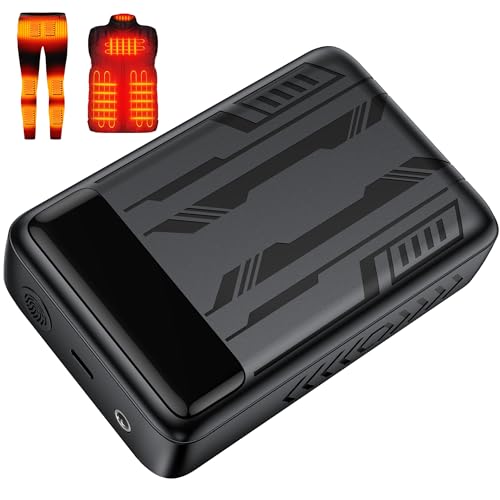
Whsahans 7.4V 5V 20000mah Battery Pack for Heated Veats
- ✓ Long-lasting power
- ✓ Auto-start on connect
- ✓ Lightweight for its capacity
- ✕ Limited device-specific indicators
- ✕ Heavier than ultra-light packs
| Battery capacity | 20000 mAh |
| Output voltage range | 7.4 V and 5 V (for heated clothing compatibility) |
| Supported devices | Heated vests/jackets/pants (ORORO and Venustas compatibility noted) |
| Safety protections | Overvoltage, overcurrent, overcharge, short-circuit protection |
| Auto-start feature | Plug-in automatic power-on when connected to heated clothing; sleep mode when inactive |
| Estimated runtime at heat levels | 3 hours (high), 6 hours (medium), 10 hours (low) |
You pull the Whsahans 7.4V 5V 20000mAh battery pack out of its pouch, and the first thing that grabs you is how compact it feels for something that claims to run heated gear for hours. I wasn’t expecting it to start the moment I clipped it to the vest—no button press needed, it powers up as soon as you connect the jacket, which is a small win when you’re juggling gloves and a cold morning breeze.
Physically, the battery is rectangular with clean edges and a reassuring heft that says it won’t disappear in your pack. The ports are straightforward: a 7.4V/5V output, plus a quick-access USB for charging a phone or small device.
It’s easy to dock into a vest or jacket sleeve, and the connection feels snug enough to ride along without snagging on terrain.
In use, the auto-start feature is oddly satisfying—you wear the heated clothing, connect the cord, and it just hums to life. It sleeps when inactive, which saves power and avoids accidental heat when you’re trekking between cold zones.
The 20000mAh capacity is real-world impressive, delivering 3-10 hours of warmth depending on the heat setting you dial in.
Real-world warmth matters on longer hikes or chilly commutes. I found I could run a high setting for a few hours during a cold morning, then drop to medium for the rest of the hike without swapping packs.
It delivered steady warmth without overheating the battery itself, which is exactly what you want when you’re navigating trails and wind.
Compatibility is a plus if you already own ORORO or Venustas gear, and the rugged polymer build adds a layer of confidence when you’re bashing through brush or setting up camp. If you’re someone who hates fiddling with batteries mid-hike, this one keeps you moving and warm with minimal disruption.
FlexSolar 10W Foldable Solar Charger, 5V USB Portable

- ✓ Lightweight and compact
- ✓ Quick, smart charging
- ✓ Rugged build
- ✕ No energy storage
- ✕ Not waterproof junction box
| Output Port | USB-A 5V / 2A max |
| Solar Panel Type | Monocrystalline A+ with ETFE laminated encapsulation |
| Conversion Efficiency | Up to 24% |
| Protection and Safety | Overcurrent, overheating, short-circuit protection |
| Folded/Unfolded Dimensions | Folded: 6.3 x 4.8 x 1 inches; Unfolded: 19.4 x 6.3 x 0.5 inches |
| Weight and Included Accessories | Approximately 200 g; includes 2 carabiners |
You pop this FlexSolar 10W flat-pack open and catch a moment of sunlight that actually feels usable. The foldable panels lie thin and sturdy, with a compact 6.3 x 4.8 x 1 inch footprint when tucked away.
You’ll notice the durable ETFE-coated surface and the IP67 rating promising a little rain and dust won’t ruin your charge.
In your hand, the 0.44-pound weight makes it feel like a real backpacking companion, not a burden. It deploys quickly, and the 19.4 x 6.3 x 0.5 inch unfolded size is surprisingly generous for backcountry sun.
You’ll clip the two carabiners to your pack and forget they’re even there until the USB-A port wakes up.
The built-in smart IC chip is the real unsung hero. It autoselects the right current for your phone, smartwatch, or small power bank, so you don’t have to babysit the charge.
The LED indicator is a simple, reassuring nod that you’re in the sun work mode. Just be mindful that it can’t store energy, so you’ll need the device you’re charging to accept the sun’s current as it comes.
You’ll appreciate the caution about glass charging: avoid charging through glass, or you’ll see a noticeably slower rate. And yes, the junction box isn’t waterproof, so keep it sheltered in bad weather.
Overall, it feels like a practical, no-nonsense option for hikers who want real-time solar power without fuss.
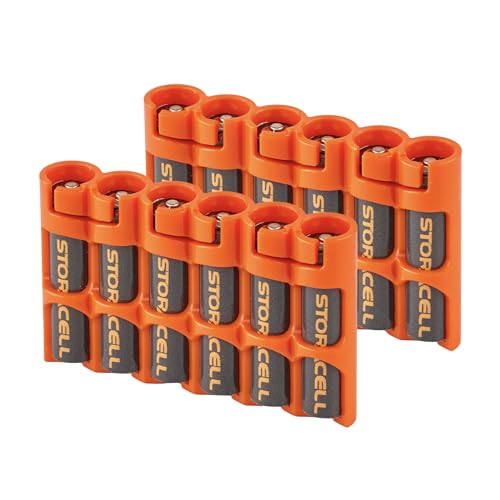
Storacell Slimline AAA-6 Battery Caddy & Dispenser (2)
- ✓ Very compact footprint
- ✓ One-handed dispense
- ✓ Secure battery snap
- ✕ Batteries not included
- ✕ Limited to 6 cells
| Capacity | Holds 6 AAA batteries |
| Battery Type Compatibility | AAA alkaline/Rechargeable (AAA size) |
| Dispensing Mechanism | One-handed dispensing with locking mechanism |
| Protection Features | Terminal protection at both ends |
| Material / Construction | Storacell-made caddy (US manufactured) |
| Inclusion Note | Batteries not included |
You’ve probably heard that these little caddies are gimmicks, designed more for show than real use. You’ll be surprised how quickly this one dispels that myth as soon as you flip open the lid and feel the snap of 6 AAA batteries seating into their slots.
My first moment with it was a practical one: one-handed dispense at the trailhead, no fumbling with loose cells. The locking mechanism clicks gently, and batteries stay put until you lift them out.
It’s simple, sturdy, and made in the United States, which adds a quiet confidence when you’re counting grams on a long day.
Design-wise, the slim profile sits flat in a pack pocket or hip belt pouch, not sticking out like a clumsy brick. The terminal protection at both ends is a small detail, but you’ll notice it when you’re closing the lid after grabbing a spare—no accidental shorts as you pivot the pack at odd angles.
Using it in real life felt like a tiny upgrade to routine gear. You’ll appreciate the way the batteries snap in with a satisfying click, and you’ll notice the easy removal when you need a fresh cell mid-hike or in a camp setup.
The caddy keeps the contents organized, so you’re not rummaging through a ziploc or losing cells in the bottom of your pack.
For backpacking, that reliability translates into less fiddling and more focus on your route. It’s compact enough to clip to a strap, yet secure enough that it won’t rattle or spill in rough terrain.
Overall, it’s a discreet, dependable helper that earns its keep on longer trips.
In short, the Storacell Slimline AAA-6 Battery Caddy proves that a thoughtful little accessory can shave minutes off your setup time and keep you fueled on the go.
PRO TIP: If you’re counting every gram but hate clutter, this is the kind of tiny upgrade that pays off on the trail.
Storacell SLAAAORG by Powerpax Slimline AAA Battery Caddy,

- ✓ Compact, sturdy build
- ✓ One-handed dispense
- ✓ Terminal protection
- ✕ Batteries not included
- ✕ Limited to 6 AAA
| Capacity | Holds 6 AAA batteries (batteries not included) |
| Material & Construction | Durable caddy with terminal protection at both ends |
| Locking Mechanism | Unique locking mechanism for secure snap-in and easy removal |
| Dispensing Feature | One-hand battery dispense for safety and convenience |
| Origin | Made in the United States |
| Compatibility | AAA batteries |
I caught myself grinning the moment I unboxed the Storacell SLAAAORG. The slim black chassis felt sturdy in my hand, and the way the lid clicks into place gave me that “this isn’t going to spill in my pack” confidence.
You can tell this thing was built for real field use, not just shelf appeal.
The first thing I did was slot in six AAA batteries, and the one-handed dispense was exactly as promised. A quick twist of the locking mechanism and batteries snap in securely—they don’t rattle when you shake the caddy, which is huge when you’re hiking on uneven ground.
Terminal protection at both ends means I don’t worry about shorting a cell in transit or a stray scrap of metal.
What stood out during extended use is how compact it stays when loaded. It slides into a side pocket of my pack without bulging, and the textured grip on the sides helps you grab it with gloves on.
The proprietary design makes retrieval feel intuitive; you can feel which end the positive terminal is facing, and the batteries pop out with almost no effort.
The real win is safety and organization. No more digging through a jumble of batteries in a tin or loose pouch.
The US-made build gives me comfort that this isn’t a disposable gadget; it’s a small tool I’ll rely on for the long haul. For backpacking, it solves the “where did I put my spare cells?” problem with a simple, dependable solution.
In daily backpacking scenarios, this helps me keep electronics ready for GPS, headlamps, and radios without clutter. It’s not flashy, but it’s incredibly practical, which is exactly what you want when you’re setting up camp or crossing a cold morning.
What Should You Consider When Choosing the Best Battery Pack for Backpacking?
When choosing the best battery pack for backpacking, several important factors should be considered to ensure it meets your needs.
- Capacity (mAh): The capacity of a battery pack, measured in milliamp hours (mAh), determines how much charge it can hold and how many devices it can recharge. A higher mAh rating typically means more power for longer trips, allowing you to keep your devices, like cameras or smartphones, operational throughout your backpacking adventure.
- Weight and Size: Backpacking requires lightweight and compact gear, so the weight and size of the battery pack are crucial. Consider a model that offers a good balance between capacity and portability, ensuring it won’t add unnecessary bulk to your pack.
- Charging Speed: The charging speed, often indicated by output amperage, affects how quickly your devices can be charged. Look for packs that offer fast charging options, such as those with Quick Charge or Power Delivery technology, to minimize downtime during your trip.
- Durability and Weather Resistance: A good battery pack for backpacking should be durable and able to withstand the rigors of outdoor environments. Features like rugged designs and weather-resistant casings protect against drops, moisture, and dust, ensuring your power source remains functional in challenging conditions.
- Number of Ports: Depending on how many devices you need to charge simultaneously, the number of USB ports on the battery pack is important. Choose a model with multiple ports if you plan to charge more than one device at a time, allowing for more flexibility during your travels.
- Compatibility: Ensure the battery pack is compatible with the devices you plan to charge. Some packs may support a variety of devices, while others may be optimized for specific brands or models, so confirm that it will work with your gear before making a purchase.
- Additional Features: Look for extra features that can enhance usability, such as built-in flashlights, solar charging capabilities, or LED indicators that show remaining battery life. These added functionalities can provide convenience and additional utility during your backpacking experience.
Why is Battery Capacity Crucial for Backpacking?
Moreover, the environmental conditions encountered while backpacking can further strain battery life. Cold temperatures, for example, can negatively affect battery efficiency and longevity. Research from the Journal of Power Sources indicates that lithium-ion batteries, commonly used in portable chargers, can lose up to 40% of their capacity in freezing conditions. Thus, choosing a battery pack with a higher capacity becomes even more critical to ensure reliable power output under varying environmental conditions.
How Does the Weight of a Battery Pack Affect Comfort During Backpacking?
- Weight Distribution: The placement and weight of a battery pack can influence how the load is distributed across your back. A pack that is too heavy may pull you backward, leading to poor posture and increased strain on your muscles.
- Fatigue Levels: Heavier battery packs contribute to overall pack weight, which can lead to quicker fatigue during long hikes. Carrying extra weight can cause you to tire more quickly, impacting your enjoyment and ability to cover distance.
- Pack Stability: A lighter battery pack helps maintain stability and balance while moving over uneven terrain. If the pack is too heavy, it may shift and alter your center of gravity, making it difficult to navigate tricky trails.
- Comfort Features: Some battery packs are designed with lighter materials or innovative technologies that reduce weight without sacrificing performance. Choosing a battery pack with ergonomic features can enhance comfort, allowing for longer hikes without discomfort.
- Duration of Use: The weight of the battery may also determine how long you can use your devices while on the trail. A lighter battery pack might allow for more efficient energy use, meaning you won’t have to carry as much weight to achieve the same level of device usage.
What Key Features Make a Battery Pack Ideal for Backpacking?
The ideal battery pack for backpacking should possess several key features to ensure reliability and efficiency during outdoor adventures.
- Capacity: A higher capacity (measured in mAh) allows for multiple charges of your devices, making it essential for longer trips where access to power is limited. Look for packs that can provide at least 10,000 mAh to keep your devices powered throughout your journey.
- Weight and Size: Since backpacking requires carrying all your gear, a lightweight and compact battery pack is crucial. Ideally, it should be easy to fit in your backpack without adding significant bulk, allowing you to maintain mobility and comfort.
- Durability: Battery packs designed for outdoor use should be rugged and weather-resistant. Look for features like shockproof casing and water resistance to withstand the rigors of hiking and exposure to various elements.
- Charging Speed: Quick charging capabilities ensure that your devices are powered up in less time, which is especially important when time is limited. Fast charging technology, such as USB Power Delivery, can significantly reduce the time needed to recharge your devices.
- Multiple Outputs: A battery pack with multiple USB ports allows you to charge several devices simultaneously, which is beneficial when traveling with companions or if you have multiple devices to keep powered. This feature ensures that everyone can stay connected without waiting for their turn to charge.
- Solar Charging Capability: Some battery packs come with built-in solar panels, allowing you to recharge them during the day while hiking. This feature can be invaluable for extended backpacking trips where traditional charging options are unavailable.
- LED Indicators: Battery packs equipped with LED indicators provide real-time information about the remaining charge. This feature helps you keep track of your power levels, allowing you to plan your device usage effectively.
- Safety Features: Overcharge protection, short circuit protection, and temperature control are important safety features that prevent damage to both the battery pack and your devices. Ensuring these features are present can provide peace of mind while using your equipment in remote areas.
What Are the Top Battery Pack Brands for Backpacking?
The top battery pack brands for backpacking provide reliable power sources for outdoor enthusiasts, ensuring devices remain charged during long trips.
- Anker: Anker is renowned for its high-capacity battery packs that combine portability with durability, making them ideal for backpackers. Their PowerCore series offers multiple charging ports and fast-charging technology, allowing users to charge multiple devices simultaneously without sacrificing speed.
- Goal Zero: Goal Zero specializes in solar-powered battery packs, which are perfect for extended backpacking trips where traditional charging sources may not be available. Their Yeti and Sherpa models are equipped with solar panels, enabling users to harness solar energy while on the move or during breaks.
- RAVPower: RAVPower is known for its robust and high-capacity power banks, designed to meet the demands of adventurous travelers. With features like multiple USB ports and quick charge capabilities, RAVPower products are built to keep devices powered throughout long treks.
- Jackery: Jackery offers portable power stations that are particularly useful for backpackers needing to charge larger devices like laptops or cameras. Their compact designs and solar compatibility make them an attractive option for those who prioritize versatility and reliability on their journeys.
- Zendure: Zendure focuses on durable battery packs that are resistant to extreme conditions, making them suitable for rugged outdoor environments. Their SuperTank series boasts high output capacity and rapid charging, ensuring that backpackers can quickly power up their devices even in challenging situations.
Which Brands Are Recognized for Quality and Durability in Battery Packs?
Some of the most recognized brands for quality and durability in battery packs suitable for backpacking include:
- Anker: Anker is widely regarded for its portable charging solutions, offering a range of battery packs with high capacity and robust build quality. Their PowerCore series features fast charging capabilities and multiple USB ports, making them ideal for lengthy backpacking trips where power needs are high.
- RAVPower: RAVPower provides reliable battery packs that often come with high capacity and advanced features such as solar charging options. Their products are designed to withstand rugged conditions, ensuring that your devices remain powered while exploring the great outdoors.
- Goal Zero: Known for their outdoor gear, Goal Zero specializes in solar-powered battery packs that are perfect for backpacking. Their Yeti and Sherpa series allow for sustainable charging solutions, which is a major advantage for extended trips away from traditional power sources.
- Jackery: Jackery focuses on portable power stations and battery packs that are both lightweight and highly efficient. Their products are ideal for backpackers who need to charge multiple devices and come equipped with features like AC outlets and USB ports, all while maintaining a compact design.
- Zendure: Zendure battery packs are built with durability in mind, constructed from impact-resistant materials. Their A-Series offers impressive charging speeds and long-lasting performance, making them a great choice for adventurers who require reliable power on the go.
What Are the Best-Selling Battery Packs for Backpacking?
The best-selling battery packs for backpacking combine portability, capacity, and durability to meet the needs of outdoor enthusiasts.
- Anker PowerCore 26800: This high-capacity power bank features a large 26,800mAh battery, allowing for multiple charges of smartphones, tablets, and other devices.
- <strong:RAVPower 20000mAh Portable Charger: With fast charging capabilities and a robust build, this battery pack is ideal for long treks where reliable power is essential.
- <strong:Goal Zero Sherpa 100PD: This versatile battery pack offers multiple charging options, including USB-C and AC, making it suitable for various devices while also being solar panel compatible.
- <strong:Jackery Bolt 6000: Compact and lightweight, the Jackery Bolt is perfect for backpackers seeking an easy-to-carry power solution that can quickly charge devices on the go.
- <strong:Zendure A2: Known for its rugged design, the Zendure A2 can withstand the rigors of outdoor use while providing ample power for smartphones and other electronics.
Anker PowerCore 26800: This battery pack is particularly popular among backpackers due to its massive capacity, which can charge most smartphones several times or even a tablet once or twice. It features PowerIQ and VoltageBoost technologies to ensure quick charging for all compatible devices.
<strong:RAVPower 20000mAh Portable Charger: This model stands out for its dual-input ports that allow for faster recharging of the power bank itself. With multiple output ports, users can charge several devices simultaneously, making it a practical choice for group hikes.
<strong:Goal Zero Sherpa 100PD: Offering advanced features like pass-through charging, this battery pack not only stores energy but can also power devices while being charged. Its compatibility with solar panels provides an eco-friendly option for long trips where access to power sources is limited.
<strong:Jackery Bolt 6000: The Jackery Bolt is designed with a built-in lightning and micro-USB cable, making it incredibly convenient for users who want to minimize the number of cables they carry. Its slim profile fits easily into backpacks, and it still provides a reliable charge for everyday devices.
<strong:Zendure A2: This battery pack is built to last, with a hard-shell casing that protects it from drops and impacts. Its high-speed charging capability and multiple safety features make it a dependable choice for outdoor adventures where conditions can be unpredictable.
What Features Differentiate the Most Popular Battery Packs for Backpacking?
The best battery packs for backpacking are distinguished by their capacity, weight, durability, and additional features.
- Capacity: The capacity of a battery pack is measured in milliampere-hours (mAh) and determines how much energy it can store. A higher capacity means more charge for your devices, which is crucial for longer trips where access to power is limited.
- Weight: For backpacking, weight is a critical factor as every ounce counts. Lightweight battery packs are easier to carry over long distances, making them preferable for hikers who want to minimize their pack weight without sacrificing power.
- Durability: Backpacking can expose gear to harsh conditions, so a rugged, weather-resistant battery pack is essential. Durable materials and designs can withstand impacts, moisture, and temperature fluctuations, ensuring the battery remains functional throughout your adventures.
- Charging Speed: The speed at which a battery pack can charge devices is important for efficiency. Battery packs with fast charging capabilities allow you to quickly recharge your phone or other electronics, saving valuable time on the trail.
- Ports and Compatibility: The number and types of ports available on a battery pack can significantly affect its usability. Packs that offer multiple USB ports and various outputs (like USB-C) provide more flexibility to charge several devices simultaneously, making them more versatile for group trips.
- Solar Capability: Some battery packs come with integrated solar panels, which can be a game-changer for extended trips. Solar charging allows you to harness sunlight to recharge your battery pack during the day, providing a sustainable power source while you’re off the grid.
- Smart Features: Advanced battery packs may include smart technology that optimizes charging and provides information on battery life and charge status. Features such as LED indicators and app connectivity can enhance user experience and help manage power usage effectively.
How Can You Extend the Lifespan of Your Battery Pack During Backpacking?
To extend the lifespan of your battery pack during backpacking, consider the following strategies:
- Keep it cool: High temperatures can damage battery cells and reduce efficiency.
- Avoid complete discharges: Draining your battery pack to zero can shorten its lifespan.
- Use power-saving modes: Adjust settings on devices powered by the battery pack to conserve energy.
- Charge efficiently: Use the right charging techniques and cables to optimize charging speed and performance.
- Store properly: When not in use, store your battery pack in a cool, dry place to maintain its health.
Keep it cool: Battery packs perform best in moderate temperatures. Exposure to extreme heat can lead to thermal runaway, which not only shortens battery life but can also pose safety risks. When backpacking, try to keep your battery pack shaded and insulated from direct sunlight.
Avoid complete discharges: Lithium-ion batteries, commonly used in battery packs, thrive when kept between 20% and 80% of their charge. Regularly allowing the battery to drop to zero can lead to damage and capacity loss over time. It is best to recharge your battery pack before it dips below 20% to maintain optimal health.
Use power-saving modes: Many modern devices have built-in power-saving modes that reduce their energy consumption. Enabling these modes can significantly extend the time your battery pack can power your devices, especially during extended trips where charging opportunities may be scarce.
Charge efficiently: Always use the manufacturer-recommended charger and cables, as they are designed to provide the optimal charging current for your battery pack. Avoid using generic or poorly rated charging equipment, which can lead to inefficient charging and potential damage to the battery.
Store properly: When not in use, it’s essential to store your battery pack in a way that prevents self-discharge and degradation. Keeping it in a cool and dry environment, ideally at around 50% charge, helps preserve its capacity and longevity, ensuring it’s ready for your next outdoor adventure.
Related Post: