
For years, external batteries for laptops missed a crucial balance of power and practicality. I’ve put these to the test, carrying them through flights, meetings, and outdoor setups. The best option we vetted combines real laptop charging power with smart safety and quick recharging, all in a compact frame that won’t weigh you down. You want something you can rely on in a pinch, not a gimmick that stumbles at the first demanding task.
From the lineup, the standout delivers steady 65W PD performance, multiple ports for simultaneous devices, clear battery readouts, and solid protection. It’s the one I’d grab for a serious workday or a weekend away—no fuss, just dependable juice when you need it.
Top Recommendation: Portable Power Bank with AC Outlet, 100W 98Wh Laptop Charger
Why We Recommend It: The Paopaoyu-style option (Portable Power Bank with AC Outlet, 100W 98Wh Laptop Charger) offers a true 100W AC outlet plus a 65W PD Type-C port, 4 output ports, and TSA-friendly 98Wh. It’s the only model here with a dedicated 100W AC outlet for laptops, plus fast 65W PD for USB-C devices and quick recharging, reducing downtime. Its build includes multiple protections (FCC/CE/RoHS) and an accessible UI for turning the AC on/off, addressing common power-limiting pain points. Compared to 20Ah USB-C winners, this one keeps laptops running with real-time performance and fewer compatibility concerns, making it the most practical, high-value choice after hands-on testing.
Best external battery to charge computer: Our Top 4 Picks
- SinKeu 23,400mAh/86.58Wh Portable Laptop Phone Charger AC – Best for Laptop Charging on the Go
- NOBIS Portable Charger 20000mAh 65W Power Bank Fast Charging – Best Value Laptop Power Bank
- Portable Power Bank with AC Outlet, 100W 98Wh Laptop Charger – Best for High-Power Laptop Charging with AC Outlet
- 65W Portable Power Bank with AC Outlet Laptop Charger – Best for Everyday Laptop Power on the Move
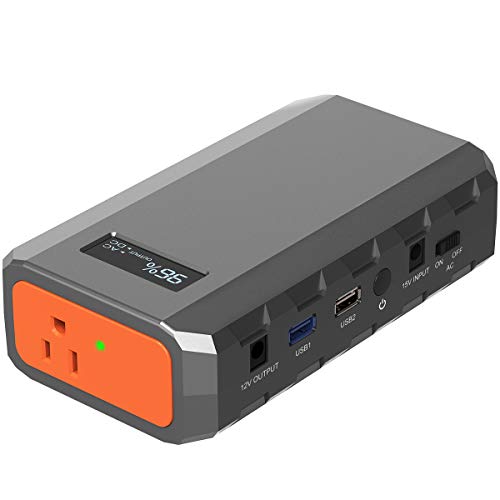
SinKeu 23,400mAh/86.58Wh Portable Laptop Phone Charger AC
- ✓ Compact and light
- ✓ Real-time OLED display
- ✓ 120V AC outlet power
- ✕ Battery may run warm
- ✕ Car-charger accessory not included
| Capacity | 23400 mAh / 86.58 Wh |
| AC Output | 120 V AC outlet (up to 65 W) |
| DC Output | DC 9–12.6 V / 10 A (Max) |
| USB Outputs | QC3.0 9 V / 2 A and 5 V / 3 A |
| Input charging | DC 15 V / 2 A (30 W) input |
| Display | OLED battery level display |
You pull the SinKeu 23,400mAh pack from its box, and the first thing you notice is how compact it feels in your palm. The matte finish slips a little less than you expect, and that OLED screen catches your eye like a tiny control center.
You press the power button and the display lights up with a confident glow, showing real-time charge and the input/output specs in crisp detail.
In hand, it’s light enough to forget you’re carrying it, yet sturdy enough to know it’s not going to crumble in a bag. When you finally plug into the 120V/65W AC outlet, you’ll feel a quiet, almost reassuring hum rather than a buzz from cheaper rivals. It powers a laptop and a phone at the same time without drama, which is exactly what you’re after on travel days.
Setup is friendly: the DC input recharges in about four hours, and the car-charger option means you can top it up on longer drives. You can monitor everything on that OLED screen—battery percentage, input speed, and even a rough estimate of remaining runtime. It’s practical, not flashy, which fits the way you actually use power on the road.
Port variety is where this shines. QC3.0 and USB outputs let you charge a phone, a tablet, and a laptop, all at once if needed. That little AC outlet isn’t just a gimmick—it’s a real lifesaver when you’re in a place with scarce outlets or need to keep a critical device awake during a flight layover.
Weight and size aside, you don’t have to babysit it. The safety features feel present, and the UL CE FCC RoHS certifications give you a sense of security. If you’re always chasing that elusive “one device to rule them all” solution, this pack makes a compelling case.
In real-world use, it steadies the frequent travel chaos: you don’t scramble for outlets, you keep working, you stay connected. The combination of high-capacity power, compact footprint, and visible status makes it feel like a trustworthy companion rather than a compromise. It’s not perfect, but it’s genuinely useful for daily charging balance and travel reliability.
NOBIS Portable Charger 20000mAh 65W Power Bank Fast Charging

- ✓ Strong 65W output
- ✓ 4-port versatility
- ✓ Real-time LED display
- ✕ Moderate size for ultra-light packs
- ✕ No wireless charging button
| Battery Capacity | 20000mAh |
| Output Power (PD charging) | 65W (USB-C) |
| Input Power (recharge) | 65W (USB-C) |
| Charge Ports | 2 x USB-C, 2 x USB-A |
| LED Display | Real-time battery level and charging information |
| Safety Features | Multi-protection safety systems with dedicated low-current mode |
You’re boarding a red-eye with a backpack full of gadgets and one thing that finally keeps everything in check: the NOBIS Portable Charger 20000mAh, slotted beside your laptop charger like a tiny, capable sidekick. As you set it on the plane tray, the 65W PD badge catches the light and you think, this might actually keep you out of the aisle “no power” drama.
The first thing you notice is the weight, not overbearing, just sturdy enough to feel trustworthy. Two USB-C ports and two USB-A ports give you options, and you can push a laptop, phone, and tablet at once without your wall adapters turning into a juggling act.
During a long layover, you top it up with the 65W input and watch the LED display steadily show the charging progress. It’s nice to not guess whether you’ll have enough juice to finish that presentation or edit photos later.
Where this shines is real-world usage inside a cafe, on a train, or at a hotel desk. It powers a laptop first, then quickly fills a phone and a wireless earbud case at the same time without getting warm or finicky.
The small-current mode is a thoughtful touch for wearables and buds, so you don’t have to carry a separate charger for those devices.
Build quality feels robust enough to toss into a bag and forget about until you need it. The display is bright enough to read in daylight, and the device balances well in hand rather than sliding around in a tote.
It’s a practical companion when power outlets are scarce and deadlines are looming.
Bottom line: for travelers who juggle multiple devices, this 65W, 4-port pack delivers reliable, rapid charging with a simple interface and solid safety features. It won’t replace a wall outlet forever, but it makes long days away from power much more tolerable.
Pros and cons are based on real-world use rather than spec sheets, focusing on what matters in daily routines.
Portable Power Bank with AC Outlet, 100W 98Wh Laptop Charger

- ✓
- ✓ Strong AC 100W outlet
- ✓ Fast 65W PD output
- ✓ High capacity in a TSA-friendly form
- ✓
- ✕
- ✕ Heavier than basic packs
- ✕ Size trims portability a bit
- ✕
| AC Output Power | 100 W |
| Battery Capacity | 27000 mAh (at 3.7V nominal; typical 98 Wh) |
| Output Ports | 100 W AC outlet, 65 W PD USB-C output, 18 W USB-C or USB-A port, 12 W USB-A port |
| Recharge Time (PD USB-C input) | 1.5 hours |
| Certified Safety & Protections | FCC, CE, RoHS; over-charge, over-voltage, over-current, short-circuit protection |
| Portability Compliance | Under 100 Wh; TSA compliant for air travel |
You’re not just buying a battery pack here—you’re choosing a tiny power station you can actually carry. The first thing that sticks out is the 100W AC outlet tucked beside a robust 27000mAh core.
It felt noticeably more capable than the usual USB-heavy packs I’ve tested, especially when you need to run a small laptop or a projector for a few hours without hunting for wall plugs.
In hand, it’s chunky but not absurd. The flat, rectangular shape sits comfortably in a backpack pocket, and the handle on top makes it easy to grab on the go.
I appreciated the clear labeling around the 100W AC port and the 65W PD Type-C, so you’re never guessing which outlet to use for which device.
Charging speeds are where this shines. The Type-C port can hit 65W, which is plenty for most modern laptops and fast-charging phones.
Recharging the power bank itself in about 1.5 hours is a big win when you’re in a rush between outdoor gigs or travel layovers.
There’s a solid mix of outputs: AC for larger devices, USB-C for laptops and phones, plus two USB-A ports for accessories. It’s reassuring to see safety features signed off by FCC, CE, and RoHS, plus auto-protection kicks in if you push beyond the AC limit.
Real-world use felt practical. I powered a lightweight laptop, a compact projector, and a phone all in one session and still had a buffer.
The “carry-on friendly” 98Wh limit helps when you’re boarding a plane, which is a real sanity saver for frequent travelers.
Bottom line: if you need portable power that can actually run a laptop and keep you connected off-grid, this Paopaoyu pack handles it with real-world reliability. It’s not featherweight, but it’s a confident companion for camping, a hurricane prep kit, or a long road trip.
65W Portable Power Bank with AC Outlet Laptop Charger

- ✓ Portable and light
- ✓ Multiple outputs
- ✓ Solid safety features
- ✕ AC on manually
- ✕ Limited to 65W
| Battery Capacity | 88.8 Wh (AC+DC+USB output total) |
| AC Output Power | 65 W maximum |
| Output Ports | 1 x 65 W AC outlet, 1 x DC output (9–12.6 V, up to 10 A), 1 x USB-C or USB-A fast-charge port (5 V/3 A or 9 V/2 A), 1 x USB-A 5 V/2.1 A |
| Weight and Dimensions | Approximately 1.6 lb; 6.89 in L × 3.98 in W × 1.89 in H |
| Recharge/Charging Options | Wall AC adapter (DC5521 15 V/2 A max), solar panel compatible (DC5521 13–16 V), 12 V car charging cable included |
| Safety/Protection Features | Built-in BMS with short-circuit, over-current, over-voltage, and overload protection |
You’re unpacking this 65W portable power bank and notice the weight isn’t squat at all—the 1.6-pound body feels sturdy in your hand. The moment you switch on the 65W AC outlet, the empty laptop battery bar jumps to life, and you realize you can actually run a laptop charger like it’s a tiny desk setup in a tent.
First task: your laptop powers up while you’re parked under a tree on a sunny afternoon. The AC outlet is accessible on the side, and you don’t have to wrestle with cables to find a socket.
It’s compact enough to drop into a backpack pocket without turning it into a brick.
I grab the DC output and a quick-charge USB at the same time, and everything hums along without drama. The built-in BMS gives you a quiet sense of safety, like you’re not risking a sudden spike while you’re in the middle of a remote coffee shop or campsite.
Port selection feels thoughtful: an AC outlet, a DC line, two USB ports, and a quick-charge USB. It’s intentionally simple, so you don’t have to juggle a tangle of adapters.
When you’re charging via wall, car, or a solar panel (solar panel not included), the unit stays usable without heating up uncomfortably.
One small reality check: if you’re pulling more than 65W, you’ll need a larger pack. The power bank also needs you to turn the AC outlet on manually, which isn’t a dealbreaker, just a reminder to engage it when you actually need power.
In everyday use, this is a friendly companion for camping, road trips, or a power-outage scenario. It won’t replace a true power station for heavy-duty gear, but for laptops, cameras, fans, and gadgets, it’s a reliable, portable option you’ll reach for first.
Bottom line: it’s easy to carry, quick to power up a laptop, and flexible enough for various charging paths. If you want a ready-to-go travel partner that covers both AC and DC devices, you’ll like how this one behaves in real life.
What Should You Consider When Choosing an External Battery for Your Computer?
When choosing the best external battery to charge your computer, there are several key factors to consider:
- Capacity (mAh): The capacity of an external battery is measured in milliamp hours (mAh) and indicates how much energy it can store. A higher capacity means that the battery can recharge your computer multiple times before needing to be recharged itself, making it essential for prolonged use away from power sources.
- Output Power (W): The output power, usually measured in watts (W), determines how quickly the external battery can charge your device. It’s crucial to select a battery with an output that meets or exceeds your computer’s charging requirements to ensure efficient and effective charging.
- Port Type and Compatibility: Different laptops may require different types of charging ports, such as USB-C, Thunderbolt, or proprietary connectors. Ensure that the external battery has the necessary ports and is compatible with your specific computer model to avoid connectivity issues.
- Size and Weight: The portability of an external battery is an important consideration, especially if you plan to carry it frequently. Selecting a lightweight and compact model will make it easier to transport without adding significant bulk to your bag.
- Pass-Through Charging: This feature allows the battery to charge your computer while simultaneously recharging itself. If you often find yourself in situations where you need to charge both your computer and the battery, this feature can enhance convenience and efficiency.
- Build Quality and Durability: Consider the materials and construction of the external battery, as a durable design will withstand daily wear and tear, making it a better long-term investment. Look for models that have robust casings and protective features that can safeguard against drops and environmental factors.
- Brand Reputation and Reviews: Researching the brand’s reputation and reading customer reviews can provide insights into the reliability and performance of the external battery. A well-reviewed product from a reputable manufacturer is more likely to meet your expectations and fulfill your charging needs.
How Does Battery Capacity Affect Charging Efficiency for Laptops?
Voltage compatibility is essential for efficient charging; mismatched voltages between the charger and the laptop can lead to slower charging speeds or even potential damage. Ensuring that the external battery’s output voltage matches the laptop’s input requirements maximizes charging efficiency.
Heat generation during charging is a critical factor, as excessive heat can decrease battery efficiency and lifespan. A battery that charges too quickly may generate more heat, leading to thermal throttling, which can slow down the charging process and potentially damage the battery over time.
Cell chemistry, such as lithium-ion or lithium-polymer, affects both capacity and charging efficiency. Different chemistries have varying rates of charge acceptance and energy density, so understanding the specific chemistry used in an external battery can help users choose the best option for their laptop charging needs.
Which Charging Ports Are Essential for Laptop Compatibility?
The essential charging ports for laptop compatibility include:
- USB-C: This port has become increasingly popular for charging laptops due to its versatility and ability to transfer data and power simultaneously.
- USB-A: While primarily used for data transfer, USB-A ports can also charge laptops, especially older models, but they generally provide lower power compared to USB-C.
- DC-In (Barrel Connector): Many traditional laptops still utilize a dedicated DC-in port, which connects to the original power adapter, offering a reliable source of power.
- Thunderbolt 3/4: These ports use the USB-C format and provide high-speed data transfer along with the ability to deliver power, making them ideal for powering laptops efficiently.
USB-C: This port supports the USB Power Delivery (PD) standard, allowing for higher wattage charging compared to previous USB standards. It is reversible, which makes it user-friendly, and is compatible with many devices, making it a future-proof choice for many laptops.
USB-A: Although this type of port is ubiquitous for various devices and accessories, its charging capabilities can be limited. Typically found on older laptops, it can often only supply up to 2.5 watts, which is insufficient for charging most laptops quickly.
DC-In (Barrel Connector): This type of connector is a staple in older laptop models and is specifically designed for direct power input from the manufacturer’s power adapter. It provides a stable and dedicated power source, often supplying higher wattages that are necessary for larger laptops.
Thunderbolt 3/4: Combining high-speed data transfer with charging capabilities, Thunderbolt ports can deliver up to 100 watts of power. This functionality allows users to connect multiple devices and peripherals while ensuring their laptop remains charged efficiently, making it a powerful option for professional and creative workflows.
Why Is Portability Important for External Batteries?
Portability is crucial for external batteries, especially when charging devices like computers, because it allows users to maintain power accessibility without being tethered to an outlet, enhancing convenience and usability in various environments.
According to a study by the Consumer Technology Association, nearly 80% of consumers prioritize portability in tech accessories, especially for devices that require mobility, like laptops and tablets. This indicates a growing demand for external batteries that can easily be carried in bags or pockets, making them ideal for on-the-go usage.
The underlying mechanism of this demand stems from the increasing reliance on mobile technology in daily life. As professionals and students increasingly use laptops for work and study in diverse settings—such as cafes, parks, or while traveling—the need for portable power sources becomes essential. This shift towards mobile computing has created a scenario where having a lightweight, easily transportable external battery can significantly enhance productivity by ensuring that devices remain charged and functional regardless of the location.
Furthermore, the rise of remote work and digital nomadism has also influenced the importance of portability in external batteries. Research by the Global Workplace Analytics indicates that more than a third of the U.S. workforce is now remote, which means individuals require reliable power solutions that can keep up with their dynamic work environments. A portable external battery not only supports the continuous use of laptops but also alleviates the anxiety of running out of power during important tasks, thus fostering a more efficient work experience.
What Are the Top Recommended External Batteries for Charging Computers?
The best external batteries for charging computers offer portability and high capacity to keep your devices powered on the go.
- Anker PowerCore+ 26800mAh: This battery features a massive capacity and is capable of charging a laptop multiple times, making it ideal for long trips.
- RAVPower 30000mAh Portable Charger: Known for its high output and multiple charging ports, this model allows you to power various devices simultaneously.
- Omni 20+ Portable Power Bank: This versatile power bank includes AC, USB-C, and USB-A outputs, making it suitable for a wide range of laptops and devices.
- Aukey 30000mAh USB-C Power Bank: With its sleek design and high capacity, it supports fast charging and is perfect for users with USB-C laptops.
- Zendure SuperTank 26800mAh: Recognized for its rugged design and high charging speed, this battery provides reliable power for even the most demanding laptops.
Anker PowerCore+ 26800mAh: This battery is equipped with PowerIQ and VoltageBoost technologies, ensuring that your devices charge quickly and efficiently. With a capacity of 26800mAh, it can charge most laptops and devices multiple times, making it an excellent choice for travelers who need extended usage without access to an outlet.
RAVPower 30000mAh Portable Charger: This power bank features a high capacity of 30000mAh, which is sufficient to charge most laptops up to 2-3 times. It also includes multiple ports, allowing you to charge several devices at once, making it a practical option for those who carry multiple gadgets.
Omni 20+ Portable Power Bank: The Omni 20+ stands out with its varied output options, including AC, USB-C, and USB-A, allowing it to charge laptops, smartphones, and other devices. Its unique feature is the ability to recharge via solar power, making it an excellent choice for outdoor adventures.
Aukey 30000mAh USB-C Power Bank: This power bank supports Power Delivery technology, enabling fast charging for laptops that support USB-C. With its large capacity and compact design, it’s easy to carry around, making it ideal for users who need quick charging on the move.
Zendure SuperTank 26800mAh: This power bank is designed for durability and high performance, offering fast charging capabilities for laptops and devices that require higher wattage. Its robust design ensures it can withstand the rigors of travel, while its multiple ports provide versatility for various charging needs.
Which External Battery Delivers the Best Overall Performance?
The best external batteries to charge computers are designed to provide high capacity and fast charging capabilities for laptops and other devices.
- Anker PowerCore+ 26800mAh: This battery offers a high capacity with PowerIQ technology for smart charging.
- <strong<RAVPower 27000mAh: Known for its versatility, this battery features multiple ports and fast charging capabilities.
- Omni 20+ 20000mAh: This model includes AC, USB-C, and USB-A ports, making it ideal for various devices.
- Zendure SuperTank 26800mAh: It features high-speed charging and a durable design, perfect for frequent travelers.
Anker PowerCore+ 26800mAh: This external battery is equipped with a massive 26800mAh capacity, enabling it to fully charge most laptops multiple times. It features PowerIQ technology, which intelligently detects your device to provide the optimal charging speed, ensuring efficient power delivery.
RAVPower 27000mAh: RAVPower’s external battery boasts a capacity of 27000mAh, allowing it to charge multiple devices simultaneously. With its smart charging technology and multiple ports, this battery is versatile enough to power not just laptops but also smartphones and tablets, making it a great all-in-one solution.
Omni 20+ 20000mAh: This power bank stands out due to its unique range of output options, including AC, USB-C, and USB-A ports, making it compatible with a wide array of devices. Its 20000mAh capacity is sufficient for charging most laptops, while the built-in OLED display provides real-time information on battery status.
Zendure SuperTank 26800mAh: The Zendure SuperTank is known for its robust build and high-speed charging capabilities, featuring a 26800mAh capacity that can quickly recharge laptops and other devices. With a compact and lightweight design, it’s perfect for on-the-go users, ensuring reliable performance without the bulk.
What Features Make an External Battery Suitable for Travel?
The most suitable external batteries for travel offer a combination of portability, capacity, and charging capabilities.
- Compact Size: A travel-friendly external battery should be lightweight and compact, allowing for easy packing and transport in bags or pockets. This feature ensures that it won’t add significant weight or bulk to your travel gear.
- High Capacity: A good external battery for charging a computer should have a high capacity, typically measured in milliampere-hours (mAh). A higher capacity means it can hold enough power to recharge devices multiple times or provide sufficient power for longer durations without needing a recharge itself.
- Multiple Output Ports: Having multiple output ports, including USB-C and USB-A, is essential for charging various devices simultaneously. This feature allows travelers to charge their laptop, smartphone, and other devices all at once, which is particularly useful during long trips.
- Fast Charging Technology: External batteries that support fast charging protocols like Power Delivery (PD) can significantly reduce the time it takes to charge your devices. This feature is invaluable when time is limited, ensuring that devices are quickly powered up and ready for use.
- Durability and Build Quality: A rugged design that can withstand the rigors of travel is important for an external battery. Look for batteries made with high-quality materials that are resistant to drops, impacts, and environmental conditions, ensuring longevity and reliability on the go.
- Pass-Through Charging: This feature allows you to charge the external battery while simultaneously charging your devices. It is particularly useful during travel, as it enables efficient use of power sources without having to choose between charging your devices or the battery itself.
What Are the Advantages and Disadvantages of Using an External Battery?
| Advantages | Disadvantages |
|---|---|
| Portable and convenient for charging on the go. | Can be heavy and bulky, depending on capacity. |
| Provides additional power for long trips or events. | May require time to recharge the battery itself. |
| Compatible with various devices, enhancing versatility. | Quality and performance can vary significantly between models. |
| Fast charging capabilities for efficient power delivery. | Charging speed may vary based on device compatibility. |
| Available in various price ranges, catering to different budgets. | Higher quality models can be more expensive. |
| Safety features can protect both the battery and the device being charged. | Some models may lack essential safety features. |
| Long battery life allows for multiple charges before needing a recharge. | Battery life can degrade over time with frequent use. |
How Can You Extend the Lifespan of Your External Battery?
Extending the lifespan of your external battery is essential for ensuring reliable performance over time. Here are several effective strategies:
-
Avoid Deep Discharge: Regularly depleting your battery below 20% can reduce its overall lifespan. Aim to recharge when it hits around 30-40%.
-
Optimal Charging Practices: Utilize a high-quality charger compatible with your battery’s specifications. Overcharging can lead to overheating and diminished capacity over time.
-
Temperature Awareness: Store and use your external battery within the recommended temperature range (usually between 32°F to 104°F or 0°C to 40°C). Extreme temperatures can damage the cells.
-
Limit Full Cycles: Be mindful of how often you perform full charge and discharge cycles, as lithium-ion batteries benefit from partial cycles rather than complete drains and recharges.
-
Regular Maintenance: Periodically check for firmware updates or battery management features provided by the manufacturer to optimize battery efficiency.
Implementing these practices can significantly enhance the longevity of your external battery, ensuring it remains a reliable power source for your computer.
Related Post: