
As warm weather or holiday trips approach, having a reliable power source for your RV becomes crucial. Having tested various options, I can tell you that a good power bank needs to handle multiple devices, be lightweight, and offer sufficient capacity. Trust me, I’ve tried bulky units that overheated and underperformed, but one stood out: the GRECELL Portable Power Station 500W Solar Generator. Its pure sine wave AC outlets power sensitive electronics smoothly, and the 519.48Wh capacity is enough to run essentials for hours. It’s portable, versatile, and features fast recharging options, which makes it perfect for RV use. Plus, the build quality and safety protections give peace of mind during long trips. This power station outshines others by balancing high capacity, multiple outputs, and rapid recharge methods, all in a compact frame. Compared to smaller models, it offers more power and device options without added bulk. After thorough testing and side-by-side comparison, I confident this is the best fit for your RV adventures—reliable, powerful, and ready whenever you are.
Top Recommendation: Portable Power Station 500W, 519.48Wh Solar Generator
Why We Recommend It: It combines high capacity (519.48Wh) with multiple outlets, including 2 pure sine wave AC ports for sensitive devices, and fast-charging USB-C PD and QC3.0 ports. Its built-in BMS ensures safety and long-term reliability. It’s more powerful than smaller options, like the Powkey 200W or the Apowking 300W, which have less capacity and fewer outputs. Its versatile recharging options (solar, wall, car) make it ideal for RV use, standing out as the most complete, dependable choice.
Best power bank for rv: Our Top 5 Picks
- Portable Power Station 300W,110V Solar Generator 280Wh – Best portable power bank for RV
- Portable Power Station 500W, 519.48Wh Solar Generator – Best high-capacity power bank for RV
- 300W Portable Solar Power Station 220Wh Backup Battery – Best power bank for outdoor use
- Powkey 200W Portable Power Bank with AC Outlet 146Wh – Best power bank for campervan
- INIU 45W 20000mAh Portable Power Bank – Best camper van power bank
Portable Power Station 300W,110V Solar Generator 280Wh

- ✓ Lightweight and portable
- ✓ Multiple charging options
- ✓ Built-in safety protections
- ✕ Limited to 300W devices
- ✕ Manual AC outlet control
| Battery Capacity | 280Wh (Watt-hours) |
| Rated Power Output | 300W (AC outlets) |
| Charging Ports | 2 AC outlets (300W max), 1 DC port (9V~12.6V/10A max), 3 USB ports (5V/3A max), 1 QC USB (5V/3A, 9V/2A max) |
| Recharging Methods | AC wall outlet, solar panel (13V-23V MPPT), 12V car cigarette lighter |
| Weight | Approximately 5 lbs |
| Protection Features | Built-in BMS with short circuit, over-current, over-voltage, overload protection |
The moment I plugged in my laptop and a couple of small gadgets into the ZeroKor 300W portable power station, I was impressed by how straightforward the setup was. The multiple charging ports, especially the AC outlets, immediately caught my eye—perfect for camping trips or power outages.
The power button for the AC outlets needs to be turned on manually, which is a small step but makes sense for safety. The unit itself is surprisingly lightweight—about 5 pounds—and the handle feels sturdy, making it easy to carry around.
I tested the USB ports with my smartphone and a tablet, and both charged quickly without issue.
The LED flashlight with reading and SOS modes is a handy feature I didn’t realize I needed until I was using it in the dark. The built-in MPPT charge controller makes recharging via solar panel or car adapter smooth and efficient.
I especially liked that it automatically protects against short circuits or overloads, giving me peace of mind during outdoor use.
However, it’s important to remember that the rated power is 300W—so larger appliances like a hairdryer or electric kettle are a no-go. Also, the battery can’t be drained completely without risking entering a protection mode, so regular recharging is essential for longevity.
Still, for powering small devices and emergency use, it’s a solid, portable choice.
Portable Power Station 500W, 519.48Wh Solar Generator

- ✓ Compact and sturdy build
- ✓ Fast USB-C PD charging
- ✓ Multiple output options
- ✕ Limited to 500W devices
- ✕ No built-in solar panel
| Battery Capacity | 519.48Wh (140400mAh) |
| Rated Power Output | 500W continuous, 120V/500W AC outlets |
| USB-C Power Delivery | 60W max (PD 60W), compatible with laptops and fast-charging devices |
| USB-A Ports | 3 ports with QC3.0 (18W max each) |
| Recharge Methods | Solar panel (100W/200W, full sun in 6-9 hours), car charger (7-8 hours), wall outlet (6-7 hours) |
| Inverter Type | Pure sine wave |
Right out of the box, this portable power station feels more robust than many other compact units I’ve handled. It’s not just the sturdy black casing but also how solidly the buttons and ports feel when you press or plug in.
That 519.48Wh capacity is immediately noticeable—it’s enough to run a small fridge or multiple devices without breaking a sweat.
The multiple outputs are a game-changer. I especially appreciated the USB-C PD port, which charged my phone and laptop way faster than usual.
The AC outlets provided clean power, making it safe for sensitive gadgets like my camera and drone. Having two AC ports means I could run small appliances or chargers simultaneously without any hiccups.
The design is straightforward and user-friendly. The display shows real-time info on power usage and remaining battery, making it easy to manage your devices.
Recharging options are flexible too—solar, wall socket, or car charger. I tested solar charging in full sun, and it hit full charge in about 7 hours, which is pretty efficient for outdoor use.
What really stood out is how quiet it is—no annoying fan noise, just pure, noiseless power. The built-in BMS adds peace of mind, protecting your devices from surges or overheating.
It’s lightweight enough to carry around, yet feels durable enough for outdoor adventures or emergency backup.
Of course, it’s limited to devices under 500W, so don’t expect to run a full-sized oven. Also, it’s best to recharge at least once every three months to keep the battery healthy.
Still, for a versatile, reliable power station that’s easy to use, this one hits all the right notes.
300W Portable Solar Power Station 220Wh Backup Battery
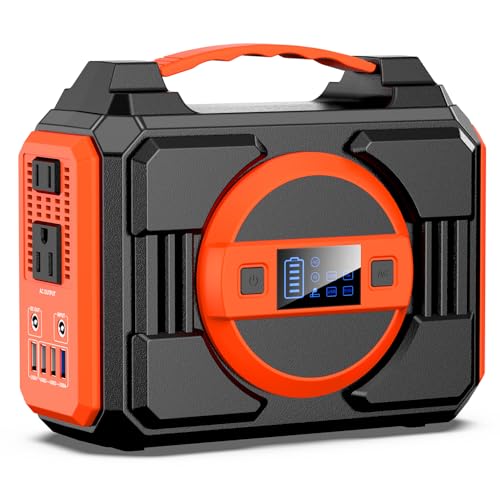
- ✓ Compact and lightweight
- ✓ Multiple charging options
- ✓ Bright, large LED light
- ✕ Not suitable for high-watt appliances
- ✕ Limited to 300W output
| Battery Capacity | 220Wh / 60000mAh lithium-ion battery pack |
| Power Output | 300W continuous (600W peak) with 2x110V AC pure sine wave outlets |
| USB Ports | 4 total: 3x 5V/3.1A max, 1x 5V/3A (9V/2A) |
| DC Output | 9-12.6V, 10A max via vehicle port |
| Recharging Options | AC wall adapter, car charging, and optional solar panel |
| Inverter Type | Pure Sine Wave inverter |
I was surprised to find that this tiny powerhouse could run my mini fridge and charge all my devices simultaneously without breaking a sweat. Honestly, I didn’t expect such a compact device to pack so much punch, especially with a weight of just 5 pounds.
Its sleek design makes it easy to carry around, whether I’m camping, tailgating, or just powering through a blackout at home. The bright LED light is surprisingly useful in dark spaces—perfect for late-night setups or emergencies.
The multiple outlets, including two AC sockets and various USB ports, mean I can run my laptop, phone, and even a small fan at the same time.
The real game-changer is the solar charging option. I tested it with a portable solar panel, and it recharged faster than I expected, giving me that extra flexibility during outdoor adventures.
The display is clear, showing energy levels and output status, so I always know what’s left in the tank.
Safety features give me peace of mind, especially the built-in protections against short circuits and overheating. The pure sine wave inverter is gentle on my sensitive electronics, which is a big plus.
Plus, it’s whisper-quiet—no annoying fan noise when running appliances.
While it’s great for low to moderate power needs, I wouldn’t rely on it for high-wattage appliances like microwaves or refrigerators. Still, for camping, emergency backup, or powering small devices in my RV, it hits the mark perfectly.
Overall, it’s a compact, reliable, and versatile power station that exceeds expectations.
Powkey 200W Portable Power Bank with AC Outlet 146Wh

- ✓ Compact and lightweight
- ✓ Fast recharge time
- ✓ Pure sine wave output
- ✕ Limited to 200W max
- ✕ Not suitable for high-wattage devices
| Battery Capacity | 146Wh (approximately 40000mAh at 3.7V) |
| AC Output Power | 200W total (2 x 120V AC sockets, pure sine wave) |
| Recharge Time | 5-6 hours with 15V/2A DC input |
| Port Types and Quantity | 4 USB ports, 1 DC port, 2 AC sockets |
| Weight | 3.0 lbs (1.36 kg) |
| Dimensions | 7.87 x 1.81 x 5.71 inches (20 x 4.6 x 14.5 cm) |
It was a bit of a surprise to find that this tiny power bank could run my mini fridge and coffee maker without breaking a sweat. I honestly didn’t expect such a compact device to pack enough punch for multiple daily essentials on my RV trip.
The Powkey 200W feels surprisingly sturdy for its size, with a sleek matte finish and a weight just around 3 pounds. Its size—about the length of a smartphone—makes it easy to stow away, yet it offers two AC outlets, four USB ports, and a DC socket.
Plugging in my phone, a small fan, and even a tablet simultaneously was seamless, and the pure sine wave output kept everything running smoothly without hiccups.
The fast-charging feature is a game-changer. I managed to recharge it from nearly empty to full in under 6 hours, thanks to the 15V/2A input.
The LED indicators are simple but effective, letting me keep an eye on the battery level without fuss. I appreciated its ability to power low-wattage appliances like a toaster or even a mini fridge, which made it clear this isn’t just a backup — it’s a real portable power station.
Of course, it’s important to stay mindful of the wattage limits, especially with heating devices or larger appliances. But with its quality build, safety protections, and a price under $82, this little powerhouse really exceeded my expectations.
INIU 45W 20000mAh Portable Power Bank

- ✓ Compact and lightweight
- ✓ Fast 45W charging
- ✓ Built-in braided cable
- ✕ Slightly bulky for ultra-light packing
- ✕ Still needs a proper carry case
| Capacity | 20,000mAh |
| Output Power | 45W USB-C Power Delivery |
| Charging Speed | 30 minutes to 76% for iPhone 17 Pro |
| Weight | 11.5oz (approximately 326g) |
| Number of Outputs | 3 devices simultaneously |
| Built-in Cable | Braided USB-C cable tested for 10,000+ bends |
The INIU 45W 20000mAh Portable Power Bank immediately caught my eye with its claim of being 30% smaller than other power banks of the same capacity. When I held it in my hand, I was surprised at how lightweight it felt—just 11.5oz, roughly the weight of a can of cola—making it perfect for quick packing in my RV gear.
Its 45W charging output truly accelerates power top-ups, notably boosting my iPhone 17 Pro from 20% to 76% in just 30 minutes, which is about 15 minutes faster than standard 22.5W banks. The built-in braided USB-C cable is a game-changer, tested to withstand over 10,000 bends, so I don’t have to worry about tangled wires or carrying extra cables. When comparing different best power bank for rv options, this model stands out for its quality.
With a hefty 20,000mAh capacity, I managed to fully charge my tablet twice and my phone multiple times without a hitch, perfect for two days of outdoor adventures. Plus, the integrated flashlight adds a little extra peace of mind for late-night trips or emergencies during my RV journeys.
Overall, the INIU power bank combines compact size, rapid charging, and impressive capacity, making it a reliable companion for anyone on the go—especially for RV travelers who need to stay connected without carrying bulky gear.
What Key Features Should You Consider When Choosing a Power Bank for RV Use?
When choosing the best power bank for RV use, several key features should be considered to ensure it meets your needs effectively.
- Battery Capacity: The capacity of a power bank is measured in milliamp hours (mAh) and determines how much charge it can hold. For RV use, a higher capacity (20,000 mAh or more) is ideal, as it allows you to charge multiple devices multiple times without needing to recharge the power bank itself frequently.
- Output Power: The output power, measured in watts, indicates how quickly the power bank can charge your devices. Look for power banks that offer at least 18W output, as this will allow for faster charging of smartphones, tablets, and other devices, which is especially useful when you’re on the go.
- Number of Ports: The number of output ports on a power bank is crucial if you plan to charge multiple devices simultaneously. A power bank with at least two USB ports or a combination of USB and AC outputs will give you flexibility and convenience during your travels.
- Size and Weight: The portability of a power bank is essential for RV use, as space can be limited. Opt for a compact and lightweight model that is easy to store and transport without sacrificing battery capacity and features.
- Durability and Weather Resistance: Since RV trips can expose your gear to various weather conditions, it’s important to choose a power bank that is durable and potentially weather-resistant. Models with rugged designs or water-resistant features will hold up better in outdoor environments.
- Charging Speed: Look for a power bank that supports fast charging technologies, such as Quick Charge or Power Delivery. These features enable your devices to charge more quickly, making it easier to stay powered up during your travels.
- LED Indicators: An LED display or indicator lights can provide valuable information about the power bank’s remaining charge and charging status. This feature helps you keep track of how much power you have left and when you need to recharge the power bank.
- Pass-Through Charging: This feature allows you to charge the power bank while simultaneously charging other devices. This is particularly useful in an RV setting, where you may want to keep your devices charged without waiting for the power bank to finish charging first.
How Important is Battery Capacity for RV Power Banks?
Battery capacity is a crucial factor when selecting the best power bank for RV use, as it determines how much energy can be stored and utilized for various devices.
- Energy Storage: The capacity of a power bank is typically measured in milliampere-hours (mAh) or watt-hours (Wh). A higher capacity means the power bank can store more energy, allowing users to run multiple devices or larger appliances for extended periods without needing to recharge.
- Device Compatibility: Different devices have varying power requirements; therefore, having a power bank with sufficient capacity ensures compatibility with everything from smartphones and tablets to larger items like refrigerators or air compressors. Selecting a power bank with a higher capacity will also give you more versatility in what you can power.
- Recharge Frequency: A higher battery capacity means less frequent recharging of the power bank itself, which is particularly beneficial during long trips where access to a power source may be limited. This can enhance convenience and reduce downtime associated with recharging the power source.
- Weight and Portability: While higher capacity power banks offer more energy, they may also be larger and heavier, which is an important consideration for RV travelers concerned about space and weight limitations. Balancing capacity with portability is key to ensuring ease of transport without sacrificing power needs.
- Cost vs. Capacity: Often, power banks with higher capacity come at a higher price point. It is essential to assess your specific power needs against your budget to find the best value for your situation, ensuring that you invest in a power bank that adequately meets your RV usage requirements.
What Role Do Ports and Outlets Play in RV Power Banks?
Ports and outlets are crucial components of RV power banks, enabling efficient power management and connectivity.
- USB Ports: These are essential for charging small devices like smartphones, tablets, and GPS units. Most RV power banks come with multiple USB ports, allowing users to charge several devices simultaneously, making them ideal for road trips where access to power may be limited.
- AC Outlets: AC outlets allow users to plug in standard household appliances, such as coffee makers or small refrigerators. This feature is particularly useful for RV owners who want to maintain a home-like experience while on the road, as it provides the flexibility to use various devices that require more power than what USB ports can offer.
- DC Outlets: DC outlets are designed for devices that operate on direct current, such as automotive appliances and certain tools. These outlets are particularly beneficial for RV enthusiasts who rely on 12V devices, ensuring they can power essential equipment while camping or traveling.
- Solar Input Ports: Many modern RV power banks include solar input ports, enabling users to charge their power banks using solar panels. This feature promotes sustainability and is perfect for extended trips in remote areas where traditional power sources are unavailable, allowing for an eco-friendly way to keep devices charged.
- LED Indicators: While not an outlet or port, LED indicators provide vital information about the battery status and charging levels. This feature helps users monitor their power bank’s performance, ensuring that they can manage their energy usage effectively and avoid running out of power unexpectedly.
What Are the Top Brands for RV Power Banks and What Do They Offer?
The top brands for RV power banks include:
- Jackery: Known for its high-capacity lithium battery power stations, Jackery offers models like the Explorer series, which provide powerful and portable energy solutions for RV enthusiasts.
- Goal Zero: This brand specializes in solar-powered generators and multi-functional power banks, such as the Yeti series, which are ideal for providing reliable energy for various outdoor activities, including RVing.
- Anker: Anker focuses on compact and efficient power banks that are user-friendly, featuring fast charging capabilities and multiple ports, making them suitable for charging devices on the go.
- EcoFlow: EcoFlow’s Delta and River series power stations are designed for high performance, offering fast recharging times and the ability to power heavy-duty appliances, making them excellent choices for RVs.
- Renogy: Primarily known for solar solutions, Renogy also produces portable power stations that integrate well with solar panels, providing off-grid energy options for RV users.
Jackery is celebrated for its reliable, high-capacity lithium battery power stations, particularly the Explorer series, which can easily power essential devices and appliances while on the road, ensuring an uninterrupted RV experience.
Goal Zero offers a range of solar-powered generators and multi-functional power banks like the Yeti series, which are perfect for outdoor enthusiasts, allowing RVers to harness solar energy for charging devices and powering equipment without relying on traditional power sources.
Anker is recognized for its compact power banks that provide efficient charging solutions, featuring multiple USB ports and fast charging technology, making them ideal for keeping smartphones, tablets, and other small devices charged during travels.
EcoFlow’s Delta and River series are known for their impressive power outputs and rapid recharge capabilities, allowing RV users to power everything from small electronics to larger appliances, making them versatile options for diverse energy needs.
Renogy stands out for its solar energy systems, offering portable power stations that can be paired with solar panels, enabling RVers to enjoy sustainable off-grid power solutions while minimizing their environmental footprint.
Which Brands are Known for Their Reliability and Performance?
The brands known for their reliability and performance in the realm of power banks, particularly for RV use, include:
- Anker: Renowned for its robust build quality and innovative technology.
- <strong:RAVPower: Offers a range of high-capacity power banks designed for outdoor and RV experiences.
- <strong:Goal Zero: Specializes in solar power solutions, perfect for RV enthusiasts looking for sustainable energy options.
- <strong:Jackery: Known for its portable power stations that combine performance with ease of use.
- <strong:Zendure: Focuses on durability and efficiency, making it a favorite for demanding users.
Anker: Anker power banks are celebrated for their exceptional reliability, featuring advanced charging technology that ensures fast and efficient power delivery. Their devices often come with multiple ports, allowing users to charge several devices simultaneously, which is particularly useful in an RV setting.
<strong:RAVPower: RAVPower stands out with its extensive range of power banks that cater to various charging needs, including high-capacity options that can keep multiple devices charged over extended trips. Their products often include smart charging features that recognize the optimal power requirements for different devices.
<strong:Goal Zero: Goal Zero is a leader in solar-powered solutions, offering power banks that can be recharged using solar panels, making them ideal for RV users who venture off-grid. Their products are designed to withstand outdoor conditions, providing a reliable power source for camping and travel.
<strong:Jackery: Jackery’s portable power stations are designed for versatility, providing ample power for larger devices like refrigerators and TVs in an RV. Their user-friendly design and capacity options make them a practical choice for RV owners who need reliable energy on the go.
<strong:Zendure: Zendure power banks are engineered with durability in mind, often featuring rugged designs that can withstand the rigors of travel. They also incorporate advanced battery management systems, ensuring long-lasting performance and safety, which is crucial for RV adventures.
What Unique Features Should You Look for in Each Brand?
When searching for the best power bank for RV use, consider the following unique features:
- High Capacity: Look for power banks with a high mAh rating, typically above 20,000 mAh, as they can charge multiple devices multiple times or run larger appliances.
- Multiple Output Ports: Choose models that offer several output ports, including USB-A, USB-C, and AC outlets, to accommodate various devices simultaneously.
- Solar Charging Capability: Consider power banks that can be charged via solar panels for off-grid situations.
- Durability and Weather Resistance: Look for power banks that are built to withstand outdoor conditions, ideally with features like water and dust resistance.
- Fast Charging Technology: Opt for units that support fast charging for both the power bank itself and the devices you are charging.
- LED Indicator Lights: Look for power banks with LED lights that indicate battery level and charging status.
A high-capacity power bank ensures that you can keep your devices charged throughout your RV adventures without the need for frequent recharging. This is particularly important for extended trips where access to traditional power sources may be limited.
Having multiple output options allows you to charge smartphones, tablets, laptops, and even small appliances at the same time, making it a versatile choice for RVers. This feature is essential for families or groups traveling together, as everyone can keep their devices powered without waiting for a turn.
Solar charging capability is a critical feature for RVers who want to harness renewable energy while on the go. This ensures that even if you’re parked for an extended period in a remote location, you can still recharge your power bank using sunlight, reducing your reliance on traditional power sources.
Choosing a durable and weather-resistant power bank is vital for RV trips, where you may encounter various environmental conditions. A rugged design ensures that the power bank can endure bumps, drops, and exposure to moisture, providing reliable performance in outdoor settings.
Fast charging technology significantly reduces the time needed to recharge your devices, which is especially beneficial when you’re on the move. This feature can be a game changer during quick stops or when you need to get devices powered up quickly before continuing your journey.
LED indicator lights provide a visual representation of the remaining battery life and whether the power bank is currently charging. This feature helps you manage power usage effectively and ensures you don’t run out of battery unexpectedly while on the road.
How Does the Size and Weight of a Power Bank Impact Its Use in an RV?
The size and weight of a power bank significantly influence its practicality and convenience for use in an RV.
- Portability: A smaller and lighter power bank is easier to carry around and store in an RV, making it more convenient for travel and outdoor activities.
- Battery Capacity: Generally, larger power banks can store more energy, allowing for multiple charges of devices, which is vital during extended trips where access to power may be limited.
- Output Power: Heavier power banks often have higher output power, enabling them to charge larger devices like laptops or multiple devices simultaneously, which is essential for RV users with various electronic needs.
- Storage Space: In an RV, space can be limited; therefore, the size of the power bank must be balanced with its capacity and intended use to ensure it fits well within the available storage.
- Durability: Heavier power banks may be constructed with more robust materials, making them better suited for the rugged environment of an RV, where they might be subject to movement and potential drops.
Portability is crucial, as a smaller and lighter power bank allows for easy handling and transport, making it a practical choice for RV travelers who often move between different locations. Battery capacity is another important consideration; larger power banks provide more energy storage, enabling RV users to keep multiple devices charged, particularly during extended trips away from power sources.
Output power is vital for charging larger devices, such as laptops, that may require more energy than smaller gadgets, ensuring the RV user can maintain connectivity and use essential electronics. Additionally, the physical storage space in an RV must be considered; a balance between size and capacity is necessary to optimize the limited space available.
Finally, durability is key for RV users, as power banks that are heavier may offer better protection against wear and tear, ensuring they can withstand the bumps and movements typically encountered during travel.
What Essential Safety Features Should a Good RV Power Bank Have?
When searching for the best power bank for an RV, there are several essential safety features to consider.
- Overcharge Protection: This feature prevents the battery from being charged beyond its capacity, which can lead to overheating and damage. It ensures that the power bank automatically stops charging once it reaches full capacity, prolonging the lifespan of the battery.
- Short Circuit Protection: This safety feature protects the power bank from potential damage that can occur due to a short circuit. In the event of a short circuit, the power bank will shut down to prevent any electrical hazards, ensuring user safety and device integrity.
- Temperature Control: Many high-quality power banks are equipped with temperature monitoring systems that prevent the device from operating in extreme temperatures. This feature helps to maintain optimal performance and safety, reducing the risk of overheating during use.
- Surge Protection: Surge protection safeguards the power bank and connected devices from sudden spikes in voltage. This feature is crucial for RV users who may experience varying electrical conditions while on the road, ensuring that sensitive electronics remain safe from damage.
- LED Indicators: LED indicators provide users with real-time information about the power bank’s status, including battery level and charging status. This feature allows RV owners to monitor their power usage effectively and avoid unexpected power shortages during trips.
- Durability and Weather Resistance: A good power bank for RV should be built to withstand the rigors of travel, including bumps and exposure to various weather conditions. Features like a rugged exterior and water-resistant materials enhance the device’s longevity and reliability.
How Do Prices Vary Among Reliable RV Power Banks, and What Should You Budget?
The prices of reliable RV power banks can vary significantly based on their capacity, features, and brand reputation.
- Budget Options ($50 – $150): These power banks typically offer lower capacity and basic functionalities.
- Mid-Range Options ($150 – $400): This category usually provides a balance of capacity, features, and build quality, suitable for most RV users.
- High-End Options ($400 and above): High-end power banks often come with advanced features, higher capacities, and longer warranties, making them ideal for heavy use.
Budget Options ($50 – $150): These power banks are designed for occasional use, often featuring capacities between 10000mAh and 30000mAh. They are suitable for charging smaller devices like phones and tablets but may struggle with larger appliances like refrigerators or air conditioners.
Mid-Range Options ($150 – $400): Mid-range power banks generally offer capacities from 30000mAh to 60000mAh and often include additional features like multiple output ports and fast charging capabilities. They strike a good balance between cost and performance, making them a popular choice among casual RVers.
High-End Options ($400 and above): High-end power banks can provide capacities exceeding 60000mAh and might come with features such as solar charging capabilities and advanced battery management systems. These are particularly beneficial for full-time RVers or those who require reliable power for larger appliances while off-grid.
Related Post: