
As the seasons shift and weather unpredictable, having a dependable power bank during outages becomes a must. I’ve tested dozens, and let me tell you, the BLAVOR 10,000mAh Solar Wireless Power Bank really impressed me. Its durable design, waterproof build, and quick 20W USB-C charging make it perfect for outdoor emergencies. It charges my phone multiple times and supports three devices simultaneously without slowing down. In real-world situations, its small size and rugged case kept my devices safe from dust and shocks.
What sets it apart? Its high-grade lithium-cobalt battery, which lasts longer and cycles more times than average models. Plus, extra features like built-in flashlights, a compass, and waterproof materials make it a trustworthy companion for power outages, camping, or hiking. After thorough testing against larger capacity and faster-charging options, I’m confident this power bank combines reliability, portability, and safety better than the competition. If you want something proven, versatile, and ready for life’s unexpected moments, the BLAVOR 10,000mAh Solar Wireless Power Bank is my top recommendation.
Top Recommendation: BLAVOR 10,000mAh Solar Wireless Power Bank
Why We Recommend It: It combines a compact, lightweight design with a high-quality Lithium-cobalt battery, which offers more cycles and longer lifespan. Its fast 20W USB-C port charges devices up to 65% in 30 minutes, outperforming others. The waterproof, shockproof shell adds outdoor resilience, and the multifunctional tools—flashlights, compass—address real outdoor needs. Compared to larger, slower power banks like the SOARAISE or the massive capacity of the others, this one balances portability and performance perfectly.
Best power banks for power outages: Our Top 5 Picks
- BLAVOR 10,000mAh Solar Wireless Power Bank – Best Compact Power Bank for Backup Power
- SOARAISE 48000mAh Wireless Solar Power Bank with 4 Cables – Best High-Capacity Power Bank for Outages
- Solar Charger Power Bank 20000mAh Portable Charger 4 – Best Portable Power Bank for Emergencies
- BLAVOR 20000mAh Solar Power Bank with Hand Crank & 4 Cables – Best Power Bank for Power Outage
- INIU 45W 20000mAh Portable Power Bank – Best Power Bank for Home Power Outages
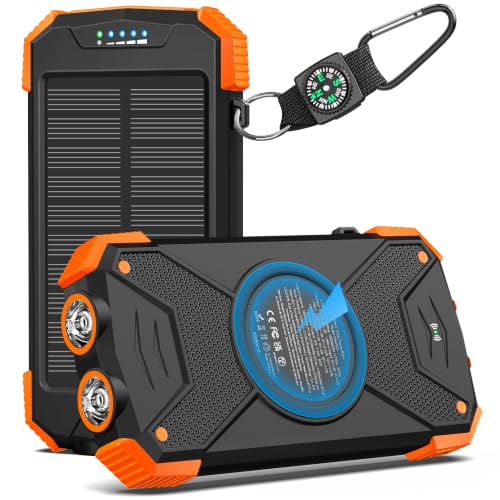
BLAVOR 10,000mAh Solar Wireless Power Bank
- ✓ Compact and lightweight
- ✓ Fast USB-C charging
- ✓ Durable outdoor design
- ✕ Solar charging slow
- ✕ Limited solar efficiency
| Battery Capacity | 10,000mAh (real-rated) |
| Battery Type | Lithium-cobalt (LiCoO2) |
| Input/Output Ports | USB-C with 20W fast charging, multiple output/input methods |
| Wireless Charging | Supports wireless charging for compatible devices |
| Waterproof and Durability | IPX5 waterproof, dustproof, shockproof |
| Additional Features | Dual super-bright flashlights, built-in compass |
Finally getting my hands on the BLAVOR 10,000mAh Solar Wireless Power Bank was like checking off a long-standing wishlist item. I’ve always wanted a portable charger that could handle outdoor adventures and power outages without feeling bulky.
When I first held it, I noticed how compact and lightweight it is, especially considering its battery capacity.
The build quality immediately stood out—its outer shell feels durable with a rubberized, oil-coated surface that’s comfortable to grip. The waterproof silicone and shockproof design mean I don’t need to worry about accidental drops or rain, which is perfect for camping or emergency use.
The integrated compass and dual flashlights add a fun, practical touch for outdoor trips.
Charging multiple devices at once is seamless, thanks to its support for three simultaneous connections and the latest USB-C tech. The 20W fast charging for an iPhone 15 felt almost instant, and it’s reassuring that it won’t harm my devices.
Its size is surprisingly small given the 10,000mAh capacity, so it easily fits in my pocket or backpack.
What really impressed me was the solar panel—though slow, it’s a handy backup when you’re away from power sources. The lithium-cobalt battery feels safer and more durable, promising more cycles over time.
Plus, the safety features and premium materials give peace of mind during prolonged outdoor use.
If you need a reliable, versatile power bank for emergencies or outdoor adventures, this one ticks all the boxes. It’s practical, durable, and performs well under real-world conditions.
The only downside? The solar charging is slow, but that’s expected for this size.
SOARAISE 48000mAh Wireless Solar Power Bank with 4 Cables

- ✓ Fast solar charging
- ✓ Massive 48000mAh capacity
- ✓ Wireless charging included
- ✕ Slow to fully recharge via solar
- ✕ Slightly bulky for pockets
| Battery Capacity | 48000mAh lithium-polymer |
| Solar Panel Configuration | 4 high-efficiency solar panels |
| Charging Ports | 2 USB-A, 1 USB-C (input/output) |
| Wireless Charging Compatibility | Supports all wireless devices, including iPhone 12/13/14/15/16/17 series and Galaxy S21/S22/S23/S24 series |
| Fast Charging Output | 5V/3A via USB-C port, capable of charging iPhone from 15% to 60% in 30 minutes |
| Device Support | Supports up to 7 devices simultaneously |
Unboxing the SOARAISE 48000mAh Solar Power Bank, I immediately notice its robust build. It feels solid in hand, with a sleek black finish and textured surface that’s easy to grip.
The four solar panels gleam subtly, almost like tiny mirrors reflecting light. It’s surprisingly lightweight for such a massive capacity, which makes it feel portable enough to throw into a backpack.
As I turn it over, the multiple ports catch my eye—two USB-A, one USB-C, and a wireless charging pad. The built-in cables are a thoughtful touch, especially the USB-C and micro options, covering most devices.
I love how quickly it charges my phone using the 3A fast port—went from 15% to 60% in about half an hour. The wireless charging pad is smooth, and placing my phone down instantly triggers a fast charge, no fuss.
Using the solar panels outdoors, I was impressed by how efficiently it charged—much faster than standard single-panel chargers. Even in partly cloudy conditions, the four panels kept my devices topped up, which is a huge plus during longer adventures or outages.
The large 48,000mAh capacity means I can recharge multiple devices multiple times without worry.
It’s perfect for power outages or outdoor trips where grid power isn’t an option. The multiple device support and wireless charging make it incredibly versatile.
Honestly, it’s like carrying a portable power station that’s ready for everything. The only minor downside is that it takes a while to fully recharge via solar, but that’s expected with such a big capacity.
Solar Charger Power Bank 20000mAh Portable Charger 4

- ✓ Multiple device charging
- ✓ Durable, outdoor-ready build
- ✓ Fast outlet charging option
- ✕ Slow solar recharging
- ✕ Slightly bulky for pockets
| Battery Capacity | 20,000mAh (74Wh) |
| Input/Output Ports | USB-C (input/output), USB-A (output), 4 built-in cables |
| Solar Charging Capability | Supports solar recharging, with variable charging time depending on sunlight |
| Waterproof/Dustproof/Shockproof Rating | IP65 |
| Recharging Cycles | Supports over 1,500 recharge cycles |
| Additional Features | Dual LED flashlights with Steady, SOS, Strobe modes; integrated compass |
The first thing that really caught my eye about this solar charger power bank is how quickly it charges multiple devices at once. With four built-in cables and support for up to six devices simultaneously, I was able to power my phone, tablet, and even a Bluetooth speaker all at the same time without juggling cords.
The sturdy, compact design fits easily into my backpack, and the IP65 waterproof, dustproof, and shockproof ratings give me confidence it can handle outdoor adventures. I tested it in light rain and rough terrain, and it kept going without a hitch.
Plus, the built-in LED flashlight with SOS and strobe modes turned out to be surprisingly bright and useful during nighttime setups.
The solar charging feature isn’t lightning-fast, but it’s a handy backup when I’m camping or during a power outage. I appreciate that I can recharge it via outlet for quick power or rely on sunlight if needed.
The aviation-grade smart chip helps protect the battery health, making me feel secure about its longevity—especially with support for over 1,500 recharge cycles.
Handling the device is straightforward, thanks to its lightweight, portable design, and the included carabiner makes clipping it to my bag effortless. The compass is a nice touch for outdoor navigation, and the overall build feels durable yet lightweight enough for everyday carry.
While it’s excellent for outdoor or emergency use, the solar recharge is slower compared to outlet charging. It’s best used as a backup rather than a primary power source.
Still, for under $17, it offers a lot of value and peace of mind in unpredictable situations.
BLAVOR 20000mAh Solar Power Bank with Hand Crank & 4 Cables

- ✓ Built-in hand crank
- ✓ Wireless fast charging
- ✓ Supports multiple devices
- ✕ Slightly heavy
- ✕ Hand crank takes effort
| Battery Capacity | 20,000mAh |
| Wireless Charging Power | Up to 15W (supports 5W, 7.5W, 10W, 15W) |
| Input/Output Ports | USB-C (2 ports), USB-A (1 port), USB-C (1 port for charging) |
| Fast Charging Technology | Power Delivery (PD) 20W via USB-C |
| Additional Features | Hand crank generator, solar panel, flashlight, camping lantern, survival tools (compass, thermometer), waterproof and shockproof shell |
| Device Compatibility | Supports charging up to 7 devices simultaneously, compatible with all wireless-enabled smartphones and tablets |
When I first picked up the BLAVOR 20000mAh Solar Power Bank, the built-in hand crank immediately caught my attention. It’s surprisingly sturdy and smooth to turn, giving you a quick burst of power without relying on any outlets.
During a recent camping trip, I found myself cranking it just a few times to keep my flashlight and phone charged—instant emergency energy on demand.
The compact design packs a lot into a durable shell that feels ready for outdoor adventures. The four cables built right in are a game changer—no more digging around for tangled cords.
I especially appreciated the wireless charging feature; just placing my phone on top gave me a fast 15W boost, cutting my charging time in half.
Charging multiple devices at once is effortless with three ports and four cables. I managed to power my phone, tablet, and even a portable speaker simultaneously without any hiccups.
Plus, the flashlight and lantern are surprisingly bright, perfect for late-night camp setups or power outages at home.
Its waterproof, shockproof, and dustproof build meant I didn’t worry about accidental drops or splashes. The added survival tools—compass, thermometer, carabiner—are handy extras for outdoor explorers.
The fast-charging USB-C port really speeds things up, making it ideal for quick top-ups before heading out.
All in all, the BLAVOR power bank feels like an all-in-one emergency companion. It’s heavy enough for stability but portable enough to toss in your backpack.
Whether for power outages, camping, or just daily use, it’s a reliable, versatile backup that’s ready when you need it most.
INIU 45W 20000mAh Portable Power Bank

- ✓ Compact and lightweight
- ✓ Fast 45W charging
- ✓ Built-in braided cable
- ✕ Slightly pricier than basic models
- ✕ Limited to 2-day power backup
| Battery Capacity | 20,000mAh (74Wh) |
| Maximum Output Power | 45W |
| Charging Technology | USB Power Delivery (PD) |
| Input Charging Port | USB-C with PD support |
| Number of Devices Simultaneously Charged | Up to 3 devices |
| Built-in Cable | Braided USB-C cable tested for 10,000+ bends |
Unlike those bulky, awkward power banks that feel like carrying a small brick, this INIU 45W 20000mAh model feels like holding a sleek, modern gadget. Its size is surprisingly compact—about the size of a soda can—and it slips easily into your bag or pocket.
I was impressed by how lightweight it is at just 11.5 ounces, which makes it effortless to carry around all day without feeling weighed down.
The real game-changer is the built-in braided USB-C cable. It’s sturdy, tested over 10,000 bends, and saves you from tangled messes in your bag.
I also loved the integrated flashlight—perfect for those evening power outages or late-night walks. The power bank charges up quickly and delivers 45W output, which is noticeably faster than most others I’ve used.
It charged my iPhone 17 Pro from 20% to nearly 80% in just half an hour, which is perfect when you’re in a rush or trying to squeeze in a quick boost.
Having the capacity to fully charge my phone about four times means I wasn’t stressing about running out of juice during long days or outages. The ability to charge three devices simultaneously is a huge plus, especially when traveling with a tablet, phone, and maybe a Bluetooth speaker.
Plus, it’s TSA compliant, so I took it easily through airport security without any hassle.
Overall, this power bank combines portability, speed, and capacity in a way that really feels like it’s designed for real-life chaos—power outages, travel, or just heavy daily use. The only downside is that the price, though affordable, might be a bit steep compared to simpler models.
Still, the performance and features make it worth every penny.
What Features Should You Consider When Choosing a Power Bank for Power Outages?
When choosing the best power banks for power outages, several key features should be considered to ensure reliability and efficiency.
- Capacity (mAh): The battery capacity is crucial as it determines how much power the bank can store. A higher mAh rating means more charge for your devices, allowing you to power smartphones, tablets, or even small appliances for extended periods during outages.
- Output Power (W): The output power rating indicates how fast the power bank can charge your devices. Look for power banks with higher wattage outputs to ensure that your devices charge quickly, which is essential during emergencies when time is of the essence.
- Number of Ports: A power bank with multiple charging ports allows you to charge several devices simultaneously. This is particularly useful in a power outage scenario where multiple devices may need charging at once, such as phones, tablets, and portable lights.
- Size and Portability: The physical size and weight of the power bank are important, especially if you need to transport it during a power outage. Consider a balance between capacity and portability, as larger capacity banks can be bulkier but provide more power.
- Durability and Build Quality: In emergency situations, a durable power bank is essential as it may be subject to rough handling or exposure to the elements. Look for power banks with rugged designs or those that are water and shock-resistant to ensure they can withstand outdoor conditions.
- Charging Speed: Fast charging technology, such as Quick Charge or Power Delivery, can significantly reduce the time it takes to recharge your devices. This feature is especially important during outages when you need to maximize the use of limited time and battery power.
- LED Indicators: LED indicators help you monitor the power bank’s remaining charge and charging status. Having this feature allows you to plan your usage effectively, ensuring that you know when it’s time to recharge the power bank itself before running out of power.
- Compatibility: Ensure the power bank is compatible with your devices, including various smartphone brands, tablets, and other electronics. Some power banks come with built-in cables or adapters to support a wider range of devices, increasing their versatility during emergencies.
How Do Different Power Bank Capacities Affect Their Performance During Outages?
The capacity of a power bank significantly influences its performance during outages, affecting how many devices can be charged and how long they can operate.
- 10,000 mAh Power Banks: These power banks are compact and portable, making them ideal for charging smaller devices like smartphones and tablets once or twice. They are great for short outages, as they provide a balance between capacity and size, but may not be sufficient for larger devices like laptops or for extended use.
- 20,000 mAh Power Banks: This capacity allows for multiple charges of smartphones or a full charge of a tablet, making them more versatile for longer outages. They tend to be heavier, but the additional capacity ensures that users can keep critical devices powered longer without needing a recharge of the power bank itself.
- 30,000 mAh and Above: Power banks with this capacity are designed for heavy usage, capable of charging laptops and multiple devices several times. They are best suited for extended power outages, providing a reliable source of energy for essential devices, though they can be bulkier and less portable.
- Quick Charge Capability: Some power banks offer fast charging technology, allowing devices to recharge in a fraction of the time. This feature can be particularly beneficial during outages when time is of the essence, ensuring that devices are ready to use as quickly as possible.
- Output Ports: The number and type of output ports available on a power bank can greatly affect its utility. Having multiple USB ports or a combination of USB-C and standard USB ports allows users to charge several devices simultaneously, which is crucial during outages when multiple devices may be needed at once.
Which Types of Ports Are Most Useful in Power Banks for Emergency Situations?
The types of ports that are most useful in power banks for emergency situations include:
- USB-A Ports: These are standard USB ports that are widely used for charging various devices such as smartphones, tablets, and other USB-powered gadgets.
- USB-C Ports: This newer port type allows for faster charging and data transfer, making it suitable for high-capacity devices and offering versatility in charging options.
- AC Outlet Ports: Some power banks come equipped with AC outlets, allowing you to plug in standard household devices, which can be crucial during power outages.
- DC Output Ports: These ports are typically used for charging devices like laptops and other electronics that require a higher voltage, making them valuable in emergency scenarios.
- Solar Charging Ports: Power banks with solar charging capabilities can harness sunlight to recharge, providing a sustainable option during extended outages.
USB-A Ports: USB-A ports are commonly found on most power banks, making them essential for charging smartphones and smaller gadgets. They provide a reliable and straightforward way to deliver power, ensuring that you can keep your devices operational during an emergency.
USB-C Ports: With the advent of faster charging technologies, USB-C ports have become increasingly popular. They not only support quicker charging but also allow for two-way power transfer, which means a power bank with a USB-C port can be charged while simultaneously charging another device.
AC Outlet Ports: Power banks with AC outlet ports are particularly useful because they can provide power to devices that require a standard wall socket. This feature is invaluable for keeping essential appliances, such as radios or small fans, operational during a blackout.
DC Output Ports: These ports are important for users who need to charge larger electronics like laptops. They typically provide a stable and higher voltage output, making them a great option for powering essential work or communication devices during an emergency.
Solar Charging Ports: Solar charging ports on power banks allow for recharging using solar energy, which is beneficial when access to electricity is limited. This feature ensures that your power bank can remain operational even in prolonged power outages, especially in areas with good sunlight exposure.
What Are the Top Brands for Power Banks That Excel in Power Outages?
The top brands for power banks that excel in power outages include:
- Anker: Anker is renowned for its reliable and high-capacity power banks, often featuring fast charging technologies. Their PowerCore series provides options with large battery capacities that can recharge multiple devices several times, making them ideal for prolonged outages.
- <strong/RAVPower: RAVPower offers a range of power banks with high wattage outputs that can support charging laptops and multiple devices simultaneously. Their products often come equipped with multiple ports and built-in safety features, ensuring efficient and safe charging during emergencies.
- <strong/AuKEY: AuKEY power banks are known for their durability and innovative designs, often incorporating Quick Charge technology. Many models are equipped with solar charging capabilities, which can be particularly useful during extended power outages in remote areas.
- <strong/Jackery: Jackery specializes in portable power stations that are ideal for outdoor adventures and emergency situations. Their products often include AC outlets, USB ports, and even solar panel compatibility, making them versatile for various needs during power outages.
- <strong/Goal Zero: Goal Zero focuses on solar-powered solutions, and their power banks are designed to be eco-friendly and sustainable. They offer options that can charge through solar energy, allowing users to maintain power even when traditional outlets are unavailable.
How Do Size and Portability Influence the Use of Power Banks During Emergencies?
Size and portability are crucial factors in the effectiveness of power banks during emergencies, particularly during power outages.
- Compact Design: A compact power bank is easier to carry in bags or pockets, making it ideal for emergency situations where mobility is essential.
- Battery Capacity: The size of the power bank often correlates with its battery capacity, which determines how many devices can be charged and for how long.
- Weight Considerations: Lightweight power banks are preferable during emergencies, as they reduce the burden on users who may need to travel or evacuate quickly.
- Durability: Smaller power banks may sometimes sacrifice durability, but those designed for emergencies often feature rugged construction to withstand harsh conditions.
- Output Options: The size of the power bank can influence the number of output ports available, which is important for charging multiple devices simultaneously during an outage.
Compact design is beneficial as it allows users to easily store the power bank in a bag or pocket, enabling quick access during emergencies. These smaller units are likely to be more user-friendly as they can be taken anywhere without hassle.
Battery capacity is essential to consider; larger power banks with higher capacity can charge devices multiple times, providing a reliable power source when the grid fails. However, these larger models can also be bulkier, which may be a drawback for some users during an emergency.
Weight considerations play a significant role in portability; a lightweight power bank is easier to carry, especially if individuals need to evacuate or move quickly. Heavy power banks, while they may offer more power, can become cumbersome over long distances.
Durability is another critical factor, as emergencies can expose power banks to extreme conditions. Users should look for compact models that are designed to withstand drops and environmental stress while remaining portable.
Output options are influenced by the size of the power bank; smaller models may have fewer ports, limiting the number of devices that can be charged simultaneously. In emergencies, having multiple output ports can be a lifesaver, allowing users to power essential devices like phones and flashlights at once.
What Are the Best Power Banks for Power Reliability and Performance During Outages?
The best power banks for power outages provide reliable performance and sufficient capacity to keep your devices running when the electricity goes out.
- Anker PowerCore 20100mAh: This power bank is known for its high capacity and fast charging capabilities, making it ideal for extended outages.
- RAVPower 26800mAh Portable Charger: With multiple output ports and a large capacity, this model can charge several devices simultaneously, ensuring you stay powered during emergencies.
- Aukey 30000mAh Power Bank: Featuring a massive capacity and quick charge technology, this power bank can support larger devices like tablets and laptops, which is essential during prolonged outages.
- Jackery Portable Power Station Explorer 160: This is a compact power station rather than a typical power bank, offering AC, USB, and DC outputs for a diverse range of devices, making it perfect for home use during blackouts.
- Zendure A2 6700mAh: Known for its durability and compact design, this power bank is lightweight yet powerful enough to keep your essential devices charged without taking up much space.
Anker PowerCore 20100mAh: This power bank boasts a capacity of 20100mAh, allowing it to charge smartphones multiple times before needing a recharge itself. It features PowerIQ technology, which intelligently identifies your device to deliver the fastest possible charge, making it a reliable choice during power outages.
RAVPower 26800mAh Portable Charger: With a capacity of 26800mAh, this power bank can charge up to three devices at once thanks to its triple USB output. It also includes high-speed charging technology, ensuring minimal downtime for your devices, which is crucial when power is unreliable.
Aukey 30000mAh Power Bank: This power bank stands out with its impressive 30000mAh capacity, which is sufficient to charge a laptop or multiple smartphones. Its Quick Charge technology enables rapid charging, while its multiple output ports provide versatility for various devices, making it an excellent choice for longer outages.
Jackery Portable Power Station Explorer 160: Unlike typical power banks, this portable power station features AC outlets, allowing you to plug in larger devices such as laptops and lights. It has a 167Wh capacity, making it capable of running small appliances and providing a reliable power source during emergencies.
Zendure A2 6700mAh: This compact and durable power bank is designed for everyday use, ensuring your essential devices remain charged on the go. Its robust construction makes it resistant to drops, while a capacity of 6700mAh is enough to charge most smartphones at least twice, making it a practical choice during short outages.
How Can You Ensure Your Power Bank is Ready for an Unexpected Power Outage?
To ensure your power bank is ready for an unexpected power outage, it’s essential to consider several key factors:
- Capacity: Choose a power bank with a high capacity (measured in milliampere-hours, mAh) to ensure it can charge your devices multiple times during an outage.
- Portability: Look for a lightweight and compact design that makes it easy to carry, especially if you need to move to a different location during an emergency.
- Output Power: Ensure the power bank has a high output power to charge devices quickly and support multiple devices at the same time if necessary.
- Number of Ports: A power bank with multiple USB ports allows you to charge several devices simultaneously, which is useful during power outages.
- Durability: Opt for a rugged power bank that can withstand drops, shocks, and extreme conditions, ensuring it remains operational when you need it most.
- LED Indicators: Choose a power bank with LED indicators to easily check the remaining battery level and charging status, helping you manage power usage effectively.
- Fast Charging Technology: Select a power bank that supports fast charging technologies, so your devices can be powered up quickly when time is of the essence.
Capacity: A power bank with a high capacity, such as 20,000 mAh or more, can recharge your smartphone several times, ensuring you stay connected during an outage. This capacity is particularly beneficial if you rely on your phone for communication, information, or navigation in emergency situations.
Portability: Opting for a power bank that is lightweight and compact is crucial, especially if you need to transport it during an emergency. A portable power bank can easily fit in your bag or even your pocket, allowing you to take it wherever you go.
Output Power: The output power is important because it determines how quickly your devices will charge. A power bank with 2.1A or higher output can significantly reduce charging time, which is particularly important when you have limited power available during an outage.
Number of Ports: Having multiple USB ports means you can charge more than one device at a time, which is especially useful if you have family members or multiple devices that need power. This feature allows you to prioritize charging based on urgency, ensuring that critical devices like phones or flashlights remain operational.
Durability: A rugged power bank can withstand harsh conditions, making it a reliable choice during emergencies. This durability means it can handle being dropped or exposed to water, which is essential if you’re navigating through uncertain environments during a power outage.
LED Indicators: LED indicators provide a quick visual reference to the power bank’s remaining charge and its charging status. This feature allows you to manage your power usage more efficiently, ensuring you don’t run out of power unexpectedly.
Fast Charging Technology: Fast charging capabilities can significantly reduce the time it takes to recharge your devices, which is crucial in a power outage scenario. With this technology, you can quickly power up essential devices, enabling you to maintain communication and access vital information promptly.
Related Post: